Fig trees need surprisingly little fertilizer, and that is exactly where most people go wrong. Feed a fig once it wakes up in spring with a balanced or slightly nitrogen-forward fertilizer, split into two or three light feedings between when new leaves emerge and midsummer, then stop. Figs in the ground often need none at all if your soil has any body to it, and figs in containers need a steadier, weaker hand than you’d guess.
That last point trips up almost everyone. The instinct is to feed a fig like a tomato, hard and often, because it fruits so heavily. Do that and you will get a tree that looks fantastic and produces almost nothing, or worse, drops the figs it already set.
There is also a timing mistake that costs people an entire crop, a sign of nitrogen overload that looks like health instead of trouble, and an honest answer about whether that potted fig on your patio needs feeding at all this year. All of it is below, along with the save-able Fig Trees at a Glance card at the very bottom of this guide.
Why Figs Are Different From Everything Else You Feed
Figs evolved in lean, rocky Mediterranean soil, not rich garden beds. A fig tree in fertile ground will often fruit less, not more, because it puts its energy into growing leaves and wood instead of setting fruit.
This is the opposite of how most fruiting plants behave, and it’s why the “more feeding equals more figs” guess is wrong from the start.
If your tree is planted in decent native soil and growing 12 to 24 inches of new growth a year, it may need zero fertilizer, ever.
The real question isn’t how much to feed a fig, it’s whether it needs feeding at all, and that depends on where it’s growing.
Light, Placement, and Temperature
Figs want full sun, at least 6 to 8 hours a day, and they want heat radiating back at them. A spot against a south-facing wall or in a paved courtyard often outperforms an open lawn planting by several degrees of extra warmth.
Cold hardiness varies a lot by variety, but most common fig cultivars handle winter lows down to about 15 to 20°F once established, with root systems surviving colder than the wood above ground. In zones 6 and colder, figs are usually grown in containers that come indoors, or in the ground with heavy winter protection.
Potted figs should winter somewhere cool but frost-free, like an unheated garage, and go dormant rather than staying warm and leafy.
Get the light and temperature right first, because no amount of fertilizer fixes a fig that’s shaded or freezing.
Watering: How Much, How Often, and How to Tell
Water a young or newly planted fig deeply once or twice a week, enough to soak the root zone 12 to 18 inches down, then let the top few inches dry before watering again. Established in-ground figs are drought-tolerant and often need no supplemental water beyond rainfall except in extended dry spells.
Container figs are a different animal entirely. Pots dry out fast, and a fig in an 18-inch container may need water every day or two once summer heat arrives.
Check by pushing a finger 2 inches into the soil. Bone dry, water now. Still cool and damp, wait.
Figs will drop fruit if they swing between drought and flood, which matters more for feeding than you’d think.
Soil, Potting Mix, and the Actual Feeding Schedule
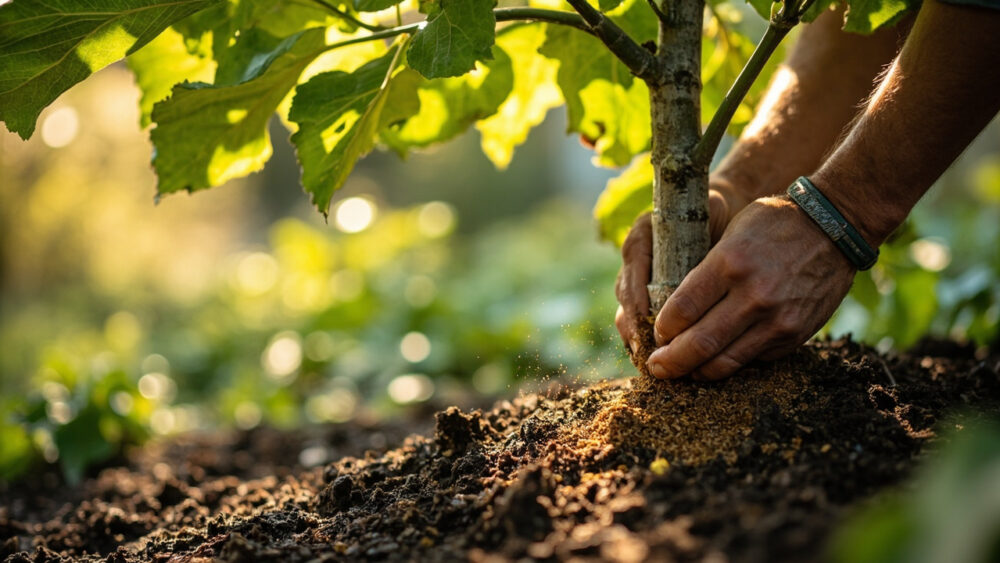
In the ground, most figs do best in soil that drains well and isn’t especially rich. If a soil test or your tree’s own growth rate tells you it’s struggling, one application of a balanced fertilizer, something like 10-10-10 or an organic equivalent, in early spring as buds swell is usually enough for the year.
Container figs need a real feeding routine, because potting mix has no reserve nutrients of its own and every watering washes some out. Feed potted figs every 4 to 6 weeks from when new growth starts in spring through midsummer, using a balanced or slightly higher-nitrogen fertilizer at half the label’s suggested strength.
Stop feeding by midsummer, roughly 8 to 10 weeks before your first expected frost. Feeding late pushes soft new growth that won’t harden off before cold weather, and that growth is usually what dies back first in winter.
That late feeding is the timing mistake that costs an entire crop, because a fig pushed into fall growth spends winter recovering instead of setting next year’s figs.
The Sign Everyone Misreads as Health
Deep green, lush, fast-growing leaves look like success. On a fig, that can actually mean too much nitrogen.
An overfed fig grows vigorous leafy shoots, drops developing figs before they ripen, and produces less fruit than a leaner-fed tree year over year. It’s the fig equivalent of a plant that’s all talk.
If your tree is putting on huge leaves and long whippy shoots but the figs keep shriveling or dropping green, ease off the fertilizer next season rather than adding more.
That one visual cue, oversized leafy growth with poor fruit retention, is the single biggest tell that you’re overfeeding, not underfeeding.
Pruning, Repotting, and Cleanup on the Right Schedule
Prune figs in late winter while fully dormant, before buds swell, cutting out dead, crossing, or crowded branches and shaping young trees to an open center. Avoid heavy pruning in summer, since it removes the wood that’s currently carrying fruit.
Repot container figs every 2 to 3 years, moving up one pot size and refreshing the mix, ideally in early spring just before growth resumes. A fig that’s badly rootbound will show it through stunted leaves and figs that never size up no matter how much you feed it.
Clean up fallen leaves and dropped fruit around the base each fall. Fig rust and some fruit-rotting fungi overwinter in that debris and reinfect the tree the following season.
A little dormant-season pruning and cleanup does more for next year’s crop than any fertilizer will.
The Problems Most Likely to Show Up
Fig rust shows as yellow-to-rust speckled spots on lower leaves in late summer, usually in humid climates, causing early leaf drop. Rake up and discard affected leaves, improve air circulation, and if it recurs badly, a fungicide labeled for rust on fruit trees can help; follow the product label exactly.
Fruit drop before ripening is most often overfeeding, inconsistent watering, or a young tree still establishing its root system, not a pest.
Root-knot nematodes and borers can attack stressed trees, especially in warm-winter regions, showing up as wilting branches or swollen, galled roots on a plant you dig up. These are harder problems with no quick fix beyond removing severely affected wood and keeping the tree otherwise healthy.
Most fig problems trace back to water or feeding extremes, which is good news, because those are the two things you control directly.
How to Tell a Fig Is Genuinely Thriving
A thriving fig pushes steady new growth each spring, holds its leaves without heavy midsummer drop, and sets figs that swell and soften rather than stalling out green. The bark on new shoots should be smooth and supple, not cracked or corky.
Two crops a year is normal for many varieties in warm climates: an early breba crop on old wood, followed by a larger main crop on new growth in late summer to fall. Cooler climates may only get the main crop, and that’s a normal limitation of the season, not a sign anything’s wrong.
If your tree is fruiting reliably and the leaves stay a healthy medium green rather than an overfed dark green, your feeding routine is working exactly as it should.
Here’s the whole thing distilled onto one card you can pull up next time you’re standing in front of the tree.
Fig Trees at a Glance
- When to feed: early spring as buds swell through midsummer, stopping 8 to 10 weeks before first frost.
- How much: in-ground trees often need one light feeding a year or none, potted figs need half-strength balanced fertilizer every 4 to 6 weeks in the growing season.
- Light needed: full sun, 6 to 8 hours daily, with reflected heat from a wall or paving a real bonus.
- Watering: deep and infrequent in the ground, checked with a finger 2 inches into soil for containers, watered whenever that spot is dry.
- Cold tolerance: most common varieties handle down to about 15 to 20°F once established, colder zones need containers or winter protection.
- Warning sign of overfeeding: oversized dark leaves and long soft shoots paired with dropped, unripened figs.
- Pruning window: late winter, fully dormant, before new buds swell.
If you remember one thing, remember that a lean-fed fig outproduces a heavily fed one almost every time.
Feed lightly, water consistently, and let the tree do the rest.