The window for how to prune oakleaf hydrangeas is short and it happens right after they finish blooming, usually mid to late summer, not in fall or spring like a lot of other shrubs. Oakleaf hydrangea (Hydrangea quercifolia) sets next year’s flower buds by late summer, so pruning after that point cuts off next year’s blooms before they even form. Most years you can skip pruning entirely and the plant will be fine, it only needs cuts for size control, shaping, and removing dead or damaged wood.
Here is where most people go wrong, and it is not the timing everyone assumes. They think a hard late-winter cutback like you’d give a panicle or smooth hydrangea will just delay bloom a little. It does not delay it. It removes it for the whole season, because those buds were already sitting on last year’s wood waiting for spring.
Below you’ll get the exact cutting points, how much is safe to remove without setting the plant back, what a “successful” prune actually looks like three weeks later, and the mistakes that cost people an entire flowering season. There’s also a save-able Oakleaf Hydrangeas at a Glance card at the bottom with the numbers you’ll want on your phone before you pick up the loppers.
When to Prune, and When to Absolutely Leave It Alone
The safe window is a few weeks right after the flowers fade and start browning, typically mid-summer in most zones, before the plant shifts into setting next year’s buds. Once you see healthy green new growth pushing out below the spent flower heads, that’s your cue the window is closing fast.
If you missed it and it’s already fall or winter, do not prune for shape or size this year. Wait until right after next year’s bloom instead. The only exception year-round is dead, damaged, or diseased wood, which you can remove anytime you spot it.
Oakleaf hydrangeas also need to be a few years established before any real structural pruning. A plant in its first or second year in the ground should get only the lightest touch.
Next up: the one prep step that saves you from cutting the wrong wood entirely.
Tools and the One Prep Step That Actually Matters
You need clean, sharp bypass pruners for anything pencil-thick or smaller, and loppers or a small pruning saw for anything thicker than that. Wipe the blades with rubbing alcohol before you start, especially if you’ve used them on a diseased plant recently.
The prep step people skip is identifying old wood versus new wood before making a single cut. Old wood is gray-brown, slightly rough-barked, and it’s what carried this year’s blooms. New wood is greener, more flexible, and thinner-barked, and it’s what will carry next year’s blooms.
Walk the whole shrub first. Find where flowers grew this year, note that as old wood, and mentally map which stems are fresh growth you want to protect.
Skip this and you’ll spend the next twelve months wondering why a plant you “barely touched” didn’t bloom.
How to Prune an Oakleaf Hydrangea, Step by Step
Work section by section rather than hacking at the whole shrub at once. The goal is shape and health, not a hard reset.
Step 1: Remove the dead and damaged wood first
Cut dead stems back to live wood or all the way to the ground if the whole stem is dead. You’ll know it’s dead if scratching the bark shows brown underneath instead of green.
Step 2: Take off the spent flower heads
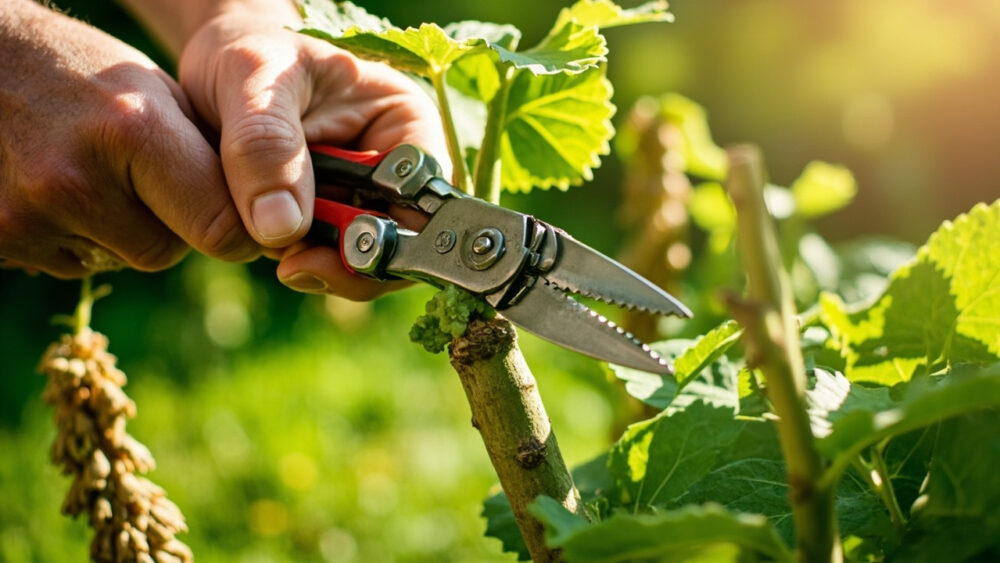
Cut the flowering stem just below the dried bloom, leaving the healthy leaves and stem below it intact. This is deadheading, not shaping, and it’s the lowest-risk cut you can make.
Step 3: Thin for airflow, not volume
Remove a few of the oldest, thickest stems at the base if the center of the shrub feels crowded or dark inside. This encourages new shoots without shrinking the whole plant.
Step 4: Shape lightly if needed
Cut wayward or overly long stems back to a healthy side bud or junction, taking off no more than about a quarter to a third of that stem’s length. Never shear the whole shrub into a ball or box shape, oakleaf hydrangea’s natural form is loose and mounding and it fights back against tight shaping for years.
Once you’ve made your cuts, the plant tells you fairly quickly whether you got it right.
What to Expect in the Weeks After Pruning
Within two to three weeks you should see new leaf growth pushing from just below your cuts. That is the sign the plant is responding normally and putting energy into new wood, not sulking.
If you assumed a stressed, droopy look right after pruning means you cut too much, that guess is usually wrong. A little wilting on the hottest days right after a prune is normal, especially if you removed larger stems. What actually signals a problem is no new growth at all after four to six weeks, or blackened, mushy stems, which points to disease or a stem that was already compromised.
You will not see this year’s flower buds change. Any pruning you did after bloom was aimed at next year, so patience is the whole game here.
That delayed payoff is exactly why the timing mistakes below are so costly.
The Mistakes That Cost You an Entire Season of Blooms
Every one of these mistakes is recoverable, the plant will not die, but you will lose flowers for a full year in most cases.
- Pruning in fall, winter, or early spring: this removes the flower buds that already formed on old wood, and there is no way to get that bloom back once the buds are gone.
- Shearing the whole shrub into a hedge shape: it destroys the natural arching form and forces the plant into years of awkward regrowth trying to recover its shape.
- Cutting everything back hard “to control size”: oakleaf hydrangea is genuinely a large shrub, often 4 to 8 feet tall and wide at maturity, and a hard cutback removes most of next year’s bloom wood along with the size.
- Removing too much old wood at once: stripping more than about a third of the mature stems in one session stresses the root system and slows the whole plant’s recovery.
- Confusing this with panicle or smooth hydrangea pruning rules: those bloom on new wood and take a hard late-winter prune fine, oakleaf blooms on old wood and cannot be treated the same way.
Get the timing and the wood type right and pruning an oakleaf hydrangea is genuinely low-risk work.
Oakleaf Hydrangeas at a Glance
- When to prune: right after flowers fade in mid to late summer, never in fall, winter, or spring for shape.
- Blooms on: old wood, meaning next year’s flower buds form on this year’s growth by late summer.
- How much to remove: no more than about a quarter to a third of any stem’s length, and no more than a third of total old wood in one season.
- Where to cut: just below spent blooms for deadheading, or back to a healthy bud or the base for shaping and thinning.
- Mature size: typically 4 to 8 feet tall and wide, so plan spacing and shape goals around that from the start.
- Dead wood exception: remove dead, damaged, or diseased stems any time of year, no need to wait.
- Recovery sign: new leaf growth near the cuts within two to three weeks means you pruned it right.
Prune right after bloom, cut lightly, and leave old wood alone the rest of the year.
That single habit is worth more than any fancy technique you’ll read elsewhere.