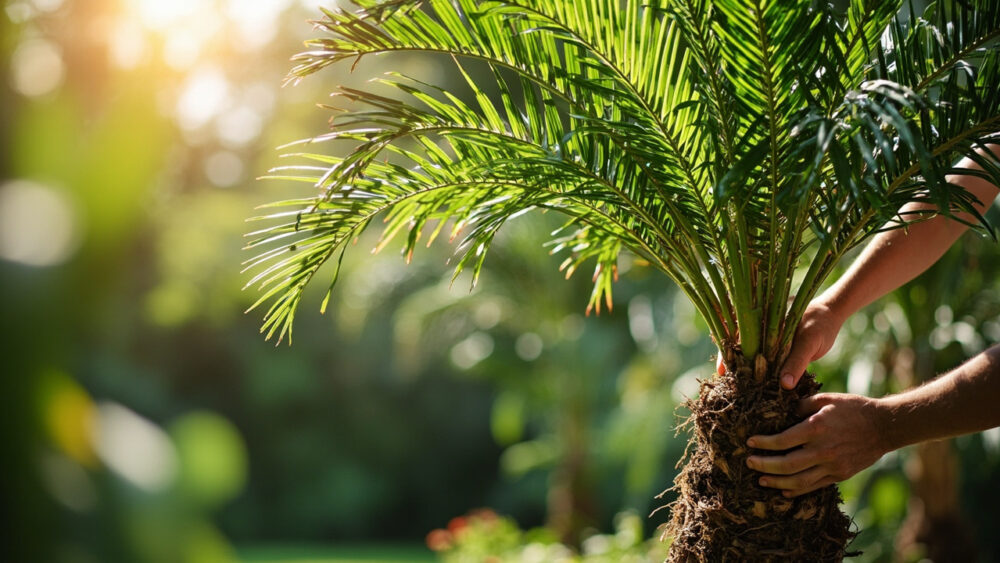
Sago palm care comes down to five things: bright light, infrequent but deep watering, fast-draining soil, warmth above 30°F, and patience, because this plant grows on its own timeline and no amount of fertilizer will rush it. Get those five right and a sago will sit happily in the same spot for decades. Get watering or drainage wrong and you will not know it until the crown is already rotting.
Most people kill a sago palm the same way: they treat it like a leafy houseplant that wants regular drinks and rich potting soil. It wants neither. There is also a sign almost everyone misreads, a flush of new fronds that actually signals stress rather than health, and an honest answer to the question you are probably already forming: why does mine only push out new growth once a year, or not at all this year.
Stick with me through the sections below and you will know exactly what your sago needs this week, not just in theory. The full Sago Palm at a Glance card is waiting at the bottom, saveable to your phone, so you have the numbers on hand next time you are standing in front of the plant wondering if today is a watering day.
Light, Placement, and Temperature
Sago palms want as much bright light as you can give them. Outdoorsfull sun to light afternoon shade is ideal in most climates; in the hottest desert zones, some afternoon shade prevents scorch on the fronds. Indoors, put it in your brightest window and expect leggier, sparser growth than an outdoor plant gets.
These are not frost-hardy plants in the way junipers or boxwoods are. They handle brief dips into the high 20s F without lasting damage, but sustained freezing temperatures will kill fronds and can kill the crown if it goes on long enough. They’re reliably hardy outdoors year-round in USDA zones 8b through 11.
If you garden colder than that, grow it in a container you can move into a garage or bright indoor spot before your first hard frost.
Placement decided, the next question is the one that trips up almost everyone: how often to water.
Watering: Less Than You Think, Checked the Right Way
Water a sago palm only when the top 2 to 3 inches of soil have gone dry, then water deeply until it runs from the drainage holes. In active summer growth that might mean every 7 to 10 days outdoors in warm climates. In winter, especially indoors, it can stretch to every 3 to 4 weeks.
If you assumed this plant likes consistent moisture like a fern, that guess is what rots the crown. Sagos are built like cycads that survive drought in the wild, with a fibrous trunk that stores water. Overwatering, not underwatering, is the single most common cause of death in this plant.
Check by feel, not by schedule. Push a finger into the soil at the pot’s edge; if it’s still damp past the first inch, wait. A sago that looks slightly dull or a little curled at the tips is more often thirsty for light than water, so don’t reach for the watering can as a reflex.
Get the water right and the soil underneath it needs to be doing its job too.
Soil, Drainage, and Feeding
Use a fast-draining mix, something like a cactus or palm blend, or regular potting soil cut with perlite or coarse sand at roughly one-third by volume. Heavy, water-retentive soil is the second big killer, right behind overwatering, and the two problems usually arrive together.
In the ground, sagos tolerate a wide range of soil types as long as water doesn’t pool around the base. If you have clay soil, plant on a slight mound or amend generously with grit before you plant.
Feed lightly during the growing season, spring through summer, with a balanced or palm-specific fertilizer at about half the label’s strength, applied every 6 to 8 weeks. Skip feeding entirely in fall and winter when growth has stopped.
Soil and food set the pace, but the calendar still asks a few things of you directly.
Pruning, Repotting, and Cleaning: What to Do and When
Prune only fronds that have gone fully yellow or brown. A frond that’s still partly green is still feeding the plant, and cutting it early slows growth and stresses the sago for no benefit. Use clean, sharp pruners and cut close to the trunk without nicking it.
Repot in springand only when roots are visibly crowded or circling the pot. Sagos actually prefer being slightly pot-bound and resent frequent disturbance. Step up one pot size at a time, never more, and expect the plant to sit still for a few weeks afterward while it settles.
Wipe dust off fronds every month or two with a damp cloth, both for appearance and because dust buildup can shelter early pest activity.
That pest point matters more than it sounds, because sagos have one insect problem that catches almost everyone off guard.
The Problems That Actually Show Up
The single biggest pest threat is sago palm scale (sometimes called cycad scale), tiny white or yellowish insects that colonize the undersides of fronds and can coat a plant in a flour-like layer if left unchecked. Catch it early: isolate the plant, prune off the worst-affected fronds, and treat remaining growth with horticultural oil or insecticidal soap, following the product label exactly on timing and reapplication.
Yellowing fronds usually mean one of three things: a manganese deficiency (frizzle top), which shows as stunted, frizzled new growth and calls for a manganese sulfate soil treatment. Overwatering leading to root or crown rot, which shows as soft, mushy trunk tissue near the soil line. Or simple old-age die-off of the lowest fronds, which is normal and needs no fix.
A word on toxicity: every part of the sago palm is toxic, and the seeds are especially dangerous, to both people and pets, particularly dogs, who are drawn to the seeds. Ingestion can cause vomiting, lethargy, and liver failure in animals. If you suspect a pet or child has eaten any part of this plant, contact a veterinarian or poison control immediately rather than waiting to see what happens.
Once you’ve ruled out these issues, the real question is what a healthy sago actually looks like day to day.
Signs Your Sago Is Actually Thriving
Here’s the answer to the question you were forming earlier: a healthy sago palm typically pushes one new ring, or flush, of fronds per year, sometimes only once every two years on older or slower plants. That is normal, not a failure on your part.
If you assumed a flush of new fronds always means things are going well, know that a flush triggered right after stress, like a repot or a cold snap, can actually pull hard on stored reserves and leave the plant weaker afterward. The better signal is steady, dark green, stiff fronds that hold their color through the season without a rushed, sudden growth spurt.
- New fronds emerge stiff and uniform in length, not stunted or curled.
- Trunk feels firm to the touch, not soft or spongy.
- Older fronds yellow gradually from the bottom up, not all at once.
- No white waxy buildup on frond undersides.
With those signs in mind, here’s everything worth keeping on hand for next time.
Sago Palm at a Glance
- Light: full sun to light afternoon shade outdoors, brightest window available indoors.
- Watering: deep soak only when the top 2 to 3 inches of soil are dry, roughly every 7 to 10 days in summer, every 3 to 4 weeks in winter.
- Soil: fast-draining cactus or palm mix, or potting soil cut with perlite or sand at about one-third by volume.
- Temperature: hardy outdoors year-round in USDA zones 8b through 11, brief dips into the high 20s F are tolerated, sustained freezing is not.
- Feeding: balanced or palm fertilizer at half strength every 6 to 8 weeks, spring through summer only.
- Growth pace: one flush of new fronds per year is normal, sometimes less on older plants.
- Toxicity: highly toxic to pets and people, especially the seeds, call a veterinarian immediately for any suspected ingestion.
If you remember one thing, remember this: water less than feels right and give it more light than feels necessary.
Everything else about sago palm care is just patience wearing a gardener’s clothes.