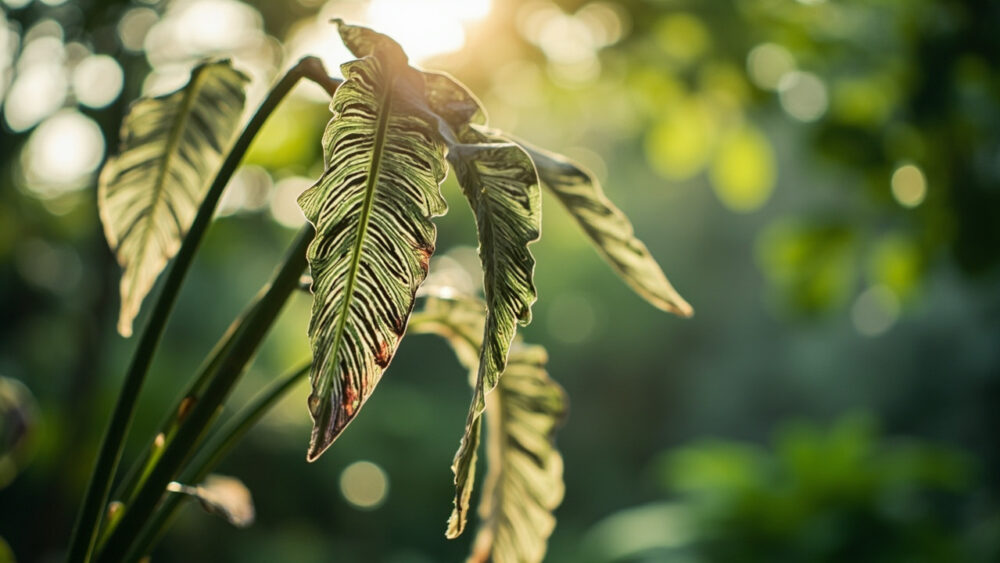
Peacock plant drooping is almost always underwatering or air that’s too dry, not overwatering like most people assume first. Calathea (technically Goeppertia now, but everyone still calls it Calathea) has thin leaves and shallow roots that wilt fast when the soil dries out or the humidity drops, and the fix is usually a thorough soak plus a real look at where you’ve got it sitting.
But that’s not the only cause, and guessing wrong here can cost you the plant. Root rot from soggy soil produces droop that looks nearly identical at first glance, and treating rot like a dry-plant problem by watering more is how healthy-looking peacock plants collapse in a week. The detail that tells the two apart is on the plant right now, not in your watering log, and I’ll show you exactly where to look.
Stick with me and you’ll know within two minutes which of the five real causes you’re dealing with, whether your plant is going to bounce back or not, and how to stop this from becoming a monthly event. There’s a full diagnosis checklist at the bottom you can run through right at the pot.
Most Likely Causes, Ranked
1. Underwatering or a soil that’s gone bone dry
Confirm it: stick a finger 2 inches into the soil. If it’s dry all the way down and the pot feels light for its size, this is your cause. Leaves often curl inward or roll like a cigar before they droop fully.
Fix it with a deep soak: water until it runs from the drainage holes, let it drink for 10 minutes, then dump the saucer. Calathea wants soil that stays evenly moist, never fully dry, never swampy.
Get this right and the leaves usually perk up within 12 to 24 hours.
2. Low humidity
Confirm it: check a humidity gauge or just think about your heating and AC. Peacock plants want 50% humidity or higher; most living rooms sit at 30 to 40%. Leaf edges often go crispy brown right alongside the droop.
Fix it with a pebble tray, a small humidifier nearby, or grouping it with other plants. Misting helps for minutes, not hours, so don’t rely on it alone.
If the air feels dry to your own skin, it feels worse to a Calathea leaf.
3. Overwatering and root rot
Confirm it: if the soil has been wet for days, or the pot has no drainage hole, slide the plant out and check the roots. Healthy roots are firm and pale tan to white. Rotten roots are brown, mushy, and smell sour.
Fix it by trimming away every rotten root with clean scissors, repotting into fresh, fast-draining soil, and watering only once the top 1 to 2 inches dry out going forward.
This is the cause most people miss because the symptom looks identical to thirst.
4. Cold drafts or temperature swings
Confirm it: think about where the pot sits. Near an AC vent, a drafty window, or an exterior door that opens often in winter, all count. Peacock plants sulk hard below 60°F and drooping shows up fast after a cold blast.
Fix it by moving the pot at least 3 feet from vents, cold glass, and doorways, and keep it in a spot that stays between 65 and 80°F.
A plant that droops right after you rearranged the room is telling you exactly what happened.
5. Too much direct sun
Confirm it: look for bleached, faded patches on the leaves facing the window, not just droop. Peacock plants come from rainforest understory and burn easily in direct afternoon sun.
Fix it by moving it to bright, indirect light, a few feet back from a south or west window, or behind a sheer curtain.
Sun stress and thirst stress often show up together, which is exactly why the next section matters.
6. Root-bound or exhausted soil
Confirm it: if it’s been over a year in the same pot and roots are circling out the drainage hole, the plant simply can’t hold enough water anymore between waterings.
Fix it by repotting up one pot size, in spring or summer when the plant is actively growing, using a light, peat-free mix that holds moisture without staying wet.
Old, compacted soil drains too fast or not at all, and neither version helps a Calathea.
How to Tell the Causes Apart
Where the droop starts is your best clue. Underwatering and low humidity affect the whole plant fairly evenly, older and newer leaves alike. Root rot usually starts with lower, older leaves going yellow and mushy-soft while new growth still looks okay, at least at first.
Cold drafts hit whichever leaves face the cold source, so the droop is lopsided, worse on one side of the plant. Sun damage shows bleached or faded color specifically on the sun-facing leaves, not just droop.
Soil feel settles most arguments. Dry and light means thirst or dry air. Wet, heavy, and sour-smelling means rot. There’s rarely a case where both are true at once.
Once you know where and how it started, the recovery conversation gets a lot more honest.
Will It Recover?
Underwatering and low humidity have the best odds. A thorough soak and better humidity usually bring leaves back within a day or two, and full recovery within a week is normal.
Cold drafts and sun stress recover well too, once the plant is moved. Damaged leaves themselves won’t heal, but new growth comes in fine.
Root rot is the honest exception. Caught early, with firm roots still outnumbering the mushy ones, trimming and repotting saves the plant more often than not. Caught late, with most of the root ball gone soft, cut your losses. At that point you’re better off taking a few healthy stem cuttings if any exist, rather than fighting for a root system that’s already gone.
Root-bound plants recover fully after repotting, usually within a few weeks of new growth.
Knowing the odds is one thing, avoiding a repeat is another.
How to Keep It From Happening Again
Water on a moisture check, not a schedule. Stick a finger in weekly and water when the top 1 to 2 inches feel dry, which might be every 5 days or every 12 depending on season and light.
Keep humidity above 50% permanently, not just when you remember. A small humidifier running near the plant solves this better than misting ever will.
Use a pot with drainage, always. No exceptions with this plant.
Keep it out of drafts and direct sun year-round, and repot every 12 to 18 months before roots get cramped.
Do these four things consistently and drooping becomes a rare event instead of a monthly scramble.
Diagnosis Checklist
- Check the soil 2 inches down: if bone dry, water deeply and expect recovery within 24 hours.
- If the soil is wet or soggy, slide the root ball out and inspect the roots for brown, mushy, sour-smelling tissue.
- If roots are rotten, trim them out, repot in fresh dry-draining soil, and cut back watering going forward.
- If roots are healthy and soil is dry, rule out humidity: check if the air is below 50%, and if so, add a pebble tray or humidifier.
- Look for lopsided droop: if one side is worse, check for a nearby draft, vent, or cold window.
- Look for bleached or faded patches: if present, move the plant out of direct sun.
- Check the pot for roots circling the drainage hole: if root-bound, plan a repot into the next pot size up.
- Note whether old leaves or new leaves drooped first: old leaves first points to rot, whole-plant droop points to thirst or dry air.
Run through that list once and you’ll know exactly which fix to make tonight.
Most peacock plants forgive a rough week, so long as you catch the right cause before you guess your way into a second problem.