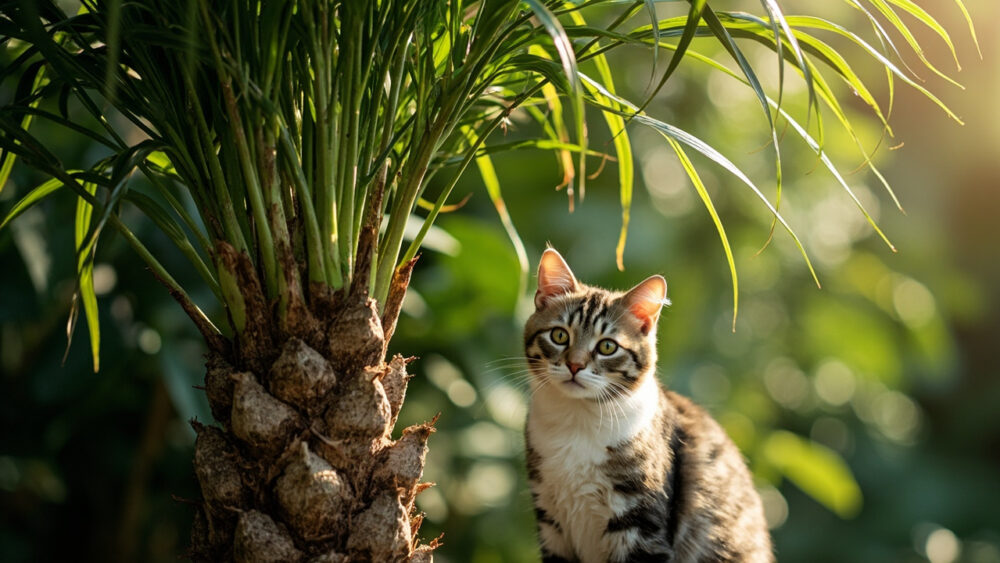
No, the ponytail palm (Beaucarnea recurvata) is not toxic to cats. It’s listed as non-toxic by the ASPCA, and it’s one of the few genuinely safe houseplants for homes with curious cats who like to chew on things. That’s the direct answer to is ponytail palm toxic to cats, and if that’s all you needed, you can breathe easy.
But “non-toxic” is not the same as “harmless in every scenario,” and that’s where most pet owners get tripped up. There’s a texture problem this plant has that mimics poisoning symptoms even though nothing toxic is involved. There’s also a soil and pot situation worth knowing about if your cat treats the base of the plant like a litter box.
Stick around for the quick-reference card at the bottom. It’s built to save or screenshot so you have the whole picture the next time this plant and your cat cross paths.
The Plain Answer: Ponytail Palm Is Cat-Safe
Despite the name, a ponytail palm isn’t a true palm at all. It’s actually a succulent related to agave, and it doesn’t carry the calcium oxalate crystals or cardiac glycosides that make so many common houseplants dangerous.
Every part of the plant, from the bulbous trunk to the long, grass-like leaves, is considered non-toxic to cats and dogs. You don’t need to worry about which part got nibbled.
That puts it in the same safe category as spider plants and Boston ferns, not in the risky category with lilies, sago palm, or pothos.
So why do some cat owners swear their cat acted sick after chewing on one? That’s the next thing to understand.
The Mistake People Make: Mechanical Irritation Isn’t Poisoning
If you assumed any reaction after chewing this plant means it’s toxic, that guess is understandable but wrong. The long, thin leaves have sharp, slightly fibrous edges, almost like coarse grass.
Cats that chew on them sometimes drool, gag, or vomit, not because of any toxin, but because the leaf fibers are irritating to swallow and can trigger a mechanical gag reflex.
It looks alarming in the moment. It’s usually resolved within an hour once the irritation passes and the leaf material is out of their system.
Knowing the difference between irritation and true poisoning is exactly why the signs section below matters.
Signs to Watch For After Any Exposure
Even with a non-toxic plant, it’s worth watching your cat for a bit after a chewing session, mainly to rule out irritation or an unrelated issue.
- Drooling or lip-licking right after chewing
- One or two episodes of vomiting, usually within an hour
- Mild gagging or pawing at the mouth
- Loss of interest in food for a few hours
Repeated vomiting, lethargy, diarrhea, or any symptom that lasts more than a few hours is no longer a simple “ate some plant fiber” situation, and deserves a proper look.
That’s the point where you stop watching and start calling.
What to Actually Do If Your Cat Ate It
For a quick nibble with mild drooling or one bout of vomiting, most cats are fine on their own within an hour or two.
If symptoms persist, worsen, or you’re simply unsure, call your veterinarian or an animal poison control line rather than waiting it out at home.
When you call, have a few details ready: roughly how much your cat ate, when it happened, and whether the plant was in soil that had any fertilizer, pesticide, or root treatment applied recently, since those additives are a separate risk from the plant itself.
Don’t give your cat anything at home, food, milk, or otherwise, to try to settle their stomach. Let the vet guide any next steps.
Once you’ve handled the immediate moment, it’s worth thinking about why the cat went for the plant in the first place.
The Litter Box Problem Nobody Warns You About
Ponytail palms are usually potted in loose, sandy, fast-draining soil, the kind that mimics their native semi-desert habitat.
That texture is basically an invitation for a cat looking for a place to dig or eliminate, especially in a household without enough litter boxes or with a box that isn’t kept clean.
The risk here isn’t the plant. It’s a cat ingesting soil, decorative rock, or fertilizer residue while digging around the base.
A layer of large decorative stones or a bit of foil pressed over the topsoil solves this without hurting the plant at all.
If you want more cat-safe greenery to round out the room, here’s where to look next.
Safer Look-Alikes and Companions to Grow Alongside It
Because ponytail palm is already safe, you don’t need a replacement. But if you like the look and want to build a whole cat-safe shelf or corner, a few companions fit well.
- Haworthia: a small, spiky-looking succulent that’s non-toxic and tolerates the same bright, dry conditions
- Spider plant: non-toxic, and cats often prefer chewing its grass-like leaves over anything else nearby, which can redirect the habit
- Parlor palm: a true palm, unlike ponytail palm, but also non-toxic and a good textural pairing
- Calathea: non-toxic, adds broad leaf contrast against the ponytail palm’s spiky top
Avoid pairing it with sago palm, which despite the similar name is one of the most dangerous houseplants for pets and is not related to Beaucarnea at all.
With the safe pairings sorted, here’s the full picture in one place.
Ponytail Palm: Quick Reference
- Toxic to cats: no, ponytail palm is considered non-toxic to cats and dogs by the ASPCA
- Parts of concern: none are toxic, but the fibrous leaves can cause mechanical irritation if chewed
- Common signs after chewing: drooling, gagging, or one to two bouts of vomiting from leaf texture, not poisoning
- When to call the vet: if vomiting repeats, symptoms last more than a few hours, or your cat also ate fertilizer or treated soil
- Hidden risk: the sandy, loose potting soil can attract cats looking to dig or eliminate
- Easy fix: top the soil with decorative rock or foil to discourage digging without harming the plant
- Not the same plant: sago palm has a similar name but is highly toxic and unrelated to ponytail palm
Ponytail palm is one of the rare plants you can stop worrying about.
Keep the soil covered, watch for the fiber-related gag reflex, and call your vet whenever something feels off.