How to grow lemons starts with getting the timing and the pot (or planting hole) right: lemons go in the ground or a container once nighttime temperatures stay reliably above 50°F, they need at least 8 hours of direct sun, and they will not tolerate soggy roots or hard freezes, period. Outside of USDA zones 9 through 11, that means most people are growing lemons in containers they can move indoors for winter, not in the yard year round. Get the siting and watering rhythm right and a healthy lemon tree can start fruiting within 2 to 3 years and keep producing for decades.
Most first attempts fail for one of three boring reasons: overwatering, a pot with nowhere for water to go, or a tree left outside through a cold snap it can’t handle. None of that is exotic. It’s also completely avoidable once you know what to look for.
There’s a sign on the leaves that almost everyone misreads as a watering problem when it’s actually the opposite, and a bloom-drop issue that panics new growers for no reason. I’ll cover both, plus the honest answer to how long you’re really waiting for fruit. Stick around, because the Lemons at a Glance card at the very bottom is the one you’ll want to save to your phone before you touch a shovel or a bag of potting mix.
When to Plant Lemons
Plant lemons after all frost danger has passed and soil temperature sits at 55°F or warmer, which in most climates lands in mid to late spring. In true citrus climates like coastal or inland Southern California, Florida, or the Gulf Coast, you can also plant in early fall so roots establish before summer heat hits.
Cold is the hard limit. Lemon trees start showing damage around 32°F and can die outright in a hard freeze much below that. If you’re outside zones 9 to 11, plan on a container from day one, not an in-ground tree you dig up later.
Container-grown lemons can technically go in any time you can bring them indoors before frost, which gives you more flexibility than in-ground planting.
Next comes the part that decides almost everything else: where you actually put the thing.
Choosing the Spot and Preparing the Soil
Lemons want full sun, 8 hours minimum, and a spot shielded from harsh wind. A south-facing wall or patio corner that holds a little warmth works well in marginal climates.
Soil drainage matters more than soil richness. Lemons want a slightly acidic, well-draining mix, roughly pH 6.0 to 7.0, and they will sulk or rot in heavy clay that holds water.
In the ground, work several inches of compost into the top 12 inches of soil and confirm drainage by digging a hole, filling it with water, and watching it drain within a few hours. If it’s still full the next morning, you need a raised bed or a container instead.
In containers, use a citrus or well-draining potting mix, never garden soil straight from the yard, and always choose a pot with drainage holes. A 15 to 20 gallon container is the right starting size for a young tree.
Get this part right and the actual planting is almost anticlimactic.
Planting Lemons Step by Step
1. Time it to the temperature, not the calendar
Wait until night temperatures hold above 50°F and soil feels warm a few inches down, not just the surface.
2. Dig the hole or fill the pot
Dig a hole twice as wide as the root ball and just as deep, so the tree sits at the same soil line it was at in the nursery pot. Planting too deep is one of the fastest ways to stall a young tree.
3. Set the tree and backfill
Loosen circling roots gently, set the tree in place, and backfill with native soil mixed with compost, tamping lightly to remove big air pockets without compacting the soil hard.
4. Space for the mature size
Give in-ground trees 10 to 15 feet of space from structures and other trees, since a mature dwarf lemon still reaches 8 to 10 feet and standard trees go taller.
5. Water in immediately
Soak thoroughly right after planting to settle the soil around the roots and knock out remaining air pockets.
Once it’s in the ground or the pot, the tree’s fate comes down to what you do with a hose over the following months.
Watering and Feeding Through the Season
Here’s the sign everyone misreads: yellowing leaves usually get blamed on underwatering, so people water more, which is exactly backwards. Yellow leaves with a green vein pattern, or leaves that drop while the soil is still damp, almost always point to overwatering and poor drainage, not thirst.
Water when the top 2 to 3 inches of soil are dry to the touch, then water deeply and let it drain completely. In-ground trees typically want a deep soak once or twice a week in summer; potted trees dry out faster and may need water every 2 to 4 days in hot weather.
Feed with a citrus-specific fertilizer, which is higher in nitrogen and includes micronutrients like iron, zinc, and manganese that lemons burn through fast. Apply on the schedule the product label gives you, typically every 6 to 8 weeks during the active growing season, and taper off in fall so the tree isn’t pushing tender new growth right before cool weather.
The other thing nobody warns you about is what happens right after all those fragrant flowers show up.
Problems Most Likely to Strike
New growers often panic when a tree blooms heavily and then drops a good portion of those flowers and small fruit a few weeks later. That’s not a disease and it’s not a mistake you made.
It’s normal fruit drop. A lemon tree sets far more blossoms than it can actually support to maturity and self-thins. Only a small percentage of flowers need to become fruit for a good harvest.
The pests to actually watch for are aphids, scale, and citrus leafminer, which show up as sticky residue, distorted new leaves, or squiggly trails in foliage. Treat with insecticidal soap or a horticultural oil labeled for citrus, following the product label exactly.
Root rot from overwatering and poor drainage remains the number one killer of home lemon trees, showing up as wilting despite wet soil and a general decline that looks confusingly like drought stress. If you catch soggy soil early and correct drainage, most trees recover; if roots have gone soft and black for a while, the prognosis gets much worse.
Assuming the tree survives its first year and settles in, the real question becomes when you actually get to eat something.
When and How to Harvest Lemons
Lemons take 6 to 9 months to mature from flower to ripe fruit, and a tree grown from a nursery start typically produces its first real harvest in year 2 to 3. Fruit does not ripen further once picked, so the tree itself is your storage container.
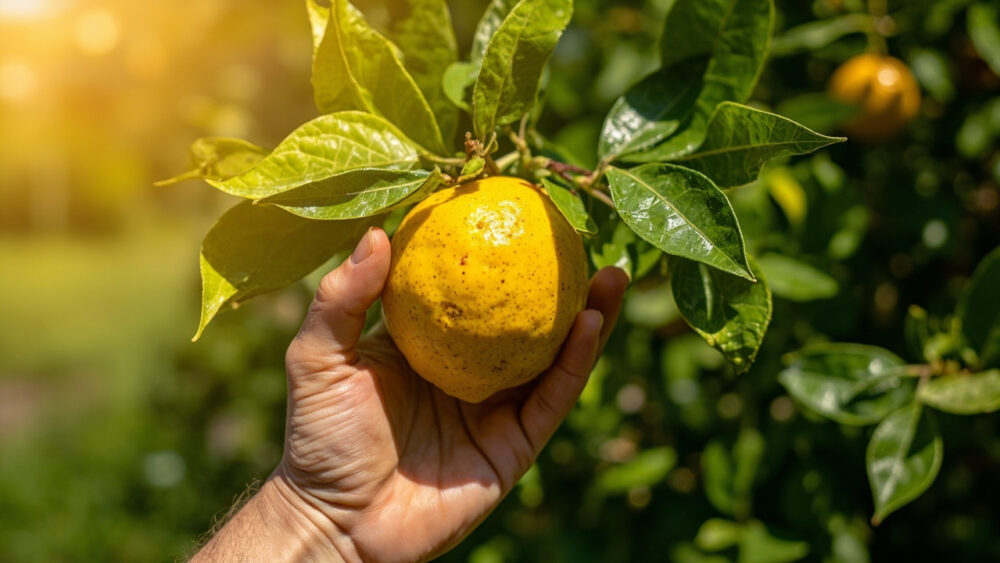
Color is a decent guide but not the final word. Wait until fruit turns fully yellow with no green remaining, then check by feel: ripe lemons give slightly under gentle pressure and feel heavy for their size.
Twist or clip the fruit off rather than yanking it, which can tear the stem and damage the branch. Ripe lemons will hold on the tree for weeks without dropping, so there’s no rush once they hit color.
Everything above boils down to a handful of numbers worth keeping on hand.
Lemons at a Glance
- When to plant: after frost danger passes and soil hits 55°F or warmer, spring in most climates, or early fall in true citrus zones.
- Sun and spot: full sun, 8 hours minimum, sheltered from cold wind and hard freezes.
- Soil: well-draining, slightly acidic, pH 6.0 to 7.0, never heavy clay that holds standing water.
- Spacing and depth: plant at the same depth as the nursery pot, 10 to 15 feet from structures or other trees in-ground.
- Water: deep soak when the top 2 to 3 inches of soil are dry, never keep it constantly wet.
- Feeding: citrus-specific fertilizer every 6 to 8 weeks during the growing season, tapered off in fall.
- Harvest: 6 to 9 months from bloom to ripe fruit, full yellow color and slight give when gently squeezed.
If you remember one thing, remember drainage: more lemon trees are killed by wet feet than by cold or neglect.
Get the water right and the rest of this is mostly patience.