How to grow zucchini comes down to three things: wait until the soil is genuinely warm, give each plant far more room than feels reasonable, and check the fruit every single day once it starts producing. Do those three and you’ll be giving zucchini away by midsummer. Skip any one of them and you’ll either watch seeds rot in cold ground or find a baseball bat where a squash should have been.
Most people who fail with zucchini fail before they even plant, by rushing the calendar. Others fail after things look perfect, when a plant loaded with yellow flowers never sets a single fruit, which is not the disease everyone assumes it is. And almost everyone, even people who’ve grown zucchini for years, misses the harvest window at least once and ends up with something better suited to a boat than a dinner plate.
I’ll walk through all three, plus the feeding schedule and the pest that causes more midseason collapse than anything else. Save-able details, spacing, depth, and the harvest signs at a glance, are waiting at the bottom.
When to Plant Zucchini
Zucchini is a heat lover with zero frost tolerance, so timing is anchored to soil temperature, not the calendar. Wait until soil temperature is reliably at or above 60°F (16°C), which usually lands two to three weeks after your last spring frost date. Cold, wet soil rots seeds before they sprout and stunts transplants even if they survive.
If you’re in a short-season climate, you can start seeds indoors three to four weeks before that outdoor date, in individual pots, since zucchini hates having its roots disturbed. Most gardeners in zones 5 through 9 do fine direct-seeding once the soil warms.
You can also make a second planting in mid to late summer, about eight to ten weeks before your first fall frost, to dodge the pests and mildew that build up on older plants.
Getting the timing right is only half the job, the ground it goes into matters just as much.
Choosing the Spot and Prepping the Soil
Zucchini wants full sun, at least six to eight hours a day, and rich, well-drained soil. Work in two to three inches of compost or aged manure before planting; this crop is a heavy feeder and thin soil shows up fast as pale leaves and small fruit.
Raised mounds or hills help in heavier clay soils because they warm faster in spring and shed excess water, which zucchini’s shallow roots do not tolerate sitting in. In sandy or loose soil, flat rows work fine.
Aim for a slightly acidic to neutral pH, roughly 6.0 to 6.8. If your soil is compacted or has never grown vegetables before, this is the season to fix that, not to skip it and hope.
Good soil sets the stage, but how you actually get the seed or transplant in the ground is where a lot of people undersize everything.
Planting Step by Step
- Depth: sow seeds about 1 inch deep directly in the garden.
- Spacing: give each plant 24 to 36 inches in every direction; a single zucchini plant can sprawl three to four feet wide.
- Seeds per spot: plant two to three seeds per hole and thin to the strongest one seedling once they have their first true leaves.
- Transplants: set them at the same depth they were growing in the pot, and water in immediately.
- Rows: if planting multiple hills, space hill centers about three feet apart so the leaves don’t smother each other by July.
That spacing looks excessive on a bare April bed, and that’s exactly the mistake: crowd them now and you’ll be fighting powdery mildew and rot from shaded, airless leaves in July.
Once it’s in the ground and spaced honestly, the plant’s next demands are water and food.
Watering and Feeding Through the Season
Zucchini wants **consistent moisture, about 1 to 1.5 inches of water a week**, delivered at the base rather than overhead. Wet leaves sitting overnight are an invitation to fungal disease. Check the soil an inch or two down. If it’s dry there, water deeply rather than giving it a light daily sprinkle.
Mulch heavilytwo to three inches of straw or shredded leaves, to hold moisture and keep soil from splashing onto the leaves when it rains.
Feed at planting with compost, then side-dress with a balanced or slightly nitrogen-lower fertilizer once fruiting starts, since too much nitrogen late pushes leaves at the expense of fruit. A liquid feed every three to four weeks through summer keeps production steady.
Fed and watered right, most plants explode with blossoms, which is exactly where the next problem shows up.
Why the Flowers Drop and the Fruit Won’t Set
If you assumed a flower-covered plant with no fruit means disease or bad luck, that’s the guess almost everyone makes, and it’s usually wrong. Zucchini produces separate male and female flowers, and the first flush is often mostly male, which never set fruit no matter what you do.
The real fix, once female flowers appear (look for a small bulb at the base of the flower), is pollination. Bees do this naturally, but cool, rainy, or bee-scarce stretches leave female flowers unfertilized and they yellow and drop.
Hand-pollinate if you’re worried: take a male flower, strip the petals, and dab the pollen-covered center directly onto the center of a female flower in the morning when both are open.
Once fruit is actually setting, the plant faces real threats that can take it down fast.
Pests and Problems That End a Zucchini Season Early
The single biggest season-ender is the squash vine borera moth larva that tunnels into the stem base and causes a healthy-looking plant to wilt and collapse within days. Check the base of the stem for small holes with a sawdust-like frass. There’s no cure once it’s inside, so prevention (row covers until flowering, or checking stems weekly) matters more than treatment.
Powdery mildewa white dusty coating on leaves, shows up in humid weather and on crowded plants. Good spacing and watering the soil instead of the leaves are your best defenses. Fungicidal treatments exist, but always follow the product label exactly rather than guessing at rates.
Squash bugs and cucumber beetles feed on leaves and can spread disease. Check under leaves for the bugs’ bronze egg clusters and squash them by hand early in the season before populations build.
Get past these threats and you’re on the good part, the daily harvest check that decides whether dinner is great or ends up as filler.
When and How to Harvest Zucchini
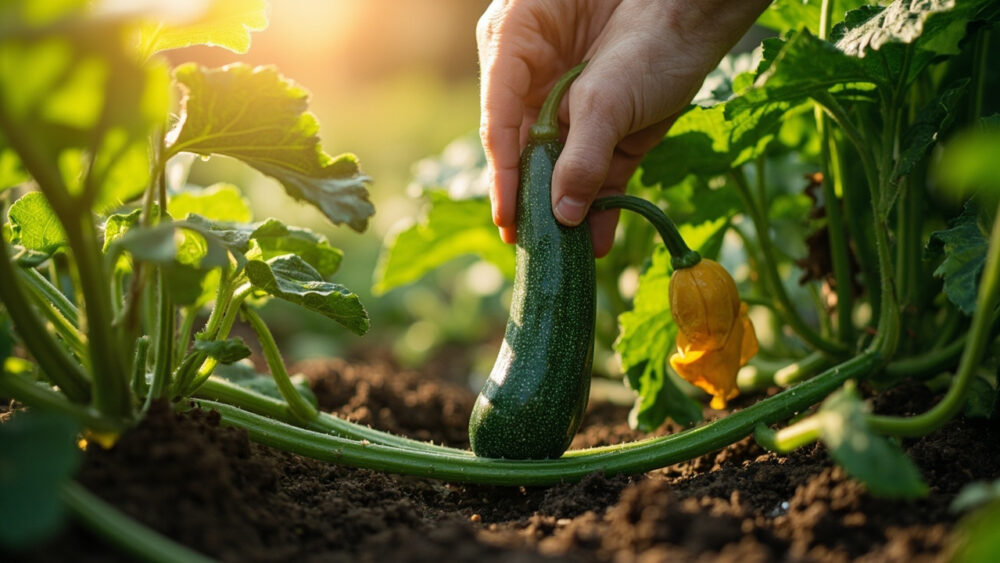
Zucchini is ready roughly 45 to 55 days from seed, and once it starts, it does not slow down. Pick fruit at 6 to 8 inches longwhen the skin is still glossy and easily pierced with a fingernail. Anything left longer than that turns tough, seedy, and watery fast.
The mistake almost everyone makes at least once is checking every few days instead of every day. In warm weather a zucchini can go from perfect to oversized in 48 hours, and one missed baseball-bat squash left on the vine will actually slow down new fruit production.
Cut the fruit with a sharp knife or pruners, leaving an inch of stem attached, rather than twisting it off, which can damage the plant.
Keep harvesting through the season and a single healthy plant will outproduce what most households can eat, which brings us to everything worth pinning to your phone before you head back out to the garden.
Zucchini at a Glance
- When to plant: once soil hits 60°F or warmer, usually two to three weeks after your last frost, with an optional second planting eight to ten weeks before first fall frost.
- Depth and spacing: sow 1 inch deep, thin to one plant per spot, and space plants 24 to 36 inches apart.
- Sun and soil: full sun, six to eight hours minimum, rich well-drained soil with two to three inches of compost worked in, pH 6.0 to 6.8.
- Water: about 1 to 1.5 inches a week at the base, soil kept moist an inch or two down, mulched heavily.
- Fruit set: early male-only flowers are normal. Hand-pollinate female flowers (with the small bulb at the base) if fruit isn’t forming.
- Watch for: squash vine borer at the stem base, powdery mildew on crowded or overhead-watered plants, squash bugs under leaves.
- Harvest: 45 to 55 days from seed, pick at 6 to 8 inches long, check plants daily once fruiting starts.
Space it wide, water it deep, and check it every day once the flowers appear. That single daily habit is the difference between a good zucchini season and a wasted one.