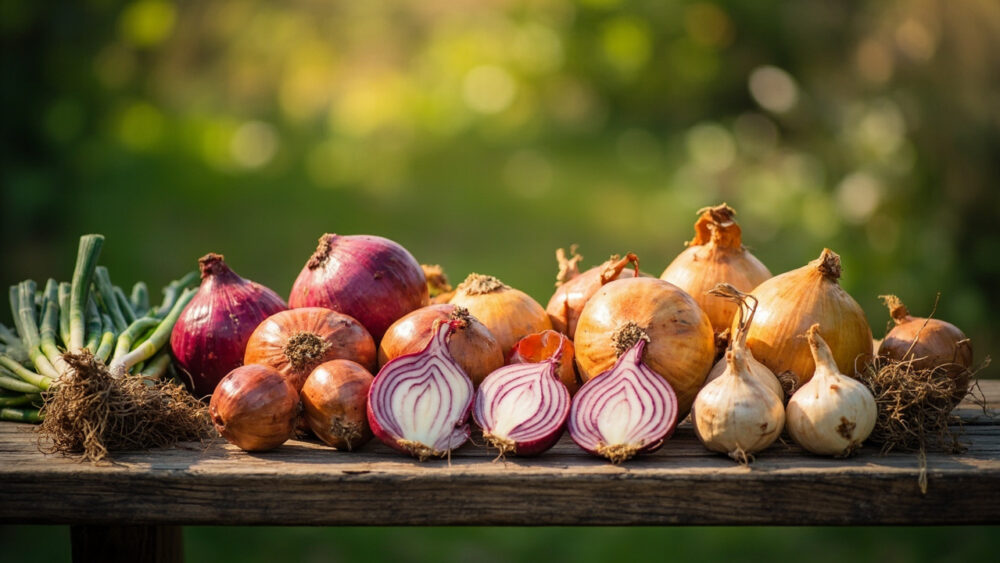
The one distinction that narrows down onion varieties faster than anything else is day length. Onions decide when to form bulbs based on how many hours of daylight they get, and picking a short-day type in a northern garden (or a long-day type in the Deep South) is the single most common reason people end up with green tops and no bulb. Sort out that one fact first, and this entire list gets a lot easier to shop from.
Most people grab the classic yellow storage onion because it is what they always buy at the store, without realizing there are sweeter, faster, or far better-keeping options sitting one shelf over at the nursery. Meanwhile experienced growers quietly load up on a scrappy little bulb most beginners walk right past. Number 13 on this list is the one gardeners consistently misjudge, usually planting it in the wrong season entirely.
Stick around for the last few entries and the simple method for choosing the right onion for your yard, both are waiting at the bottom of this list.
Long-Day Onions (For Northern Gardens, Zones 3-6)
These need 14 to 16 hours of summer daylight to bulb properly, which makes them the right call north of about zone 6.
1. Yellow Sweet Spanish
The default storage onion most gardeners already know, with a mild yellow bulb that grows large, 4 to 5 inches across, and stores reasonably well for a few months in a cool, dry space. It is a workhorse, not exciting, but reliable in short-season climates.
2. Walla Walla
The sweet one people plant for the wrong reasonexpecting it to keep like a storage onion when it is really meant to be eaten fresh within a few weeks of harvest. Huge, juicy, and mild, but it turns soft in storage fast, so grow it to eat, not to save.
3. Ailsa Craig
The show-off bulbcapable of reaching softball size or bigger under good conditions, with a mild flavor that suits slicing raw for sandwiches and burgers. It needs full sun and rich, loose soil to bulk up, and it does not store especially well.
4. Redwing
A red long-day onion with real staying powerholding its color and firmness in storage far longer than most red varieties. Flavor is sharper than the sweet types, which is exactly what makes it good for cooking down without disappearing.
Southern gardeners need the opposite day-length strategy entirely, and that is where this list heads next.
Short-Day Onions (For Southern Gardens, Zones 7-10)
These bulb up on just 10 to 12 hours of daylight, so they are typically planted in fall and harvested in late spring in mild-winter regions.
5. Texas Grano 1015Y
The sweet onion behind most grocery store bags labeled Texas sweet, with a mild flavor and flattened round shape. It is fast, often ready in around 110 days from transplant, but it is a poor keeper and should be used within a couple months of harvest.
6. Georgia Southern (Yellow Creole)
The underrated one experienced Southern gardeners quietly prefer over the sweeter, showier types. It has a stronger, more traditional onion bite and actually stores decently for a short-day variety, which is rare in this group.
7. Red Creole
A pungent, hard-fleshed red that holds up in storage better than most short-day onions, with a sharper bite that mellows nicely when cooked. It is the practical choice for anyone in the Deep South who wants a red onion that lasts past the first month.
Between those two extremes sits a middle ground a lot of gardeners do not realize exists.
Day-Neutral (Intermediate) Onions
These tolerate a wider daylight range, roughly 12 to 14 hours, which makes them the flexible pick for gardeners in the middle latitudes, zones 5-7, or anyone unsure which camp they fall into.
8. Candy
The forgiving one for uncertain climatesbulbing reliably across a broad range of day lengths and producing a large, mild, sweet onion. It is a solid first onion for a gardener who is not yet sure whether they are technically short-day or long-day territory.
9. Red Amposta
A day-neutral red with genuine sweetnessmilder than most reds and good raw in salads or salsas. It grows medium to large and adapts well whether started from seed in late winter or set out as transplants.
All three of those groups cover fresh eating, but storage life is its own separate question worth its own category.
Storage Onions (Built to Last Months, Not Weeks)
If the goal is a braid hanging in the pantry come winter, flavor sharpness and thick skin matter more than sweetness.
10. Copra
The gardener’s storage standarda long-day yellow onion with a pungent flavor and thin but tough skin that lets it keep for eight months or longer in a cool, dark, ventilated space. It is not the onion for eating raw on a burger, but it is the one still solid in the basket in March.
11. Patterson
A newer long-day storage type bred specifically for keeping quality, often outlasting Copra by a month or two under the same conditions. Skin is thick and dry, which is exactly the trait that keeps rot out during long storage.
12. Rossa di Milano
A firm, assertive Italian red that stores noticeably longer than sweeter red varieties thanks to its dense flesh and strong flavor. It is the red onion to grow if you actually want red onions on hand at Thanksgiving, not just in August.
Storage handles the big bulbs, but there is a whole different category built around small size on purpose.
Bunching, Pearl, and Specialty Types
Not every onion is grown to bulb large, and this is where the most misjudged entry on the whole list shows up.
13. Egyptian Walking Onion
The perennial oddball most people plant at the wrong time and then give up on. It does not grow like a normal annual onion at all: it produces small bulbils on top of the stalk that literally topple over and “walk” to a new spot, and it is planted in fall, not spring, since it needs a cold period to perform. Once established in a corner of the garden it comes back for years with almost no care, but planted in spring like a regular onion set it sulks and disappoints, which is exactly why so many gardeners write it off unfairly.
14. Evergreen White Bunching (Scallion Type)
A true bunching onion that never really forms a bulb at all, just a long white stalk and hollow green top, ready to harvest in as little as 60 days. It tolerates crowding, regrows after cutting in some conditions, and is the easiest onion-family crop for a small raised bed or container.
15. White Pearl (Pickling Onion)
A small, fast, thin-skinned onion grown specifically for pickling whole, harvested young at around 1 inch across rather than left to bulk up. Plant it thick, about 2 inches apart, since crowding is actually what keeps the bulbs small and uniform.
Fifteen varieties down, and now the part that actually tells you which ones belong in your own soil.
How to Choose the Right One
- Check your latitude first: south of roughly zone 7, go short-day; north of zone 6, go long-day; in between, pick day-neutral.
- Match your climate’s season length: short, cool summers favor faster bulbers like Texas Grano or Candy over slow giants like Ailsa Craig.
- Decide fresh-eating versus storage before you shop: sweet onions like Walla Walla rot fast in storage, while Copra and Patterson are built for months in a basket.
- Pick your format: bulbing onion for cooking and storage, bunching or scallion type for quick fresh use, pearl type for pickling.
- Be honest about care appetite: most onions want full sun, consistent moisture, and weed-free soil since they hate competition. The Egyptian walking onion is the one exception that thrives on neglect once it is settled in fall.
- When in doubt, split the bed: grow one storage type and one fresh-eating type so you are never stuck with a hundred onions that all go soft in the same month.
Pick the day length that matches your latitude, then pick the flavor and storage life that match your kitchen, and the right onion practically chooses itself.