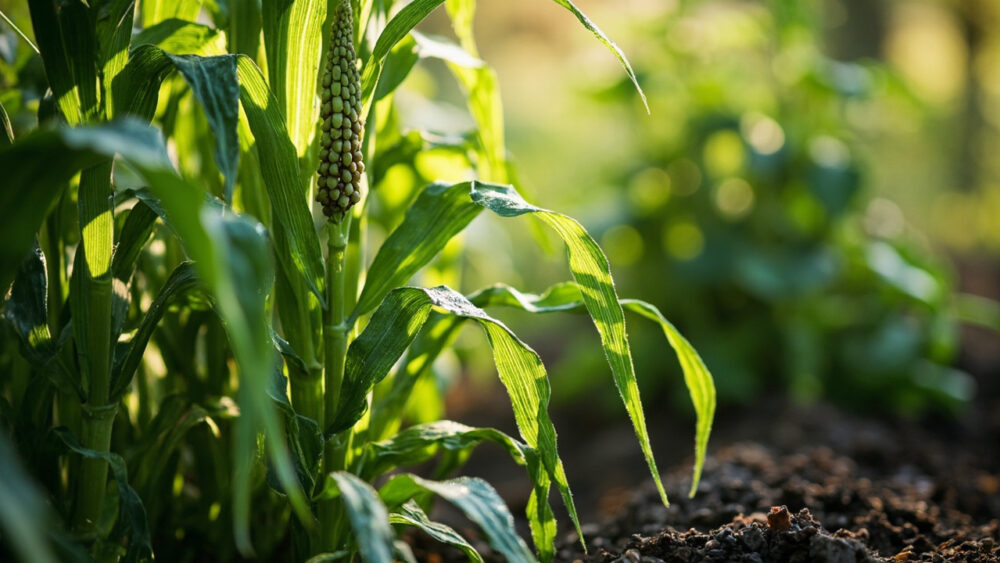
The best companion plants for corn are pole beans, winter squash, and pumpkins, the classic Three Sisters trio, plus a supporting cast of dill, sunflowers, and cucumbers planted a few feet off. Stay away from tomatoes and anything in the nightshade family, and skip fennel entirely. Corn is a heavy nitrogen feeder and a poor competitor for light at ground level, so its companions need to either fix nitrogen, cover the soil, or stay out of its root zone.
Most people who try the Three Sisters method mess up one specific step in the timing, and it is not the part they worry about. There is also a widely repeated companion pairing that sounds great on paper and does almost nothing in real gardens, and you will see it in half the planting charts online.
Stick with this to the end and you will get the full layout, the real mistakes, and a save-able Corn at a Glance card at the bottom with spacing, depth, and timing in one place.
The Three Sisters, Done Correctly
Pole Beans
Beans fix nitrogen in the soil through bacteria on their roots, which feeds the corn’s heavy appetite without extra fertilizer. They also climb the cornstalks instead of needing a trellis, which saves bed space. The catch: beans need something to climb, and corn seedlings are too short and floppy at planting time to support them.
That timing gap is the mistake almost everyone makes next.
Winter Squash or Pumpkins
Squash sprawls low and wide, shading the soil surface so weeds can’t establish and moisture doesn’t evaporate as fast. Its prickly leaves and vines also make the bed less inviting to raccoons, which is the single biggest predator problem in a home corn patch. Squash asks for almost nothing from the corn in return.
That raccoon detail matters more than most gardeners realize, and it comes back later.
The Real Timing Trick
Plant corn first, when soil hits 60°F or warmer, about 1 to 2 inches deep, in blocks rather than single rows. Wait 2 to 3 weeks, until the corn is 4 to 6 inches tall, before planting beans at its base. Squash goes in around the same time as the beans, or even a week later, spaced 24 to 36 inches from the corn.
Plant all three on the same day, the guessable move, and the beans strangle young cornstalks before they get a chance to establish.
Other Companions Worth the Space
Dill and Cilantro
Both bolt into flower quickly in warm weather, and those flowers draw in parasitic wasps and hoverflies that hunt corn earworm and armyworm eggs. Let a few plants go to flower on purpose instead of pinching them back. Tuck them along the edges of the corn block rather than inside it, since they don’t need the same water corn does.
Sunflowers
Sunflowers pull in pollinators and can act as a decoy for birds that would otherwise peck at ripening ears. Plant them on the windward side of the block, spaced at least 18 inches from the nearest cornstalk so their deep taproots aren’t competing directly with corn’s shallower, wide-spreading roots.
Birds are a real threat to ripening ears, and sunflowers only solve part of that problem.
Cucumbers and Melons
Like squash, these sprawl and shade the soil, cutting weed pressure and keeping the ground cooler and more evenly moist through hot stretches. Give them their own 3-foot band outside the corn block rather than weaving them through it. Corn’s dense root mat at the surface will out-compete a cucumber for water if they’re crowded together.
Now for the plants that undo all of this if they end up in the same bed.
What to Never Plant Near Corn
Tomatoes and Other Nightshades
Tomatoes and corn share a pest, the corn earworm, which is the same insect as the tomato fruitworm. Planting them together concentrates the pest instead of dividing its attention. Corn also casts heavy shade by midsummer, and tomatoes need full sun to ripen well and stay ahead of blight.
Fennel
Fennel releases compounds from its roots that suppress the growth of many nearby vegetables, corn included. It is one of the few plants in the garden with a genuinely documented allelopathic effect rather than just a folk reputation. Keep it in its own bed, away from almost everything.
Wheat and Other Grasses
Corn is a grass itself, and planting it near wheat, rye, or ornamental grasses puts heavy feeders with identical nutrient needs in direct competition for the same resources at the same soil depth. You will get weaker stalks and smaller ears from both crops. It is a subtler mistake than tomatoes, but it costs you the same way.
Layout solves most of these conflicts before they start.
Laying Out the Bed So It Actually Works
Corn needs to be planted in a block, at minimum a 4 by 4 grid, not a single long row. Corn is wind-pollinated, and pollen needs to drift from plant to plant across short distances; a single row often pollinates poorly and leaves ears with gaps in the kernels. Space plants 8 to 12 inches apart within rows, with rows 30 to 36 inches apart.
Build outward from that block. Beans go at the base of interior and edge stalks once corn is ankle-high. Squash and cucumbers ring the outside on the south or west side, where they get sun without shading the corn. Dill, cilantro, and sunflowers line the perimeter, not the interior, so they don’t compete for root space.
Good layout is really pest and light management wearing a different name.
The Companion-Planting Myths That Don’t Hold Up
Marigolds around corn are supposed to repel earworm moths, and this is the pairing you’ll see repeated everywhere. In practice, marigolds mainly suppress certain soil nematodes over a full season of dense planting, not flying moths overnight. They’re not harmful next to corn, just oversold for this specific job.
The other myth is that companion planting alone can replace fertility. It can’t. Beans fix a real but modest amount of nitrogen, nowhere near what a full corn crop pulls from the soil over a season. Corn is still a heavy feeder that wants compost or a nitrogen-rich amendment worked in at planting and again when it’s knee-high.
Companion planting earns its keep in pest pressure, shade, and soil cover, not in replacing your fertilizer bag entirely.
Corn at a Glance
- When to plant: after soil reaches 60°F or warmer, usually 1 to 2 weeks after your last frost date.
- Depth and spacing: seeds 1 to 2 inches deep, plants 8 to 12 inches apart, rows 30 to 36 inches apart, in blocks of at least 4 by 4 for good pollination.
- Best companions: pole beans (added 2 to 3 weeks after corn emerges), winter squash or pumpkins, dill, cilantro, sunflowers, cucumbers along the edges.
- Never plant nearby: tomatoes and other nightshades, fennel, wheat or other grass crops.
- Feeding: compost or a nitrogen-rich amendment at planting, then again once stalks are knee-high.
- Watering: about 1 to 1.5 inches per week, more during silking and ear fill, when soil an inch down feels dry.
- Pollination check: plant in blocks, not single rows, so pollen drifts between plants instead of dropping mostly to the ground.
Get the timing between corn and beans right and the rest of this layout mostly takes care of itself.
Keep the nightshades and fennel out, and you’ve already dodged the two mistakes that cost most gardeners their corn crop.