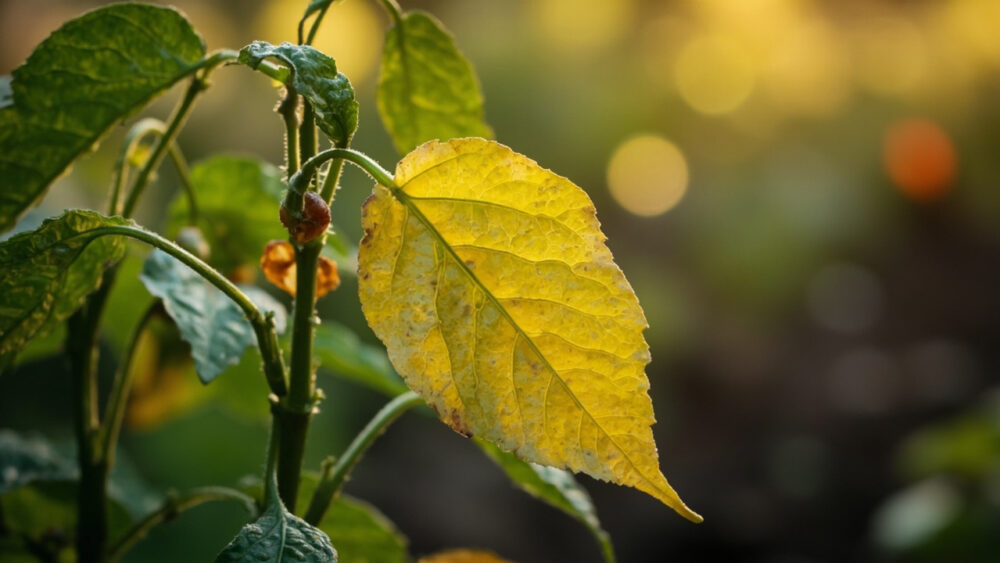
The most common cause of yellow pepper leaves is overwatering or slow-draining soil, which suffocates roots so they can’t move nitrogen up to the leaves. The fix is simple to say and easy to mess up: let the top 2 inches of soil dry out between waterings, and make sure water actually drains through instead of pooling. But that’s just the top guess, and it’s wrong often enough that you shouldn’t act on it blindly.
Most people see yellow leaves on peppers and reach straight for the fertilizer bag. That’s usually the wrong move, and in a lot of cases it makes things worse. The real cause could be root rot, a nitrogen shortage that fertilizer actually would fix, transplant shock, cold soil, or a couple of things that have nothing to do with feeding the plant at all.
Here’s what actually tells you which one you’ve got: where the yellowing started, whether it’s the old leaves or the new growth, and whether it’s the whole leaf or just the veins staying green. Get those three details straight and the diagnosis practically writes itself.
Stick with me through the causes below, and skip to the bottom when you’re ready. There’s a two-minute diagnosis checklist waiting there that you can run right at the plant.
Most Likely Causes, Ranked
1. Overwatering or Poor Drainage
Confirm it: push a finger 2 inches into the soil. If it’s still wet a day or more after you last watered, or if the pot has no drainage holes, this is your answer. Yellowing usually starts on lower, older leaves and the whole leaf turns pale to yellow, sometimes with a slight droop even though the soil is wet.
Fix it: let the soil dry out before watering again, and only water when that top 2 inches is dry to the touch. In-ground peppers in heavy clay benefit from raised beds or added compost to improve drainage. Container peppers need pots with real drainage holes, no exceptions.
If the roots have already been sitting wet for a week or more, there’s a second problem hiding underneath this one.
2. Root Rot
Confirm it: gently tip the plant out of its pot, or dig carefully at the base if it’s in the ground. Healthy pepper roots are white to tan and firm. Rotted roots are brown, mushy, and often smell sour or swampy.
Fix it: trim away the black, mushy roots with clean shears, repot into fresh, fast-draining soil, and cut back watering hard while it recovers. If more than half the root system is gone, be honest with yourself that this plant may not make it, and have a backup seedling ready if you’re mid-season.
Not every yellow leaf means a wet-soil problem, though, some are the opposite issue entirely.
3. Nitrogen Deficiency
Confirm it: look at the oldest, lowest leaves first. Nitrogen-deficient peppers yellow uniformly from the bottom of the plant upward, and the yellowing leaf usually stays yellow all over, not blotchy or veined.
Fix it: feed with a balanced vegetable fertilizer or a nitrogen-leaning one, following the label rate exactly. Peppers grown in the same container soil for months, or in sandy soil that leaches nutrients fast, are the usual suspects. Established plants that just set their first flush of fruit often need a side-dress of compost or fertilizer right about then, since fruiting pulls nitrogen hard.
If the yellowing looks more like a stained-glass pattern than a solid color, you’re looking at something else.
4. Magnesium or Iron Deficiency
Confirm it: check for yellowing between the veins while the veins themselves stay green. Magnesium deficiency shows up on older leaves first; iron deficiency shows on new growth at the top of the plant.
Fix it: for magnesium, a diluted Epsom salt drench (following a product label’s rate) or a magnesium-containing fertilizer usually clears it up over a couple of weeks. For iron, check your soil pH first, since iron becomes unavailable to roots above pH 7, and correcting pH matters more than adding iron directly.
Timing matters here too, because a plant that just went into the ground has its own reason for yellowing.
5. Transplant Shock or Cold Soil
Confirm it: did you transplant in the last one to two weeks, or is soil temperature still below 60°F? Peppers are tropical natives and sulk hard in cold soil, often yellowing a leaf or two and stalling growth entirely.
Fix it: there’s no fast fix here except warmth and patience. Use black plastic mulch or wait it out, and hold off on transplanting next time until nighttime temperatures are reliably above 55°F. Most plants shake this off within two to three weeks on their own.
One more possibility worth ruling out before you settle on a diagnosis.
6. Pest or Disease Pressure
Confirm it: flip a yellowing leaf over. Fine webbing or tiny moving specks point to spider mites. Stunted, curled, yellow-mottled new growth can mean aphids or a virus spread by them. Yellowing paired with dark leaf spots suggests a fungal or bacterial disease.
Fix it: for mites or aphids, a strong water spray or insecticidal soap applied per the label usually knocks populations down. For spotted, diseased leaves, remove and discard them, improve airflow between plants, and avoid overhead watering. If a virus is suspected, there’s no cure, and the plant should be removed to protect its neighbors.
With six possible culprits, here’s how to stop guessing and actually narrow it down.
How to Tell the Causes Apart
Start with location. Bottom-up yellowing that’s solid and uniform points to overwatering, root rot, or nitrogen deficiency. Yellowing that starts at the top, on new growth, points to iron deficiency or shock.
Then check the pattern. Whole leaf yellow and pale means water or nitrogen. Yellow between green veins means a mineral deficiency. Spots, webbing, or curling means pests or disease.
Then check the soil and roots. Wet soil with mushy roots is rot. Dry soil with firm roots and slow growth is more likely a nutrient gap.
Once you know which category you’re in, the honest question is what happens next.
Will It Recover?
Overwatering and mild nitrogen deficiency have the best odds. Correct the watering or feed the plant, and you’ll usually see new growth come in green within one to two weeks, though the yellowed leaves themselves won’t turn green again.
Root rot is a coin flip. Catch it early with firm white roots still present and a trim-and-repot often saves the plant. Wait too long and the root system is too far gone to recover.
Mineral deficiencies and transplant shock resolve well once the underlying condition, whether that’s pH, magnesium, or cold soil, is corrected. Give it two to three weeks before judging results.
Viral disease has no recovery. Removing the plant is the only responsible move once you’re confident that’s what you’re looking at.
Whatever the cause turns out to be, the goal now is making sure it doesn’t come back.
How to Keep It From Happening Again
Water on a schedule tied to soil, not the calendar. Check the top 2 inches before every watering, and only water when it’s dry there.
Feed lightly but consistently. A balanced fertilizer every three to four weeks during the growing season, plus a side-dress when fruit sets, prevents most nitrogen and magnesium gaps before they start.
Match soil temperature to the plant. Don’t transplant peppers until nighttime temps hold above 55°F and soil has warmed past 60°F, even if the calendar says it’s time.
Keep airflow and spacing generous. Crowded plants stay damp longer and invite both rot and disease.
Now that you know what to look for and what to do about it, here’s the fast version you can run at the plant itself.
Diagnosis Checklist
- Check the soil 2 inches down: if it’s wet, suspect overwatering, if dry, move to nutrient causes.
- Note where the yellowing started: bottom of the plant points to water or nitrogen, top points to iron or shock.
- Look at the pattern on one leaf: solid yellow means water or nitrogen, yellow between green veins means magnesium or iron.
- If soil is wet, tip the plant and check the roots: white and firm means adjust watering, brown and mushy means trim and repot for rot.
- Flip a leaf and check the underside: webbing or insects mean pests, spots or mottling mean disease.
- Ask if you transplanted or had a cold spell in the last two weeks: if so, give it two to three weeks before changing anything else.
- Once you’ve matched a cause, apply that fix only, and recheck new growth in ten to fourteen days.
Yellow leaves on a pepper plant are a message, not a verdict.
Read the pattern correctly once, and you’ll spot this problem in ten seconds every time after.