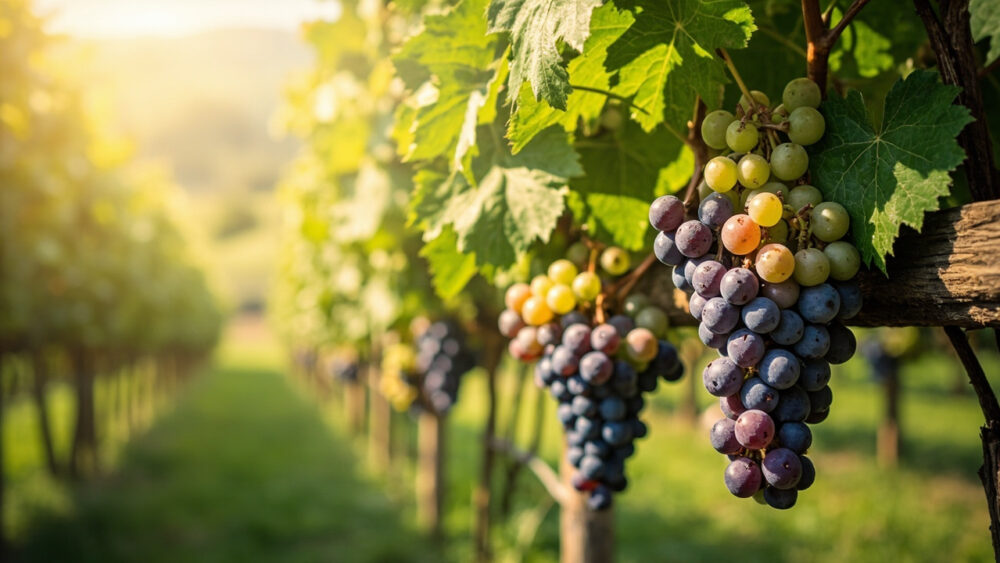
A new grapevine takes two to three years to produce its first real harvest, and about four to five years to hit full production. That is the honest range for a vine planted from a young nursery plant, which is how almost everyone starts. Grow grapes from seed instead and you can add another year or two, plus you will not even know what you grew until it fruits.
How long does it take to grow grapes to that first bunch worth eating? That is the question people actually mean, and the answer depends heavily on variety, climate, and something most new grape growers get backward: pruning hard in the early years, not letting the vine sprawl, is what makes it fruit sooner.
Below I will walk through the year-by-year reality, what speeds things up and what is just wishful thinking, and how to tell if your vine is behind schedule or right on track. Save-able quick-reference card is at the bottom if you just want the numbers.
The Realistic Timeline, Year by Year
Year one is all root and structure building. You will get little to no fruit, and that is correct, not a failure. Some growers see a few token clusters in year two, but the smart move is to remove them so the vine keeps investing in its framework.
Years two to three bring the first meaningful harvest, usually a light one. Year four or five is when a healthy vine hits its stride and gives you a full crop.
A vine that lives 25 to 40 years or more will keep improving in yield and flavor for a good decade before leveling off.
What Actually Controls the Speed
Variety matters more than most people expect. Fast, vigorous types like Concord or many American hybrids can outrun some European wine varieties by a full year. Muscadines, if you are in the Southeast, often bear a bit sooner than European bunch grapes but need real heat to ripen well.
Climate does the rest of the work. Grapes want a long, warm growing season, generally 150 to 180 frost-free days depending on the variety, and full sun for at least six to eight hours. Plant in USDA zones outside a variety’s range and you will get vines that grow but fruit poorly or not at all, no matter how many years you wait.
Soil drainage is the quiet dealbreaker. Grapevines sitting in heavy, wet clay develop weak roots and stall out regardless of age.
Get the site right first, because no amount of patience fixes a bad location.
Reading Your Own Vine’s Stage
Look at the trunk, not the calendar. A vine with a trunk about as thick as a broom handle, with two to four sturdy permanent arms trained along a wire or trellis, is structurally ready to carry a real crop.
A spindly, pencil-thin trunk means the vine is still building, even if it is technically three years old.
Count the clusters realistically too. A young vine setting six or eight small clusters is behaving normally. One that sets forty clusters in year two will exhaust itself, produce mediocre fruit, and often set the whole plant back a year, so thin those extra clusters off by hand in spring.
Next, the part almost every new grower gets wrong on purpose.
How to Speed It Up, and What Does Nothing
If you assumed heavy feeding and constant watering push a vine to fruit faster, that guess is backward. Grapevines that get too much nitrogen or water put out lush leafy growth and delay fruiting, sometimes by a full season.
What actually works is disciplined early pruning: cutting the vine back hard in its first two winters to force it into a strong, simple framework instead of a tangle of weak shoots. Buying the largest, oldest nursery vine you can find also genuinely shaves off a year, since you are skipping the establishment phase someone else already did.
Choosing a variety bred for your exact climate matters more than any fertilizer. A vine perfectly matched to your season ripens on schedule; a mismatched one struggles no matter what you feed it.
None of that changes the biology, though, only the timeline within it.
Slow Vine: Normal or a Real Problem
No growth at all by the end of year one, or leaves that stay small and yellowish through a full growing season, points to a site problem: poor drainage, too much shade, or roots that never established because the vine was planted too shallow or too deep.
A vine that grows vigorously but simply refuses to flower past year four or five is usually a pruning issue, often too much old wood left on, or in cold climates, winter injury to the fruiting buds year after year.
Sparse fruit in year two or three, on the other hand, is not a problem. That is the plant on schedule.
Here is the full picture in one place, worth screenshotting before you head back out to the vine.
Grapes: Quick Reference
- First harvest: two to three years after planting a young nursery vine, light crop.
- Full production: four to five years, continuing to improve for roughly a decade.
- From seed: add one to two years, and the fruit quality is unpredictable.
- Growing season needed: about 150 to 180 frost-free days, six to eight hours of full sun.
- Fastest path: buy an older, larger nursery vine and prune hard the first two winters.
- Biggest mistake: overfeeding and overwatering, which delays fruiting by favoring leaf growth.
- Vine lifespan: 25 to 40 years or more with good pruning and drainage.
Grapes reward patience more than effort in the early years.
Get the site and variety right, prune with intention, and the timeline takes care of itself.