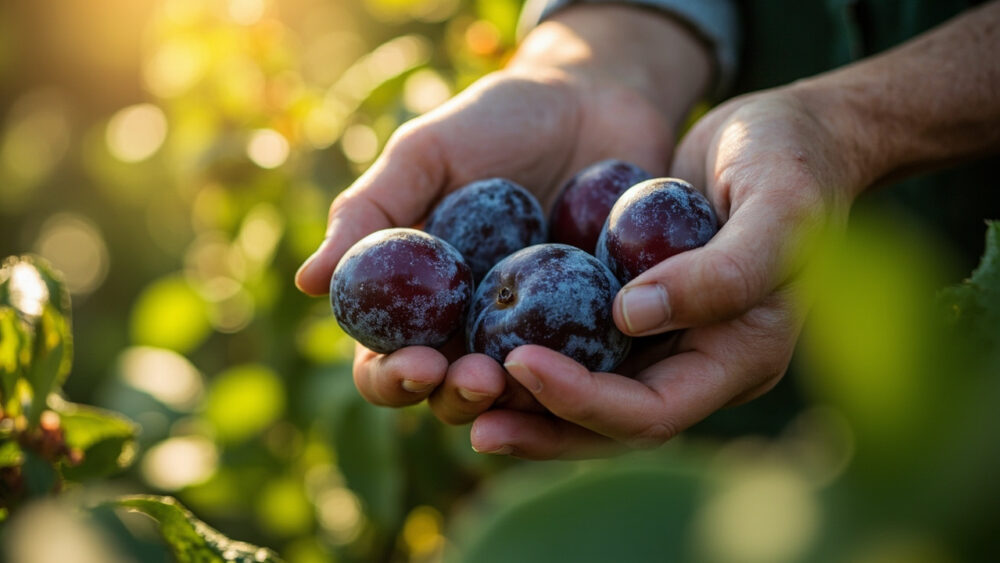
The right way to store plums depends entirely on whether they are ripe yet. Firm, not-quite-ripe plums belong on the counter at room temperature until they give slightly to a gentle squeeze, then move to the fridge, where they will hold another 5 to 7 days. Already-soft, ripe plums go straight into the fridge, unwashed, in a loose paper bag or a bowl left uncovered, not sealed in plastic.
That is the one-sentence version, but it is not the whole story. Most people ruin a bowl of plums in one of two ways: they refrigerate them too early and lock in a mealy, flavorless texture, or they wash them before storing and speed up the rot by a full two or three days. There is also a sneaky middle stage nobody warns you about, where a plum looks perfect on the outside but has already started breaking down at the pit.
Stick around and I will walk through the exact counter-to-fridge timeline, how long plums actually last frozen or dried, the prep step that decides whether your batch makes it a week or three days, and the specific signs that tell you a plum is done, not just soft. There is a save-able Plums at a Glance card at the very bottom with every number in one place.
Ripen First, Refrigerate Second
The single biggest mistake is refrigerating plums the moment you get them home. Cold air stops the ripening process almost completely, so a firm plum put straight in the fridge will often stay firm and starchy instead of turning sweet and juicy.
Leave underripe plums on the counter out of direct sunlight, stem side up, not touching each other if you can help it. Check them once a day by pressing gently near the stem end with your thumb. When that spot gives slightly, like a ripe peach, they are ready.
This usually takes 1 to 4 days depending on how firm they were at purchase and how warm your kitchen runs. A paper bag speeds things up by trapping the ethylene gas the fruit gives off, cutting ripening time by a day or so.
Once they yield to that gentle press, the clock changes entirely.
How Long Plums Actually Last, Method by Method
Ripe plums held at room temperature last only 1 to 2 days before they start softening past the point of good eating. That is the window most people misjudge, assuming a bowl on the counter is fine for a week.
In the fridge, ripe plums keep 5 to 7 days, sometimes stretching to 10 for a very firm-ripe fruit, stored loose in the crisper drawer rather than sealed in a bag.
Frozen, halved and pitted, plums hold their quality for 8 to 12 months. Whole plums can be frozen too but the skins toughen and the texture turns mushy on thawing, so halving is worth the extra minute.
Dried into prunes, properly cured plums last 6 to 12 months at room temperature in an airtight container, longer in the fridge or freezer.
Which method you pick next depends on one prep decision most people get backward.
The Prep Step That Makes or Breaks the Batch
If you assumed washing plums before storing them keeps them cleaner and safer, that guess is exactly what shortens their life. Water on the skin invites mold and softens the fruit’s natural protective bloom, the faint dusty coating you see on unwashed plums.
Wash plums only right before you eat or cook them, never before storage. A quick rinse under cool water and a pat dry is all they need at that point.
For freezing, wash first since you are processing them anyway, then halve, twist out the pit, and lay the halves cut-side up on a tray to freeze solid before bagging. This keeps them from clumping into one frozen brick.
Blanching is not necessary for plums the way it is for peaches. The skins are thin enough to freeze and thaw fine as they are, though some cooks pull the skins off dessert-bound fruit for smoother texture, purely a preference, not a storage requirement.
For drying, halve and pit the fruit and treat cut sides with a light acid dip like lemon water if you want to preserve color, though it is optional for flavor.
Get the prep right and the next question is simply how to tell when a plum has crossed the line.
The Sign Everyone Misses Until It Is Too Late
A wrinkled skin is not the real warning sign, that is just a plum getting a little dehydrated, still fine to eat. The actual signal is a soft spot that feels wet or gives way completely under light pressure, especially near the stem end where rot usually starts first.
Cut open a plum you are unsure about. If the flesh near the pit looks brown, translucent, or has any fuzzy growth, discard it. A faint fermented, boozy smell is another clear stop sign, it means sugars have started breaking down.
Mold on one plum in a bowl spreads fast to its neighbors through contact and shared moisture. Pull suspect fruit immediately rather than waiting to sort the whole batch later.
None of that matters, though, if the mistakes below already sealed the batch’s fate before it got this far.
The Mistakes That Ruin a Batch
Beyond early refrigeration and premature washing, a few other habits quietly cost people their fruit.
- Sealing ripe plums in an airtight bag: trapped moisture speeds mold growth, use a loose bag or open bowl instead.
- Stacking or crowding fruit: bruised spots from pressure turn soft and moldy first, give plums room to breathe.
- Storing near ethylene-sensitive produce: plums accelerate ripening in nearby fruit like bananas and avocados, keep them separated if you need those to last.
- Freezing without removing pits: the pit flavors the flesh oddly over long storage and makes thawed fruit harder to use.
- Ignoring the crisper drawer’s humidity setting: a drawer set to low humidity dries fruit out faster than one set high.
Fix those five and almost every plum you bring home will actually get eaten instead of tossed.
Here is everything above condensed into the version worth saving to your phone.
Plums at a Glance
- Underripe plums: leave on the counter 1 to 4 days until they give slightly near the stem when pressed.
- Ripe plums, room temperature: good for 1 to 2 days only.
- Ripe plums, refrigerated: keep 5 to 7 days, up to 10 for firm-ripe fruit, stored loose in the crisper.
- Frozen plums, halved and pitted: hold quality for 8 to 12 months.
- Dried plums (prunes): last 6 to 12 months airtight at room temperature.
- Washing rule: never wash before storing, only right before eating or processing.
- Signs it has turned: wet or collapsing soft spots, brown or translucent flesh near the pit, or a fermented smell.
Get the timing of that first counter-to-fridge move right and everything else about storing plums takes care of itself.
When in doubt, trust the gentle squeeze near the stem over how the skin looks.