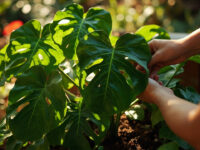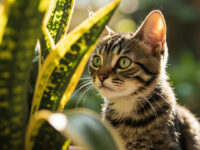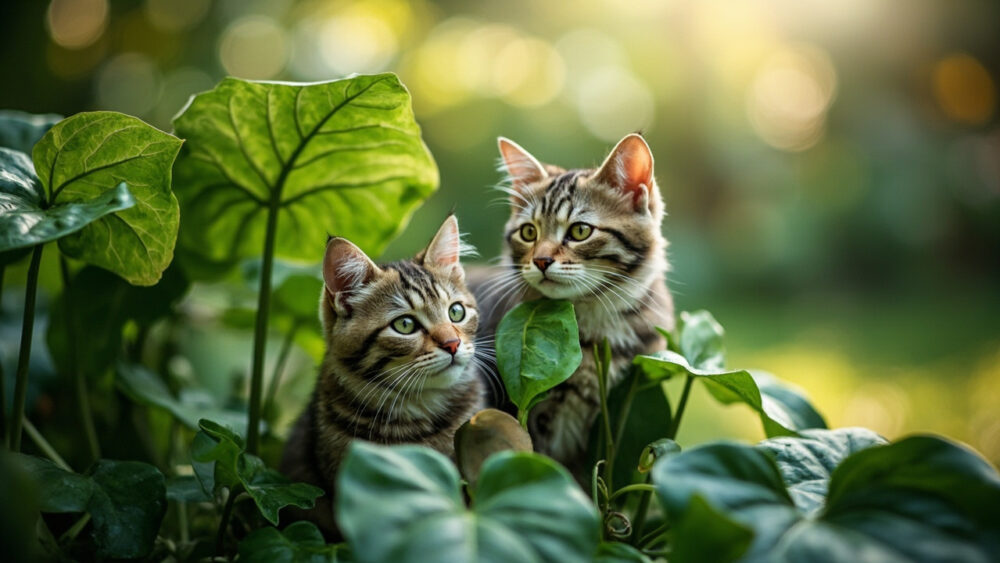
Yes, alocasia is toxic to cats. Every part of the plant contains insoluble calcium oxalate crystals, and even a small bite is enough to cause real pain and swelling in a cat’s mouth and throat. This is one houseplant question with a clean, non-negotiable answer, so if you’re asking is alocasia toxic to cats because you already caught your cat sniffing or chewing one, keep reading before you do anything else.
The plain yes doesn’t tell you everything you need, though. There’s a difference between a curious nibble and a real ingestion, and the signs aren’t always what people expect from a “poisonous plant.”
Below I’ll walk through what actually happens when a cat bites into alocasia, what to watch for, what to do right now if it already happened, and which lookalike plants are genuinely safe to grow instead. There’s also a save-able quick-reference card at the bottom if you want the short version pinned to your fridge.
So Is Alocasia Actually Toxic, or Just Irritating?
Both, honestly, and the distinction matters less than people think. Alocasia is classified as toxic to cats and dogs because of calcium oxalate crystals present throughout the plant, not just in one part.
These aren’t the kind of toxins that shut down organs on their own. They’re sharp, insoluble crystals that physically embed in soft tissue the moment a cat bites down, causing intense local irritation.
That reaction starts within seconds to minutes, which is actually a small mercy: most cats spit the plant out fast because it hurts immediately.
Immediate pain is nature’s way of limiting how much your cat swallows, but it doesn’t make an incident safe to ignore.
Which Parts Are Dangerous, and Does the Amount Matter?
Every part of an alocasia carries these crystals: leaves, stems, and the underground corms, with the concentration typically highest in the stems and roots. There isn’t a “safe part” to let a cat chew on.
Amount matters for severity, not for whether a reaction happens at all. A single lick or one small bite usually causes mouth and lip irritation and stops there.
A cat that chews and swallows more plant material, or one that goes back for repeated bites because they’re young and persistent, is at real risk for throat swelling severe enough to affect breathing or swallowing.
Size of the cat counts too. A kitten can have a more serious reaction to the same bite that barely bothers a large adult cat.
The variety of alocasia doesn’t change this. Alocasia amazonica, alocasia macrorrhiza, and every other common variety in the houseplant trade carry the same calcium oxalate risk.
Next, the signs that tell you what’s actually going on inside your cat’s mouth.
The Signs Most Owners Misread
People expect vomiting and lethargy from a “poisonous plant,” and while those can show up, the first and most telling signs are almost always oral. Watch for:
- Immediate pawing at the mouth or face
- Drooling, often heavy and sudden
- Visible swelling of the lips, tongue, or throat area
- Difficulty swallowing or refusing food and water
- Vomiting
- Loud or labored breathing, which signals a more serious airway reaction
If you assumed a toxic plant means a slow, quiet decline over hours, that guess is backwards here. The oral pain from calcium oxalate crystals is usually loud and obvious within minutes, not something that sneaks up on you overnight.
The genuinely dangerous version of this is swelling severe enough to restrict the airway, and that’s the scenario that turns a plant nibble into an emergency.
Knowing the signs is only half the job, so here’s exactly what to do the moment you see them.
Your Cat Ate Alocasia: What to Do Right Now
Call your veterinarian or an animal poison control line immediately, even if the reaction looks mild so far. Don’t wait to see if it gets worse.
Bring or describe the plant if you can, ideally a photo or the variety name, since it helps the vet confirm exposure quickly.
Note roughly how much time has passed since the suspected bite and how much plant material you think is missing or chewed.
Do not give your cat anything to eat or drink to “wash it down,” and do not attempt any home remedy or treatment on your own. This is a call-a-professional situation, not a wait-and-see one.
If your cat is struggling to breathe, drooling heavily, or seems distressed, treat it as an emergency and get to a vet or emergency animal clinic right away rather than waiting for a callback.
Once the immediate scare is handled, the longer-term fix is making sure it doesn’t happen again.
Safer Plants That Look Similar to Alocasia
If you love the bold, arrow-shaped or elephant-ear look of alocasia but have a cat that treats every leaf as a snack, you have real options that won’t send you to the emergency vet.
- Calathea: similarly dramatic patterned foliage, non-toxic to cats and dogs
- Peperomia: a range of leaf shapes and textures, generally considered pet-safe
- Ctenanthe: striped, upright leaves with a similar jungle feel, non-toxic
- Parlor palm: a safe way to get big, architectural greenery in a low-light room
Moving an alocasia out of reach isn’t a real fix, since determined cats climb, and dropped leaves end up on the floor anyway. Swapping the plant, or keeping it in a room your cat genuinely cannot access, is the only reliable solution.
Here’s the full picture in one place, worth saving before you put your phone down.
Alocasia: Quick Reference
- Toxic to cats: yes, due to insoluble calcium oxalate crystals throughout the plant
- Parts affected: all parts, with stems and roots typically the most concentrated
- Onset: irritation usually begins within seconds to minutes of a bite
- Signs to watch for: pawing at the mouth, drooling, swelling of lips or tongue, trouble swallowing, vomiting, labored breathing
- What changes severity: amount chewed and swallowed, and the size or age of the cat
- What to do: call your veterinarian or poison control immediately for any suspected ingestion, no home treatment
- Safer alternatives: calathea, peperomia, ctenanthe, or parlor palm for a similar look without the risk
Keep this card handy, but keep your vet’s number handier.
A cat-safe home doesn’t mean a boring one, it just means choosing the right plants for the room your cat actually lives in.