Growing jade plant comes down to three things: a pot with real drainage, soil that dries out fast, and the discipline to leave it alone more than feels natural. Plant it in a gritty, fast-draining mix, give it bright light for at least four to six hours a day, and water only when the soil is completely dry an inch or two down. Get those three right and a jade plant will outlive most of your furniture.
Most people who kill a jade plant do it with kindness, specifically a watering can they reach for too often. There is also a leaf-drop mistake that looks like disease but is almost always a light problem, and a “propagation” step most guides skip that decides whether your cuttings actually root or just quietly rot.
Stick with me through the sections below and I will hand you the exact watering rhythm, the soil recipe, and the harvest-and-propagate timeline that turns a sad little nursery jade into the thick-trunked, decades-old specimen people mistake for a bonsai. There is a save-able Jade Plant at a Glance card waiting at the bottom once you have the full picture.
When to Plant (and Why Timing Matters More Indoors Than Out)
Jade plant is not frost-hardy, full stop. It survives outdoors year-round only in USDA zones 10 and 11, and even there a hard frost will blacken and collapse the leaves overnight. Everywhere else, it is a houseplant that takes a summer vacation outside.
The best planting window is spring through early summer, once nighttime temperatures are reliably staying above 50°F. That is also the best time to repot, propagate, or move a jade plant into fresh soil, because it is heading into its most active growth stretch and will root and recover fastest.
If you are starting from a nursery plant or a cutting indoors under grow lights, you can technically pot one up any month of the year. But timing a repot for spring still gives you the fastest recovery and the least transplant stress.
Get the calendar right and the next decision, where you actually put the thing, matters just as much.
Choosing the Spot and Building the Right Soil
Jade plants want the brightest spot you have that is not scorching afternoon glass in high summer. A south or west-facing window indoors, or partial to full sun outdoors once acclimated, is the target. Less than four hours of direct or very bright indirect light a day and you will get a leggy, stretched plant with wide gaps between leaves instead of the tight, compact growth people love.
Soil is where most attempts actually go wrongnot watering itself. Regular potting soil holds water far too long around jade’s thick, water-storing roots. You want a cactus or succulent mix, or make your own with roughly equal parts potting soil, coarse sand or grit, and perlite or pumice.
The pot matters as much as the mix. Unglazed terracotta with a real drainage hole beats a sealed decorative pot every time, because it lets excess moisture evaporate through the sides instead of sitting at the roots.
Once the spot and the soil are sorted, planting itself is almost too easy.
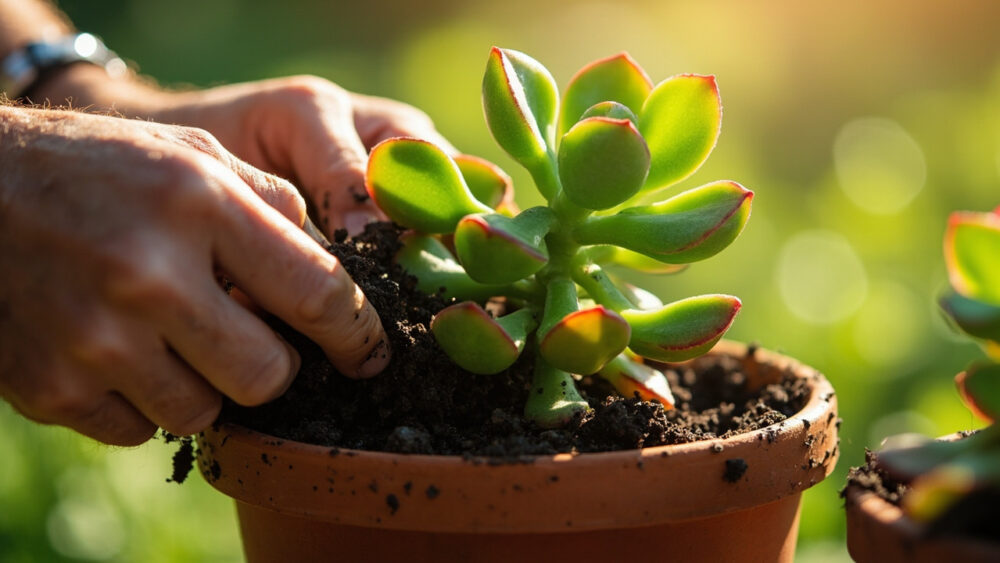
Planting a Jade Plant Step by Step
Step 1: Size the pot to the plant, not the other way around
Choose a pot only about 1 to 2 inches wider in diameter than the current root ball. Jade plants actually prefer being slightly snug; a huge pot just holds excess moisture in soil the roots cannot reach yet.
Step 2: Set the planting depth
Plant at the same depth it was growing before, with the base of the stem right at the soil surface. Burying the stem invites rot; planting too shallow leaves roots exposed and unstable.
Step 3: Backfill and settle, do not soak
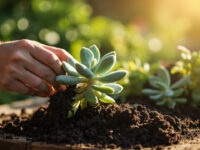
Fill in around the roots with your gritty mix, firming gently so the plant stands upright without staking. Water lightly just to settle the soil, then hold off on a real watering for three to five days if roots were disturbed, longer if you took cuttings.
Step 4: Space multiples generously
If you are planting several in one container or bed, space them 6 to 12 inches apart depending on variety. Jade plants get wide and heavy with age, and crowding now means fighting for light and airflow in two or three years.
That light watering touch you just used is the exact skill that decides everything for the rest of the plant’s life.
Watering and Feeding Through the Season
If you assumed a succulent just needs less water on the same weekly schedule, that guess is what kills most jade plants. The real rule is not about frequency at all, it is about checking the soil every single time and only watering when it is bone dry at least an inch or two down.
In warm, bright growing months that might mean every 10 to 14 days. In low light or cool winter months, it can stretch to once every three to four weeks, sometimes longer. There is no fixed calendar here, only the soil telling you what it needs.
Water thoroughly when you do waterletting it run through the drainage hole, then let the pot dry out completely again before the next round. Soggy, constantly damp soil is the single fastest way to rot the roots and stem.
Feed lightly, once a month during spring and summer only, with a diluted balanced liquid fertilizer or a cactus-specific feed at half the label strength. Skip feeding entirely in fall and winter when growth slows or stops.
Even with good watering habits, jade plants still run into trouble, and the signs are easy to misread.
The Problems Most Likely to Strike (and What They Actually Mean)
Wrinkled, slightly deflated leaves usually mean underwatering, and the fix is simple: water thoroughly and the leaves plump back up within a day or two. That part people generally get right.
What trips people up is leaf drop combined with soft, mushy, translucent leaves. That is not a watering-frequency problem, it is overwatering and likely early root rot, and the fix is to stop watering immediately, unpot, check the roots, and trim away any black or mushy sections before repotting into dry, fresh mix.
Leggy growth with wide spaces between leaves is the light problem I mentioned earlier, not a disease and not a pest. Move the plant to a brighter spot. You can prune back the stretched growth once new, tighter growth resumes.
Mealybugs and scale are the most common pests, showing up as small white cottony clusters or brown bumps in leaf joints. Wipe them off with a cotton swab dipped in rubbing alcohol, and for larger infestations, follow the label directions on an insecticidal soap.
Jade plant is mildly toxic to cats and dogs if chewed or eaten, and can cause vomiting, lack of coordination, or a slowed heart rate in pets. If you suspect your pet has eaten any part of the plant, contact your veterinarian rather than waiting to see what happens.
Handle the light and water right and most of these problems never show up at all, which brings us to the payoff people ask about most: when this plant actually blooms or gives you something to harvest.
When and How to “Harvest” a Jade Plant
Jade plant is not a food crop, so there is no harvest in the traditional sense, but there is a real payoff moment, and most people never see it because they don’t give the plant what it needs to get there. Mature jade plants, usually five years old or more, can produce small clusters of white or pale pink star-shaped flowers in late winter, but only if they have gone through a period of cooler nights (around 50 to 55°F) and slightly reduced watering in fall.
The more practical harvest is propagation, and this is that skipped step I mentioned back in the intro. Take a healthy stem cutting 3 to 4 inches long, or even a single leaf, and let the cut end callus over, sitting exposed to dry air, for two to three full days before you ever put it in soil.
Skip that callusing step and the fresh cut wound sits in damp soil and rots before it ever roots, which is the single most common reason jade cuttings fail. Once callused, set it in dry succulent mix and mist very lightly every few days until roots form, usually within two to four weeks.
Do that once and you will never buy another jade plant, because a single healthy specimen can supply cuttings indefinitely.
Jade Plant at a Glance
- When to plant or repot: spring through early summer, once nights stay reliably above 50°F.
- Light needs: at least 4 to 6 hours of bright direct or very strong indirect light daily.
- Soil: a fast-draining cactus or succulent mix, or equal parts potting soil, coarse sand, and perlite.
- Watering: only when soil is completely dry 1 to 2 inches down, roughly every 10 to 14 days in active growth, monthly or less in winter.
- Feeding: diluted balanced or cactus fertilizer once a month, spring and summer only.
- Pot and spacing: a pot just 1 to 2 inches wider than the root ball, plants spaced 6 to 12 inches apart if grouped.
- Propagation: let cuttings callus for 2 to 3 days before potting in dry mix, roots in 2 to 4 weeks.
Get the soil dry, the light bright, and your hands off the watering can, and jade plant basically grows itself.
Everything else, the rot, the legginess, the failed cuttings, traces back to breaking one of those three rules.