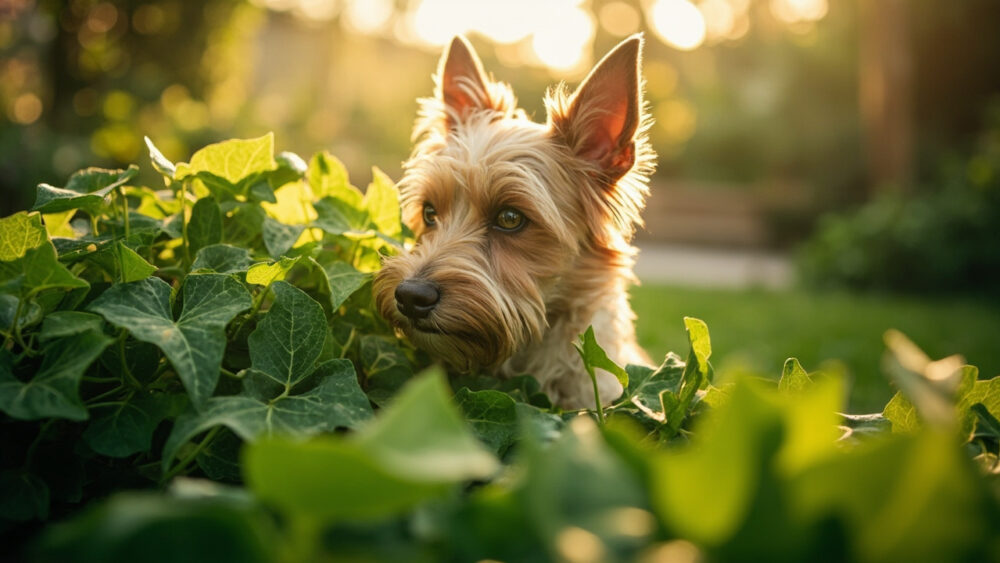
Yes, English ivy (Hedera helix) is toxic to dogs. Every part of the plant contains compounds that irritate the mouth, throat, and digestive tract, and the leaves are more concentrated than the stems. Most dogs that eat a leaf or two get an upset stomach, not a trip to the emergency vet, but that outcome depends on how much they ate and which part.
What most owners get wrong is assuming a plant this common in yards and hanging baskets must be harmless. It is not harmless, but it is also not the most dangerous houseplant your dog could get into. That difference matters, and I will walk through it.
Stick around for the parts nobody tells you upfront: which part of the plant is actually the problem, the signs that mean “watch closely” versus “call now,” and a list of look-alike trailing plants that give you the same look with none of the risk. The full quick-reference card is at the bottom, save it to your phone before you head back out to the yard.
So Is English Ivy Actually Toxic to Dogs?
Plainly, yes. English ivy contains triterpenoid saponins, a class of compounds that are irritating to mucous membranes and the GI tract. Dogs that chew on leaves typically develop drooling, lip licking, vomiting, or diarrhea within a few hours.
It is classified as toxic by veterinary toxicology references, in the same general category as many common landscape and houseplants that cause GI upset rather than organ failure. That is a meaningfully different risk tier than something like sago palm or lily, which can be life threatening.
None of that means you should relax about it. It means the honest answer is “toxic, usually mild to moderate,” not “toxic, call poison control immediately in a panic.” The next question is what actually determines how bad it gets.
Which Part of the Plant, and How Much, Actually Matters
The leaves are the main concern. They carry the highest concentration of saponins and are also what dogs are most likely to chew on since they are the largest, most accessible part of the plant.
The berries, which show up on mature outdoor ivy that has been allowed to climb and flower, are also toxic and tend to draw curious dogs and puppies because they look like food.
A puppy or small dog that chews through several leaves is a bigger concern than a large adult dog that mouths one leaf and drops it. Sap contact with skin can also cause contact dermatitis in sensitive dogs, separate from what happens if they eat it.
Amount and body size change the math every time, which is exactly why the signs matter more than a guess.
Signs to Watch For
Most reactions show up within a few hours of chewing or swallowing plant material. Watch for:
- Drooling or lip licking
- Vomiting
- Diarrhea
- Pawing at the mouth or face
- Reduced appetite or lethargy
- Skin redness or irritation if there was direct sap contact
Most dogs with mild exposure are uncomfortable for a day, not seriously ill. But you cannot tell from the outside how much they actually ate, and that uncertainty is the whole reason the next step is non-negotiable.
What to Do If Your Dog Ate English Ivy
Call your veterinarian or an animal poison control line right away, even if your dog seems fine. Do not wait to see if symptoms develop and do not give any home remedy, food, or medication on your own.
Before you call, try to note how much plant material is missing, which part (leaf, stem, berry), and roughly when it happened. If you have a photo of the plant or a piece of the chewed leaf, bring it or have it ready to describe.
Your vet will use that information, plus your dog’s size and symptoms, to decide whether they need to be seen in person or just monitored at home under guidance. This is not a plant where you should improvise treatment yourself.
Once that call is made, the longer-term fix is making sure this cannot happen again.
Safer Trailing Plants to Grow Instead
If you love the look of trailing ivy but have a dog who treats every low shelf as a snack bar, there are non-toxic options that give you a similar cascade of leaves.
- Spider plant (Chlorophytum comosum): non-toxic, tough, forgiving of missed waterings
- Boston fern (Nephrolepis exaltata): non-toxic, likes humidity and indirect light
- Swedish ivy (Plectranthus verticillatus): not a true ivy, non-toxic, trails beautifully in a hanging basket
- Peperomia varieties: non-toxic, compact, easy on low light
Swapping the plant, not just moving it higher, is the real fix if your dog is a chewer, since determined dogs find their way to shelves eventually.
That swap is also the fastest way to stop worrying every time a leaf drops on the floor.
English Ivy: Quick Reference
- Toxic to dogs: yes, classified as toxic due to triterpenoid saponins
- Most toxic part: leaves and berries, less concentrated in stems
- Typical severity: mild to moderate GI upset in most cases, worse in puppies or small dogs that eat a large amount
- Common signs: drooling, vomiting, diarrhea, pawing at the mouth, lethargy
- Skin contact: sap can cause dermatitis or irritation in sensitive dogs
- What to do: call your veterinarian or animal poison control immediately for any suspected ingestion, no home treatment
- Safer alternatives: spider plant, Boston fern, Swedish ivy, peperomia
English ivy is a real risk, not a five-alarm one, and knowing that difference is what lets you act fast instead of frozen.
Keep the vet’s number handy, and consider making your ivy an outdoor, fenced-off plant instead of a houseplant if your dog cannot be trusted near it.