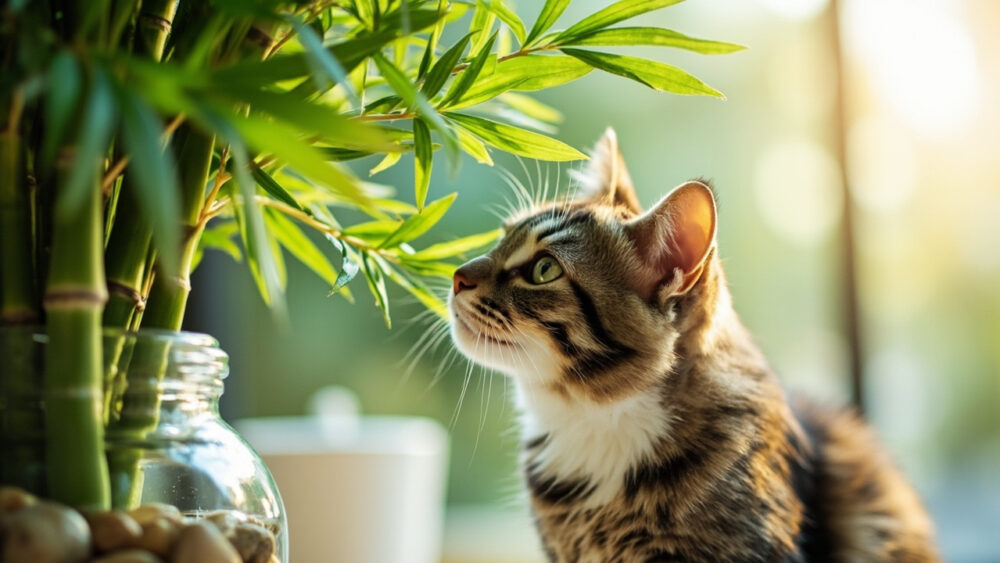
Yes, lucky bamboo (Dracaena sanderiana) is toxic to cats. It is not usually life-threatening, but it can make a cat genuinely miserable, and in cats who eat a lot of it or who have other health issues, it can turn into something that needs a vet visit fast. If you clicked here because your cat just took a bite out of the stalk in the vase on your counter, the short version is: mild-to-moderate poisoning risk, watch for vomiting and drooling, and call your vet if you saw it happen or suspect it.
What most owners get wrong is assuming that because lucky bamboo is sold as a “safe,” almost indestructible houseplant, it must be fine around pets too. It isn’t, and the mix-up costs people time when a cat is already not feeling well.
Below I’ll walk through what part of the plant actually causes trouble, the signs to watch for, what to actually do right now if your cat ate some, and a few look-alike plants that are genuinely cat-safe if you want the same vibe without the risk. There’s also a save-able quick-reference card at the very bottom, worth screenshotting before you put the plant back on the shelf.
The Plain Answer: Toxic, Not Usually Deadly
Lucky bamboo contains saponins, the same class of compound found in true Dracaena and several other common houseplants. Saponins are irritating to the mouth and gut, not the kind of toxin that shuts down organs in a small dose.
For most cats, a curious nibble on a leaf tip means some drooling and maybe an upset stomach for a day. A cat who chews through a whole stalk, or eats it repeatedly, is a different story and needs a vet call, not a wait-and-see approach.
Size of the cat, amount eaten, and whether they’ve eaten it before all change how bad it looks.
Which Part, and How Much, Actually Matters
The leaves carry the highest concentration of saponins, so a cat chewing leaves gets a stronger dose than one that just gnaws on the woody stalk. The stalk itself is tougher and less palatable, which is honestly the plant’s biggest built-in protection: most cats lose interest before they do real damage to it.
Water from the vase is not something to worry about on its own, but if a leaf has been sitting and decomposing in it, treat that water with the same caution as the plant.
A cat who just licked a leaf and walked away is in a completely different situation than one who stripped several leaves off the stem.
How much they ate decides how worried you should be, so knowing the signs to watch for next actually matters.
Signs That Mean Your Cat Ate Some
Watch for these in the hours after suspected exposure:
- Drooling or excessive lip licking
- Vomiting
- Loss of appetite
- Diarrhea
- Lethargy or hiding more than usual
Most of these show up within a few hours of eating the plant. If your cat is only drooling once and then acts totally normal, that’s a mild reaction and worth a call to your vet just to confirm, not a middle-of-the-night emergency on its own.
Repeated vomiting, obvious distress, or a cat that seems weak or won’t eat is a different level, and that’s where the next section matters.
What To Actually Do If Your Cat Ate It
Call your veterinarian or an animal poison control line right away if you saw your cat chew on lucky bamboo or you strongly suspect it happened. Don’t wait to see if symptoms show up first.
Have this ready when you call: roughly how much of the plant is missing or chewed, when you think it happened, and your cat’s current weight if you know it. A photo of the damaged plant helps the vet judge how much was likely eaten.
Do not induce vomiting, do not give home remedies, and do not give any over-the-counter medication on your own. Let the vet or poison control line guide you based on your specific cat and situation.
If your vet wants to see your cat in person, bring a piece of the plant with you so they can confirm exactly what was eaten.
Getting the plant out of reach permanently is the next real fix, and there are good alternatives that don’t carry this risk at all.
Cat-Safe Look-Alikes Worth Growing Instead
If you like the look of lucky bamboo, upright stalks, glossy strappy leaves, easy low-light care, there are safer options that give you the same feel without the trip to the vet.
- Areca palm: feathery, upright, and non-toxic to cats, though it needs brighter light than lucky bamboo does.
- Parlor palm: compact, tolerates low light, classic safe houseplant for pet owners.
- Spider plant: non-toxic, nearly impossible to kill, and cats often like batting at the leaves harmlessly.
- Calathea varieties: striking patterned leaves, non-toxic, thrives in the same indirect light lucky bamboo tolerates.
None of these need the water-vase setup either, which removes the temptation of a cat drinking from standing plant water.
Swapping the plant solves the problem permanently, but the reference card below is worth keeping even if you decide to keep your lucky bamboo and just move it out of reach.
Lucky Bamboo: Quick Reference
- Toxic to cats: yes, mild to moderate toxicity from saponin compounds.
- Most toxic part: the leaves, more than the woody stalk.
- Vase water: generally low risk unless leaves have been decomposing in it.
- Common signs: drooling, vomiting, appetite loss, diarrhea, lethargy.
- What to do: call your veterinarian or animal poison control immediately for any suspected ingestion, no home treatment.
- Safer alternatives: areca palm, parlor palm, spider plant, calathea.
Keep this plant on a high shelf or skip it entirely if your cat is a chewer.
Your vet, not the internet, is the right call the moment you suspect a bite was taken.