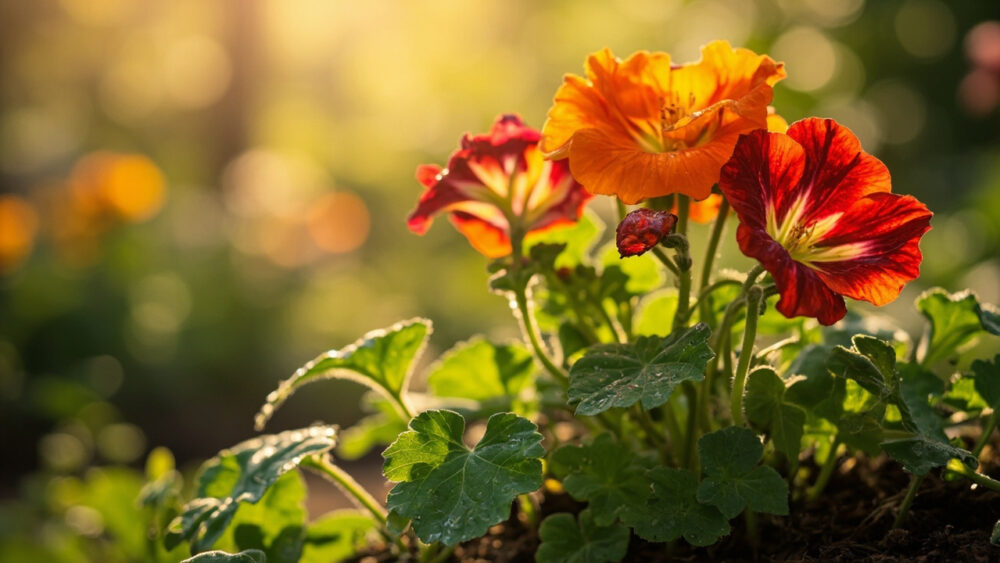
For almost everyone, no. Nasturtiums are tender annuals that die at the first real frost, and the plant itself does not come back the following spring. But if you’re in a warm enough zone, or if last year’s flowers were allowed to drop seed, you may see nasturtiums pop up again next season anyway, just not from the original plant.
That difference between “the plant survives” and “nasturtiums show up again” is the whole answer, and which one applies to you depends on your winter low temperatures and how tidy you were last fall. It also changes what you should do right now if you want more of them next year.
Stick around for the part about the one thing most people do in autumn that accidentally guarantees a nasturtium-free spring, and the quick-reference card at the bottom you can save and check next March.
The Plain Answer: Annual Almost Everywhere
Nasturtiums (Tropaeolum majus and related species) are true tender perennials in their native South and Central American highlands, but in most of the United States and Canada they’re grown, and die, as annuals. A hard frost kills the foliage and stems outright, usually within a day or two of temperatures dropping into the upper 20s Fahrenheit.
In USDA zones 9 through 11, with mild, frost-light winters, nasturtiums can sometimes limp along as short-lived perennials or reseed so reliably that they read as permanent. In zones 8 and colder, treat them as strictly seasonal.
If you assumed a plant that bloomed all summer must have some perennial root system waiting underground, that guess is wrong here. Nasturtiums have no bulb, no woody crown, and no dormant storage root worth protecting.
So the real question isn’t whether your plant survives. It’s whether its seeds do.
What Actually Happens Over Winter
Once frost hits, the vines go from vigorous to black and mushy almost overnight. That’s normal, not a sign you did something wrong.
What happens next depends entirely on the seeds those flowers dropped. Nasturtium seeds are large, wrinkled, and pea-sized, and they fall right around the base of the parent plant through late summer and fall.
In a garden bed left undisturbed, those seeds sit in the soil over winter and many will germinate on their own once the soil warms in spring, usually a few weeks after your last frost date. In a pot that gets dumped, scrubbed, and refilled with fresh potting mix, those seeds go in the trash with everything else.
This is the quiet reason container growers almost never see a “return,” while in-ground growers sometimes swear their nasturtiums are perennial.
How to Get Nasturtiums Back Next Season
If you want volunteers next spring, the fix is simple neglect at the right moment. Let the last flush of flowers go to seed instead of deadheading them in early fall. Leave the dried, browned seed pods on the ground rather than raking them away.
You can also collect seed on purpose. Once pods turn tan and papery, usually late summer into fall, pinch them off and let them finish drying indoors for a week or two before storing them in a paper envelope somewhere cool and dark.
For containers, save seed deliberately rather than hoping the soil retains any. Scatter the saved seed back into fresh potting mix once your last frost has passed and soil has warmed into the 55 to 65 F range, which is when nasturtium seed germinates reliably anyway.
Either path gets you nasturtiums again, but neither one is the original plant coming back to life.
When Treating Them as Annuals Is Honestly Smarter
Even in zone 9 to 11 gardens where nasturtiums can persist, many experienced gardeners pull them and start fresh from seed every year anyway, and there’s a good practical reason.
Older nasturtium plants get leggy, woodier at the base, and more prone to aphid clusters than young seedlings. A fresh spring sowing gives you cleaner growth, better bloom coverage, and fewer pest problems than a plant limping into its second or third year.
Nasturtium seed is also inexpensive and germinates fast, often in 7 to 12 days in warm soil, so there’s little cost to starting over. If your winters flirt with frost some years and not others, banking on overwintered plants is a gamble that doesn’t pay off often enough to bother.
Most gardeners, even in mild climates, get better results treating nasturtiums as a plant they replant on purpose rather than one they hope survives.
That brings us to the numbers worth actually saving.
Nasturtiums: Quick Reference
- Do they come back: not as the same plant in most climates, they are killed by frost and grown as annuals almost everywhere.
- Zones where they persist: USDA zones 9 to 11 may see plants limp through mild winters or reseed heavily enough to look permanent.
- Frost tolerance: foliage and stems die at roughly the upper 20s Fahrenheit, killing the plant within a day or two.
- How volunteers return: from dropped seed left in undisturbed soil over winter, not from any surviving root or bulb.
- Container growers: almost never see natural return since old potting soil, and its seed, usually gets discarded.
- To bring them back on purpose: let late-season flowers go to seed, collect dried tan pods, and resow after your last frost once soil hits 55 to 65 F.
- Germination time: typically 7 to 12 days in warm soil, making yearly resowing cheap and fast.
Print that list or screenshot it, because next March you’ll want it more than you want it right now.
Either way, a little seed and a warm spring bed is really all a nasturtium needs to feel like it never left.