Caring for gardenias comes down to four things the plant will not compromise on: acidic, evenly moist soil, bright light without hot direct sun, high humidity, and a spot where the temperature does not swing hard between day and night. Get those four right and the glossy leaves and waxy white blooms take care of themselves. Get one wrong and you will spend a season chasing yellow leaves and dropped buds without knowing why.
Here is the part nobody tells you up front. The most common gardenia failure has nothing to do with water or light. It is bud drop, and it happens for a reason most people never suspect, one that has almost nothing to do with how well you have been treating the plant.
Stick with me and you will also get the honest answer to the question every gardenia owner eventually asks, which is why the leaves are turning yellow when the plant is clearly getting watered on schedule. And down at the bottom, there is a save-able Gardenias at a Glance card with every number in one place, so you can stop hunting through your notes every time something looks off.
Light, Placement, and Temperature
Gardenias want bright, indirect light for most of the day, with a few hours of gentle direct morning sun if you can give it. Hot afternoon sun scorches the leaves and stresses the plant fast, especially in warmer climates. Indoors, an east or south-facing window with a sheer curtain works well.
Temperature matters more than most flowering houseplants. Gardenias like daytime temperatures around 65 to 75°F and nighttime temperatures 10 to 15 degrees cooler, ideally down near 60 to 65°F. That day-night swing is not optional, it is actually what triggers flower buds to form in the first place.
Outdoors, gardenias are hardy in USDA zones 7b through 11 depending on the variety, and even in those zones they want shelter from harsh wind and reflected heat off pavement or walls.
Nail the temperature swing and you have already solved the mystery everyone blames on watering.
The Real Reason Buds Drop
Here is that first loop, paid off. If you assumed dropped buds mean you forgot to water, that guess is wrong more often than it is right. The far more common cause is an abrupt change in temperature, light, or location, especially moving a plant from a warm greenhouse or shop straight into a cooler home, or letting a room swing from 70°F by day to 45°F at night near a drafty window.
Low humidity is the second big driver. Gardenias evolved in humid coastal conditions and sulk hard in dry indoor air, particularly during winter with the heat running.
The fix is consistency: pick one good spot and leave the plant there, run a humidity tray or small humidifier nearby, and keep it away from heating vents, cold drafts, and doors that open to the outside.
Once the buds are set and staying put, the next test is what is happening at the roots.
Watering: How Much, How Often, and How to Tell
Water when the top inch of soil feels dry to the touch, not on a fixed schedule. That is usually every 5 to 7 days indoors, faster in summer heat or a terra cotta pot, slower in winter.
Water deeply until it runs from the drainage holes, then let the pot drain fully and never let it sit in a saucer of standing water. Gardenias hate both drought and waterlogging, and they will not tell you gently which one is the problem.
Use rainwater or distilled water if your tap water is hard or heavily chlorinated, since gardenias are sensitive to the alkaline minerals that build up from tap water over time. That mineral buildup is quietly behind a lot of “healthy but not thriving” gardenias.
Consistent moisture sets the stage, but the soil itself has to be the right chemistry too.
Soil, Feeding, and the Yellow Leaf Mystery
Gardenias need acidic, well-draining soil, ideally a pH between 5.0 and 6.0. A potting mix formulated for azaleas, camellias, or other acid-loving plants works well, or amend a standard mix with peat moss or pine bark fines.
Feed every 4 to 6 weeks during active growth in spring and summer with a fertilizer made for acid-loving plants, and stop feeding by early fall so the plant can slow down for winter.
Now for that second loop. Yellow leaves on a well-watered gardenia are almost always iron chlorosis, caused by soil pH drifting too alkaline, which locks up iron the plant needs even if there is plenty in the soil. You will see the leaf veins stay green while the tissue between them pales out, especially on new growth. The fix is lowering the pH, not adding more water or more fertilizer.
Get the soil chemistry right and the routine maintenance becomes simple upkeep, not crisis management.
Pruning, Repotting, and Cleaning
Prune right after flowering finishes, never in fall or winter, since gardenias set next year’s buds on new growth produced shortly after this year’s bloom. Cutting late removes the flowers you were waiting for.
Deadhead spent blooms as they fade to keep the plant tidy and to redirect energy into new growth rather than seed production.
- Repot every 2 to 3 years in spring, moving up one pot size, once roots start circling the drainage holes.
- Wipe glossy leaves with a damp cloth every few weeks to clear dust and help the plant photosynthesize efficiently.
- Check the soil surface each spring and refresh the top few inches with fresh acidic mix if it looks compacted or pale.
With the plant’s structure and roots handled, the last thing to watch for is trouble that shows up on the leaves themselves.
Common Problems and How to Fix Them
Sooty mold and sticky leaves point to aphids, mealybugs, or scale feeding on the plant and leaving behind honeydew. Check the undersides of leaves and along stems, and treat with insecticidal soap or a horticultural oil, following the product label exactly.
Powdery white patches on leaves signal powdery mildew, usually from poor air circulation combined with high humidity and still air. Space plants apart and improve airflow before reaching for a fungicide.
Sudden leaf drop across the whole plant often means a cold draft or a recent big move, the same instability that causes bud drop.
Brown, crispy leaf edges usually mean the air is too dry or salts have built up from tap water and fertilizer.
Gardenias are considered non-toxic to cats and dogs by most standard references, but if a pet eats a large amount and shows vomiting, drooling, or stomach upset, call your veterinarian rather than waiting it out.
Once you have ruled these out, the plant should settle into a rhythm you can actually recognize as healthy.
Signs Your Gardenia Is Actually Thriving
A thriving gardenia has dark, glossy green leaves with no yellowing, holds its buds through to full bloom instead of dropping them, and pushes new growth steadily through spring and summer.
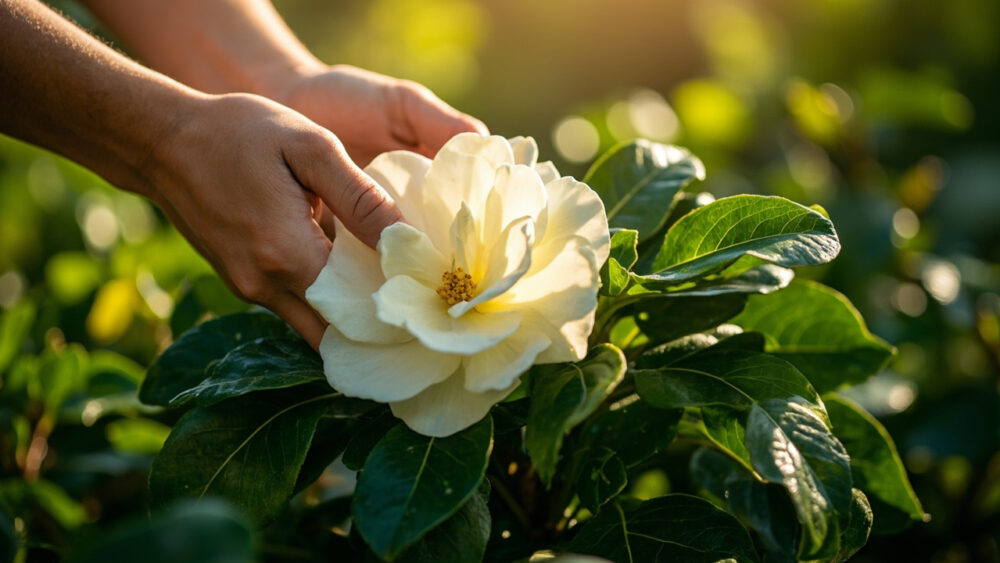
The blooms themselves should be heavy, waxy white, and intensely fragrant, especially in the evening. If the flowers open small, pale, or scentless, that is usually a light or feeding issue rather than anything urgent.
New leaf growth should come in a slightly lighter green and firm up within a couple of weeks rather than staying soft or curling.
When all of that lines up, you have earned the easy part, which is just keeping the routine steady.
Gardenias at a Glance
- Light: Bright indirect light most of the day, a little gentle morning sun is fine, avoid harsh afternoon sun.
- Temperature: 65 to 75°F by day, 60 to 65°F at night, avoid sudden swings or cold drafts.
- Watering: Water deeply when the top inch of soil is dry, roughly every 5 to 7 days, never let the pot sit in water.
- Soil and pH: Acidic, well-draining mix, pH 5.0 to 6.0, use rainwater or distilled water if your tap water is hard.
- Feeding: Acid-plant fertilizer every 4 to 6 weeks in spring and summer, stop by early fall.
- Pruning: Right after flowering ends, never in fall or winter, since next year’s buds form on new growth.
- Humidity: Keep humidity high with a tray, pebble tray, or humidifier, especially indoors in winter.
If you remember nothing else, remember this: gardenias forgive an off watering day far more easily than they forgive a sudden change in temperature or light.
Keep the routine steady and the blooms will keep showing up on schedule.