The real answer: plant cabbage when the soil sits between 45 and 75 F, which usually means 2 to 4 weeks before your last spring frost for a spring crop, or in mid to late summer, roughly 10 to 12 weeks before your first fall frost, for a fall crop. Cabbage is a cool-weather plant pretending to be tough. It survives heat but it does not thrive in it, and that single fact is the whole timing puzzle.
Most people who fail with cabbage did not fail from bad luck. They planted by the calendar instead of the soil, or they trusted a warm afternoon in March and lost the whole planting to a bolt-and-flower disaster in June.
There is also a sign almost everyone misreads when their cabbage stalls out midseason, and it is not what you think. Stick with me here, because the fall window is actually the more forgiving one and almost nobody plants it. Save-able specifics, spacing, depth, and the full at-a-glance card are waiting at the bottom once you have the timing straight.
The Actual Planting Window
Spring cabbage goes in as transplants 2 to 4 weeks before your last frost date, once soil temperature holds at 45 F or warmer. Cabbage seedlings tolerate a light frost, down to about 28 F for short stretches once hardened off, but they stall hard if the soil is still cold and wet.
Fall cabbage is planted from mid to late summer, counted backward from your first fall frost. Most cabbage varieties need 60 to 100 days to mature, so count back 10 to 12 weeks from that frost date and start transplants around then.
If you are direct seeding instead of transplanting, add 2 to 3 weeks to either window since seedlings need time to size up before they go through the same stress a transplant would face on day one.
Soil temperature is the gatekeeper here, and it is about to tell you something the calendar never will.
How to Find Your Actual Window, Not the Average One
Forget the seed packet date for a second. Push a soil thermometer 2 inches deep in the bed you actually intend to use, mid-morning, on three separate days.
If it reads consistently 45 F or higher and your last frost is close, you are in business for spring transplants. If the soil is still slick, cold, and clumps around the thermometer instead of crumbling, wait, even if the calendar says you are late.
Microclimates matter more with cabbage than most vegetables give you credit for. A south-facing raised bed against a wall can run 5 to 10 degrees warmer than an open row 20 feet away, and that difference can be a full week of head start.
Your own soil thermometer beats every planting chart, including this one.
Plant Too Early, and Here Is What Actually Goes Wrong
The obvious guess is that early cabbage just freezes and dies. That is rarely what happens. Cabbage is tougher than that.
What actually kills early plantings is a stretch of cold, wet soil that stunts root growth for weeks, followed by a warm snap that triggers bolting, the plant sending up a flower stalk instead of building a head. Once cabbage bolts, the head you wanted is over. There is no coaxing it back.
The sign everyone misreads is a plant that looks fine on top, dark green, decent size, but never rounds into a head. That is not a fertility problem. That is cold stress from weeks earlier finally showing up as a mature-plant symptom.
Plant too late in spring, on the other hand, and the plant runs into summer heat before it can size up, which causes the same bolting response from the opposite direction, heat instead of cold.
Timing errors on cabbage do not show up right away, which is exactly why they catch people off guard.
Plant Too Late for Fall, and This Is the Mistake Nobody Warns You About
Fall cabbage fails for a completely different reason than spring cabbage, and it is almost always a counting error. Gardeners plant fall cabbage using the days-to-maturity number on the seed packet and nothing else.
That number assumes warm, active growing conditions. As days shorten and temperatures drop through autumn, growth slows down substantially, so a “70 day” cabbage planted in late summer can easily take 90 to 100 days to actually finish.
The fix is padding: count back from your first fall frost using the days-to-maturity number, then add 2 to 3 extra weeks as a buffer. Cabbage tolerates real frost once mature, down into the low 20s F for short periods, so a slightly late fall crop is far more forgiving than a slightly late spring one.
That forgiveness is the honest answer to the question you were about to ask next, whether fall or spring is the safer bet.
Fall is the safer bet, if you give it the head start it actually needs.
Prep to Do Before the Window Opens
Cabbage is a heavy feeder, and prepping the bed a couple weeks ahead pays off more than almost any other step. Work in 2 to 3 inches of compost and check that the bed drains well, since soggy soil compounds cold stress.
Harden off transplants for 5 to 7 days before planting, setting them outside for increasing hours each day, especially for spring crops where a sudden cold snap is still possible.
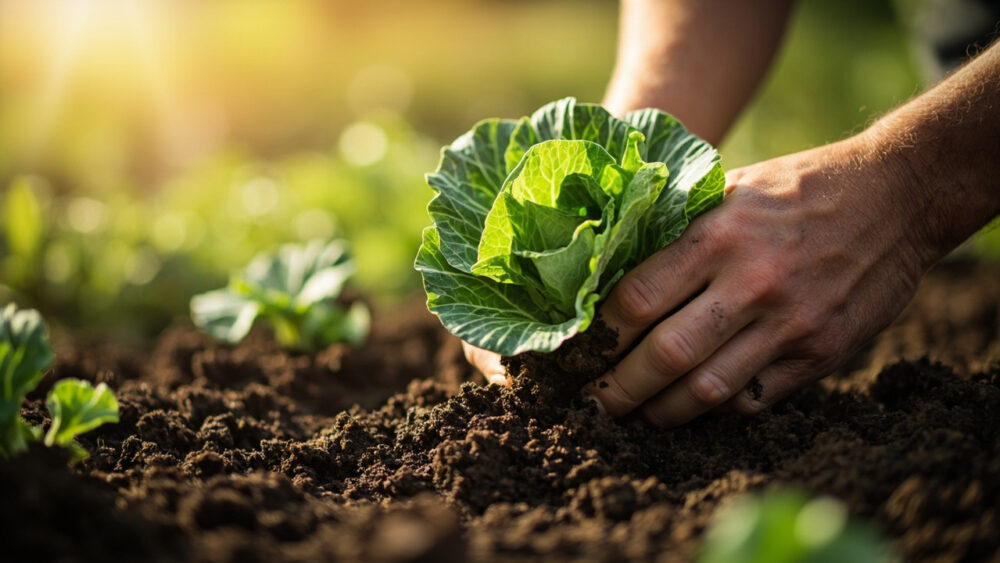
Space plants 12 to 24 inches apart depending on variety, tighter for small or compact heads, wider for large storage types, in rows 18 to 36 inches apart. Set transplants at the same depth they were growing in their pots, and firm the soil well so the stem does not wobble.
Mulch after planting to hold soil temperature steady and cut down on the freeze-thaw cycling that stresses young roots.
Get that bed ready before the window opens and the actual planting day takes ten minutes.
Zone and Region Notes That Actually Change the Timing
In zones 3 to 5, the spring window is short and the fall window even shorter, so many gardeners lean almost entirely on spring transplants and treat fall cabbage as a bonus crop in a good year.
In zones 6 to 8, you generally get both windows comfortably, spring transplants a few weeks before last frost and fall transplants in mid to late summer.
In zones 9 and up, summer heat is the real enemy, not cold, so cabbage often grows best as a fall-through-winter crop, planted as temperatures drop rather than as they rise.
Wherever you garden, the soil thermometer and your frost dates matter more than the zone number itself, the zone just tells you roughly when to expect those conditions.
Cabbage at a Glance
- When to plant, spring: transplants 2 to 4 weeks before your last frost date, once soil hits 45 F or warmer.
- When to plant, fall: transplants 10 to 12 weeks before your first fall frost, with 2 to 3 extra weeks padded in for slower autumn growth.
- Soil temperature range: 45 to 75 F, with 60 to 65 F as the sweet spot for steady head development.
- Spacing: 12 to 24 inches between plants, 18 to 36 inches between rows, depending on head size.
- Planting depth: transplants set at the same depth they grew in the pot, firmed in well.
- Cold tolerance: young plants handle brief dips to about 28 F once hardened off, mature heads tolerate frost into the low 20s F.
- Biggest risk: bolting from cold stress followed by a warm snap in spring, or heat stress from planting too late.
Get the soil temperature right and pad your fall count, and cabbage stops being finicky.
Everything else about growing it is just watering and patience.