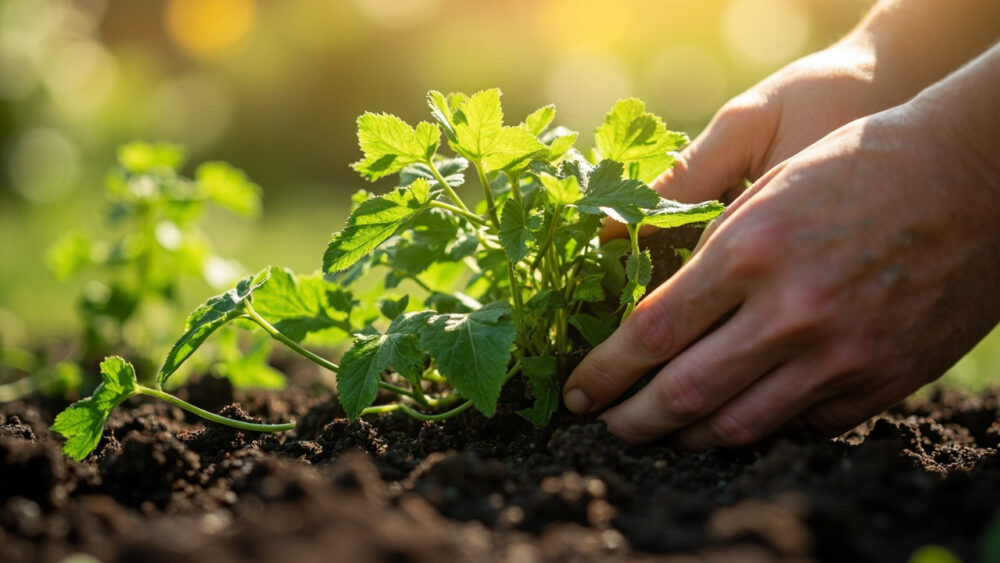
Growing catnip is genuinely one of the easier things you’ll plant this year: sow or transplant it after your last frost into any well-drained spot with at least a half day of sun, space plants 18 to 24 inches apart, and mostly leave it alone. It’s a tough perennial mint relative, and once it’s established it acts more like a weed than a delicate herb. That’s the good news, and also where the first real mistake shows up.
Most people who fail with catnip don’t fail from neglect. They fail from planting it somewhere they’ll regret in two years, or from starting seeds indoors and coddling them like basil when catnip actually wants to be ignored a little. There’s also a sign most new growers completely misread once the plant is up and thriving: the neighborhood cats flattening it before it ever gets a chance to bush out.
Stick with me through planting, feeding, and the pest that isn’t a bug at all, and I’ll give you a save-able Catnip at a Glance card at the very bottom with everything worth remembering in one place.
When to Plant Catnip
Plant catnip outdoors after your last spring frost has passed, once soil has warmed to at least 60°F. In most of the country that’s mid to late spring. Catnip is hardy in USDA zones 3 through 9, so once it’s in the ground it will shrug off winter in nearly every climate that grows tomatoes.
If you’re starting from seed indoors, begin 6 to 8 weeks before your last frost. Seeds are slow, sometimes taking 10 to 21 days to germinate, so patience matters more than warmth here.
Transplants and nursery starts can go in the ground as soon as frost risk is gone, even if the soil is still cool.
Timing solves half the battle, but where you plant it settles the other half.
Choosing the Spot and Prepping the Soil
Catnip wants full sun to partial shade, at least 4 to 6 hours of direct light for the sturdiest, most fragrant growth. In hot southern climates a little afternoon shade actually helps it hold its shape instead of sprawling and flopping.
Drainage matters more than fertility. Catnip tolerates poor, lean soil just fine, but it sulks and can rot in soil that stays soggy. Raised beds, slopes, or amended clay all work.
Here’s the part almost nobody plans for: catnip spreads by both seed and root, and it can behave aggressively in loose garden soil, crowding out neighbors over a couple of seasons. If you don’t want it colonizing the bed, grow it in a container or sink a bottomless pot into the ground to contain the roots.
Get the site right and planting itself takes five minutes.
Planting Catnip Step by Step
From seed
- Sow seeds about 1/4 inch deep, just barely covered, since they need some light to germinate well.
- Space seeds or thin seedlings to 18 to 24 inches apart once they have a few true leaves.
- Keep soil lightly moist, not wet, until germination, which can take two to three weeks.
From a nursery start or division
- Dig a hole the same depth as the root ball and about twice as wide.
- Set the plant so the crown sits level with the surrounding soil, not buried.
- Backfill, firm gently, and water in well.
- Space plants 18 to 24 inches apart; they’ll fill in and touch by midsummer.
Once it’s in the ground, catnip’s main job for the first two weeks is just building roots.
Watering and Feeding Through the Season
Water new plantings two to three times a week until you see fresh growth, then back off. Established catnip is genuinely drought-tolerant and would rather be too dry than too wet.
Check the soil an inch down before watering; if it’s still slightly moist, skip it. Overwatering mature catnip is the more common way people damage it, not underwatering.
Skip heavy feeding. Catnip grown in rich, over-fertilized soil gets leggy and weak-stemmed with weaker scent, which defeats the point if you’re growing it for cats or for cooking. A single light topdressing of compost in spring is plenty.
Feed it too well and you’ll get more mistakes to fix than benefits to enjoy.
The Problem That Isn’t a Bug
Catnip has few serious pest or disease issues. Watch for aphids or spider mites in hot, dry stretches, and treat with insecticidal soap if you see them, following the product label exactly. Root rot shows up only when drainage is poor, and the fix is better soil, not more care.
The real threat is cats. Once a plant releases its scent, cats will roll on it, chew it, and flatten it to the ground, sometimes within days of transplanting. This is the sign most beginners misread. They assume the plant is dying or diseased when really it’s just been loved to death by the neighborhood cat population.
Protect new plants with a temporary wire cloche or tomato cage wrapped in mesh until they’re established enough to take the abuse. Established catnip usually regrows from a mauling within a couple of weeks.
Guard it early, and the rest of the season is mostly about deciding when to cut it.
When and How to Harvest Catnip
Catnip is ready for its first real harvest once plants are 6 to 8 weeks old and 8 to 10 inches tall, usually right as small white or lavender flower buds start forming. The scent is strongest just before and during early bloom.
Cut stems in the morning after dew has dried, when the essential oils are most concentrated. Snip whole stems back by about a third, which encourages a second flush of growth within a few weeks.
For drying, hang small bundles upside down in a dark, airy spot for one to two weeks, then strip leaves and store them in a sealed jar out of light. A single established plant will give you two or three cuttings a season.
One honest note if you have cats or dogs at home: catnip itself is not toxic to cats or dogs, and the typical reaction is mild, temporary excitement or mellowing. If a pet eats a large quantity of a dried or packaged product and shows vomiting, lethargy, or other concerning signs, call your veterinarian rather than waiting it out.
Everything you need to keep straight about growing it lives in the card below.
Catnip at a Glance
- When to plant: after last frost, once soil hits at least 60°F, or start seed indoors 6 to 8 weeks before last frost.
- Spacing and depth: plant seeds about 1/4 inch deep, space plants 18 to 24 inches apart.
- Sun and soil: 4 to 6 hours of sun minimum, lean well-drained soil, tolerates poor soil but hates soggy roots.
- Watering: keep new plantings lightly moist, then let established plants dry out between waterings.
- Feeding: light compost topdressing once in spring, no heavy fertilizer.
- Biggest risk: cats flattening young plants, and aggressive spreading if left unconfined.
- Harvest window: 6 to 8 weeks after planting, at 8 to 10 inches tall, right around early bloom.
Get the drainage and the sun right, and catnip more or less grows itself.
The only real skill is protecting it from admirers until it’s tough enough to take the attention.