Learning how to care for roses comes down to five things: at least six hours of direct sun, deep watering at the roots instead of light sprinkles, rich soil with steady feeding through the growing season, a hard prune while the plant is dormant, and fast action on the fungal problems that show up on the leaves before they show up anywhere else. Get those right and roses are honestly no fussier than a tomato plant. Get one wrong and you get the sad, leggy, black-spotted bush that makes people think roses are hard.
Most of that reputation for difficulty comes from a handful of specific, repeatable mistakes, not from the plant itself. There is one watering habit that quietly kills more roses than any pest ever does, and it is not the one you think. There is also a sign of thriving that most gardeners misread as a problem and panic-treat right when the plant is doing exactly what it should.
Stick with me through the sections below and I will hand you the honest answer to both, plus the mistakes that cost people an entire season of bloom. At the bottom is a save-able Roses at a Glance card with the numbers you will actually want on your phone the next time you are standing in front of the bush wondering what to do.
Light, Placement, and Temperature
Roses want at least six hours of direct sun a day, and most varieties bloom harder with seven or eight. Morning sun matters more than you would guess, since it dries dew off the leaves fast and that alone cuts down on fungal disease.
Give each bush enough room to breathe. Cramming roses against a fence or wall with no airflow behind them is how mildew sets in by midsummer even in a sunny spot.
Roses tolerate real heat and real cold once established, they are hardy in USDA zones 4 through 9 depending on the variety, but they resent being planted in a low spot where water pools or cold air settles on frosty nights.
Placement decides half your season before you ever pick up a watering can.
Watering: How Much, How Often, and the Habit That Kills Them
Roses need about 1 to 1.5 inches of water a week, delivered in one or two deep soakings rather than daily light sprinkles. Water at the base, not overhead, and check soil moisture 2 to 3 inches down before watering again. If it is still damp, wait.
Here is the mistake that ruins more roses than any bug or disease: shallow, frequent watering. It trains roots to stay near the surface, where they dry out fast and cannot support the plant through a hot week.
If you assumed more water always means a healthier rose, that guess is exactly backward here. Overwatered roses get yellow leaves and root rot just as often as thirsty ones wilt, and the two look nearly identical from a few feet away.
The real tell is the soil, not the leaves, so always check depth before you decide.
Soil, Feeding, and the Timing People Get Backward
Roses want rich, well-drained soil with a pH around 6.0 to 6.5, amended with compost or aged manure at planting time. In containers, use a quality potting mix, not garden soil, which compacts and drowns the roots.
Feed roses through their growing season, starting a few weeks after last frost once new leaves are out, and continuing every 4 to 6 weeks with a balanced or rose-specific fertilizer. Stop feeding about 6 to 8 weeks before your first expected fall frost.
That last part is the piece most people get backward. Feeding late in the season pushes soft new growth right as cold weather arrives, and that new growth is what dies back first and invites disease into the whole cane.
Good soil sets the ceiling on bloom size, but timing decides whether the plant survives to use it.
Pruning, Deadheading, and the Routine Work
Prune roses while they are dormant, in late winter or very early spring, right before new growth starts, cutting canes back to healthy, white centered wood at a 45 degree angle above an outward facing bud. Remove any dead, damaged, or crossing canes first, always.
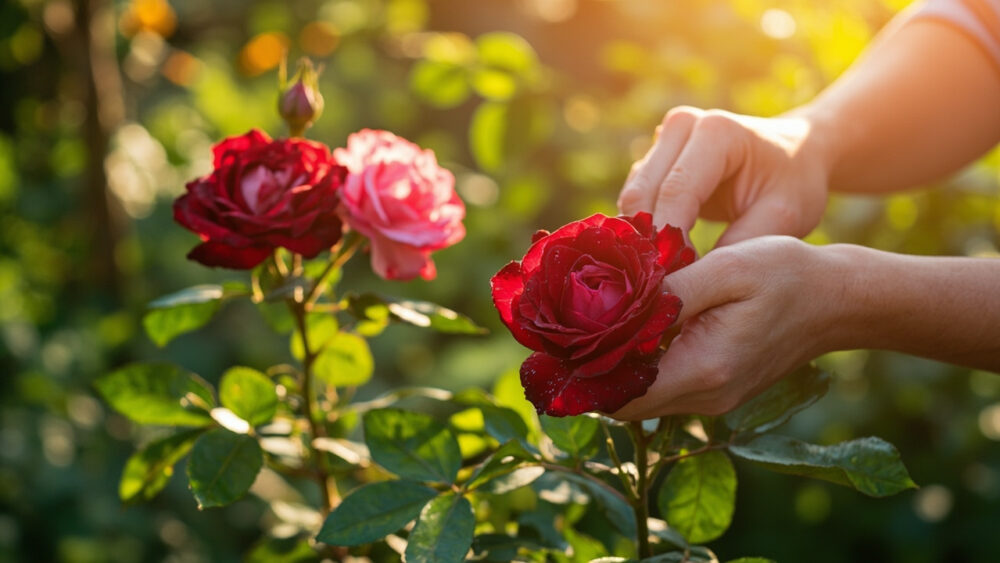
Deadhead spent blooms through the season by cutting down to the first set of five leaflets, which pushes the plant to keep flowering instead of setting seed. Clean up fallen leaves underneath the bush regularly too, since old leaf litter is where fungal spores overwinter.
Repot container roses every 2 to 3 years, sizing up gradually and refreshing the mix each time.
Skip the dormant prune and you will still get flowers, just fewer of them, on a taller, messier bush that shades out its own lower leaves.
The Problems That Actually Show Up, and How to Read Them
Black spot is the big one: circular black or dark brown spots on lower leaves that eventually yellow and drop. It thrives in humid, still air and spreads through splashing water, so watering at the base and improving airflow does more than any spray.
Powdery mildew looks like a dusting of white flour on leaves and buds, usually in warm days and cool nights with poor circulation. Aphids cluster on new growth and buds, distorting them, and a strong water spray knocks most infestations down before they become serious.
For anything fungal that keeps returning despite better watering and airflow, a fungicide labeled for roses can help; follow the product label exactly on timing and application.
Japanese beetles chew ragged holes straight through petals and leaves in midsummer in the regions where they are established, and handpicking them into soapy water in the morning, when they are slow, is still the most reliable non-chemical control.
None of these problems are mysterious once you know which symptom belongs to which cause.
How to Tell a Rose Is Actually Thriving
A thriving rose pushes out new reddish-tinted growth at the cane tips through the growing season, holds deep green leaves low on the plant, and reblooms in flushes every 4 to 6 weeks on repeat-flowering varieties. Canes should feel firm and green or brown, not soft or blackened.
Here is the sign most people misread. A big flush of blooms followed by a noticeably quieter week or two is not the plant failing, it is the plant resting and building new growth for the next flush.
Panic-feeding or panic-pruning during that quiet stretch is the actual mistake, not the quiet stretch itself.
Judge a rose over a full season, not a single week, and the picture gets a lot less confusing.
Roses at a Glance
- Sun needed: at least 6 hours of direct sun daily, morning sun is ideal for drying leaves fast.
- Watering: 1 to 1.5 inches per week in one or two deep soakings, check soil 2 to 3 inches down before watering again.
- Soil: rich, well drained, pH 6.0 to 6.5, amended with compost at planting.
- Feeding: every 4 to 6 weeks through the growing season, stop 6 to 8 weeks before first fall frost.
- Pruning: hard prune during dormancy in late winter or very early spring, deadhead spent blooms all season.
- Common problems: black spot, powdery mildew, aphids, Japanese beetles, mostly managed with airflow, base watering, and prompt cleanup.
- Hardiness: most garden roses thrive in USDA zones 4 through 9 depending on variety.
If you remember one thing, remember this: water deep and at the base, never shallow and overhead.
Everything else about roses is forgiving as long as that habit is right.