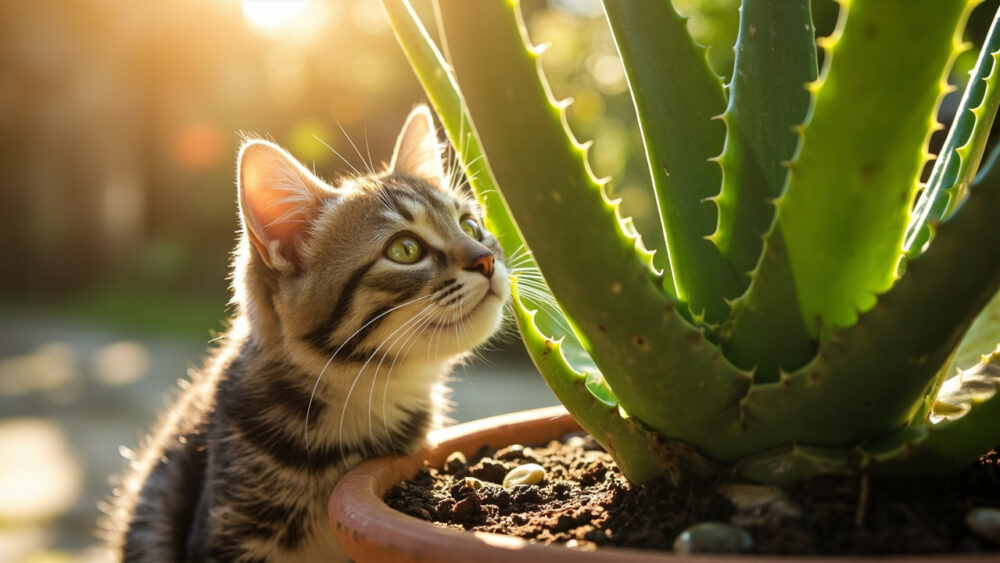
Yes, aloe vera is toxic to cats. The gel inside the leaves is mild and mostly water, but the plant also contains compounds in and near the leaf skin that cause real trouble if a cat chews or swallows it. So the honest answer to is aloe vera toxic to cats is a clear yes, with vomiting, diarrhea, and lethargy being the most common results, not a life-threatening emergency in most cases, but not nothing either.
What changes the answer is how much the cat actually ate and which part. A curious nibble on one leaf tip is a very different situation than a knocked-over pot and a chewed-up rosette. Later on I will walk you through how to tell what happened in your own house, exactly what to say when you call the vet, and which look-alike succulents you can grow instead if you want the aloe look without the risk.
Stick with me to the bottom and you will find a save-able quick-reference card that sums up every part of this so you are not digging through the article again at ten at night.
So Is Aloe Vera Actually Toxic to Cats?
Aloe vera is classified as toxic to cats by veterinary and animal poison control organizations. It is not in the same league as lilies, which can cause kidney failure, but it is genuinely irritating to the digestive system and should not be treated as harmless just because humans use aloe gel on sunburns.
The compounds responsible are saponins and anthraquinones, concentrated mainly in the latex layer just under the outer skin of the leaf, not in the clear inner gel itself. That distinction matters, and it is the next thing worth understanding.
The part of the plant your cat actually got into changes everything about how worried to be.
Which Part and How Much Actually Matters
If you assumed the whole plant is uniformly toxic, that is a reasonable guess, but it is not quite right. The inner gel is the mildest part, while the yellowish latex under the skin and the leaf skin itself carry the higher concentration of irritating compounds.
A cat that licks a broken leaf and gets some gel on its tongue is unlikely to have more than mild drooling or a brief stomach upset. A cat that chews through several leaves, skin and all, is getting a much bigger dose of the compounds that cause vomiting and diarrhea.
Size matters too. A kitten or a small cat reacts to the same amount of plant material much more than a large adult cat does, so do not use a big cat’s mild reaction as your benchmark for a small one.
Knowing the part and amount matters, but it will not tell you what a reaction actually looks like once it starts.
Signs to Watch For After Exposure
Most reactions show up within a few hours of chewing or swallowing plant material. Watch for these general signs:
- Vomiting, sometimes repeated
- Diarrhea, which can appear reddish or darker than normal
- Drooling or pawing at the mouth
- Lethargy or hiding more than usual
- Reduced appetite or refusing water
- Visible plant material in vomit
Tremors, labored breathing, or collapse are not typical aloe reactions and point to something more serious, whether that is a different plant, a different toxin, or an unrelated illness. Do not assume aloe is the cause just because there is an aloe plant in the house.
Noticing the signs is only useful if you know what to actually do with that information.
What to Do If Your Cat Ate Aloe Vera
Call your veterinarian or an animal poison control line as soon as you suspect ingestion, even if your cat seems fine right now. Reactions can take a few hours to fully show up, and a phone call costs you nothing but a few minutes.
Before you call, try to note how much of the plant is missing, whether your cat got into the leaves, the gel, or both, and roughly when it happened. If you can, bring a photo of the plant or a small clipping with you, since it helps confirm exactly what your cat was exposed to.
Do not give home remedies, induce vomiting, or offer any over-the-counter medication on your own. What seems like a reasonable home fix can make things harder for a vet to treat and can genuinely delay proper care.
If your cat is vomiting repeatedly, seems weak, or will not eat or drink for more than a few hours, that is a same-day vet visit, not a wait-and-see situation.
Getting through this one incident is the immediate job, but preventing the next one is the better long-term plan.
Safer Look-Alikes If You Want the Aloe Look
You do not have to give up the thick, architectural succulent look to keep your cat safe. A few genuinely non-toxic options give you a similar shape and texture:
- Haworthia: small, spiky-looking rosettes, often with translucent stripes, and non-toxic to cats and dogs
- Echeveria: rosette-forming succulents in blue-green or purple tones, generally considered pet-safe
- Christmas cactus: flatter, segmented leaves with a very different look but a similarly easy care routine, and non-toxic
- Ponytail palm: not a true palm, but a tough, sculptural houseplant that is safe for curious cats to be around
If you already own aloe and are not willing to part with it, the more realistic fix is placement. High shelves, hanging planters, or a room your cat does not have access to solve the problem without solving it by getting rid of the plant.
Whichever route you take, the details are worth having in one place you can actually find again.
Aloe Vera: Quick Reference
- Toxicity: yes, aloe vera is toxic to cats, classified as a toxic plant by veterinary poison control resources
- Most toxic part: the leaf skin and the yellowish latex just under it, more than the clear inner gel
- Typical severity: mild to moderate digestive upset in most cases, not usually life-threatening on its own
- Common signs: vomiting, diarrhea, drooling, lethargy, reduced appetite within a few hours of exposure
- What changes the outcome: the amount eaten, the cat’s size, and whether skin and latex were consumed along with gel
- What to do: call your veterinarian or animal poison control right away, note the amount and timing, bring a plant sample or photo, never give home remedies
- Safer alternatives: haworthia, echeveria, Christmas cactus, and ponytail palm for a similar look without the risk
Keep this card wherever you keep other pet emergency numbers.
An aloe plant and a cat can coexist, but it takes placement, attention, and a vet’s number saved in your phone, not luck.