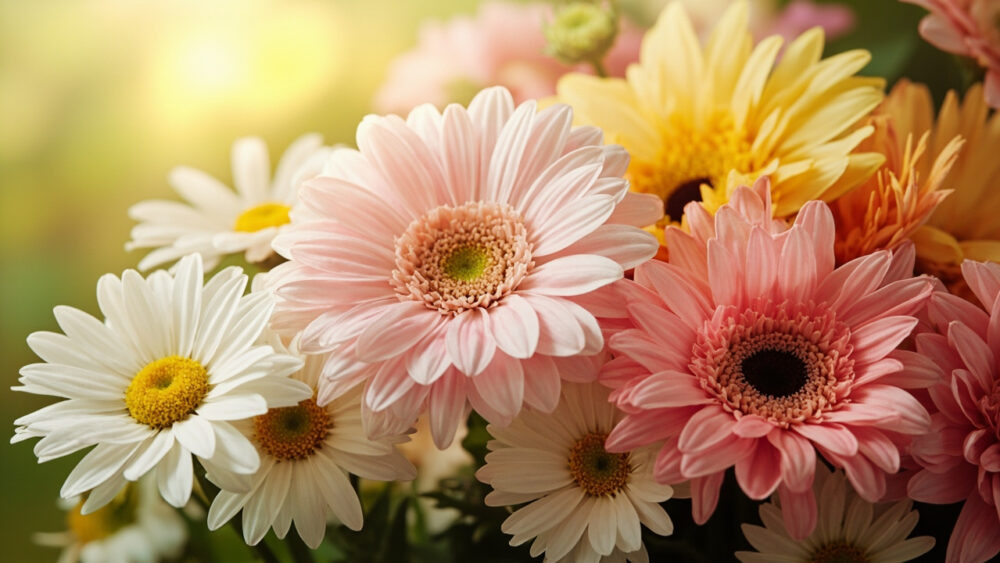
The fastest way to sort out types of daisies is by lifespan and size: some are true perennials that come back for years and clump larger every season, some are short-lived and best treated as annuals, and some are technically not daisies at all even though everyone calls them that. Get that sorted first and the rest of the choice gets easy.
The Shasta daisy is the one most people grab at the garden center for the wrong reason. It looks like “the” daisy, so shoppers assume it is tough as weeds, but a few named varieties sulk in heavy clay and humid summers if you do not divide them.
Meanwhile there is a quietly excellent daisy that experienced gardeners plant by the dozen and rarely brag about, because it just works every year without asking for anything. Number 13 on this list is the one most people get completely wrong, usually by planting it somewhere it was never built to survive.
I have grouped all 15 into categories by growth habit, and the last few entries, plus the exact method for choosing between them, are waiting at the bottom of this page.
Classic Perennial Daisies
These are the ones that come back on their own and get better with age, provided you divide them every few years.
1. Shasta Daisy
The white-petaled, yellow-centered daisy most people picture when they hear the word. It grows 18 to 36 inches tall, is hardy in zones 4 to 9, and wants full sun and soil that drains well; it declines fast in wet clay or deep shade and needs dividing every 2 to 3 years to stay vigorous.
2. Oxeye Daisy
The wild roadside daisy that Shasta was bred from, smaller and scrappier at 12 to 24 inches. It is genuinely tough, hardy in zones 3 to 8, and spreads aggressively enough that several states list it as invasive, so plant it only if you can contain it or already have a meadow you do not mind it taking over.
3. Michaelmas Daisy (Aster)
The fall-blooming purple and pink daisy that shows up when everything else is finished. Botanically an aster, not a true daisy, it grows 2 to 4 feet, is hardy in zones 4 to 8, and needs full sun plus a pinch-back in early summer or it flops open under its own weight by September.
4. Painted Daisy (Pyrethrum Daisy)
The one with pink, red, or white petals instead of plain white, blooming in early summer on 18 to 24 inch stems. Hardy in zones 3 to 7, it prefers cooler summers and can be short-lived in hot, humid climates, so treat it as a 2 to 3 year perennial rather than a forever plant in the South.
Those four cover the reliable backbone, but the daisies that survive true neglect live in the next group.
Tough, Low-Maintenance Daisies
If your main qualification is “I will forget this exists after planting it,” start here.
5. Black-Eyed Susan
The yellow-petaled daisy with a dark chocolate-brown centerblooming from midsummer into fall on 1 to 3 foot stems. It tolerates poor soil, drought, and neglect better than almost anything on this list, is hardy in zones 3 to 9, and self-seeds readily, which is either a bonus or a nuisance depending on how tidy you like your beds.
6. Blanket Flower (Gaillardia)
The red-and-yellow bicolor daisy that looks like it belongs in a hot, dry landscape, because it does. Hardy in zones 3 to 10, it thrives in sandy or rocky soil, resents rich wet ground, and blooms nonstop from early summer to frost with almost no fussing.
7. Coreopsis (Tickseed)
The airy, fine-textured daisy with narrow yellow or bicolor petals on wiry stems 12 to 24 inches tall. Hardy in zones 4 to 9, it flowers hardest in lean, well-drained soil and actually blooms less if you feed it too well.
8. Gerbera Daisy
The bold, oversized daisy sold in nearly every color from white to deep red, grown as a houseplant or patio annual in most climates. It is reliably hardy only in zones 8 to 11, needs bright light and sharp drainage, and rots quickly if water sits on the crown, so most gardeners in colder zones treat it as a one-season flower.
Toughness has its place, but the next group is where daisies stop looking like daisies at all.
Daisies That Do Not Look Like Daisies
These share the daisy flower structure, a center disc surrounded by ray petals, but the overall plant throws people off.
9. English Daisy (Bellis perennis)
The tiny lawn daisyonly 3 to 6 inches tall, with small white or pink pom-pom-like blooms. Grown as a cool-season annual or short-lived perennial in zones 4 to 8, it is the classic edging and container daisy, and it fades fast once summer heat arrives.
10. African Daisy (Osteospermum)
The daisy with a dark blue or purple center ring instead of plain yellow, in shades of purple, pink, orange, and white. Hardy as a perennial only in zones 9 to 11, it is grown as a heat-loving annual everywhere else and closes its petals on cloudy, cool evenings, which surprises people who assume it is dying.
11. Marguerite Daisy
The shrubby daisy that grows into a rounded mound 2 to 3 feet across, covered in small white or yellow blooms nearly year-round in mild climates. Hardy in zones 9 to 11 and grown as an annual elsewhere, it wants regular pinching to stay full instead of leggy.
12. Livingstone Daisy
The low, sprawling daisy with glossy, almost candy-colored petals that only open in full sun and close by afternoon. It grows just 4 to 6 inches tall, is treated as an annual outside zones 9 to 11, and is genuinely one of the best choices for hot, dry rock gardens or gritty containers where other daisies struggle.
That covers the odd shapes, but the next daisy is the one people plant in the wrong spot more than any other on this list.
The Underused and the Misunderstood
This is the payoff section, including the entry most people get wrong and a couple of quietly excellent picks nobody talks about enough.
13. Fleabane Daisy (Erigeron)
The delicate, thin-petaled daisy that looks fragile but is one of the toughest self-sufficient bloomers you can plant, hardy in zones 3 to 9. Most people get it wrong by babying it in rich, moist garden beds, where it flops and rots; it actually wants lean, gritty, well-drained soil, ideally tucked into gravel paths, rock walls, or the edge of a border where it can seed lightly into cracks.
14. Aster novae-angliae (New England Aster)
The tall, deep purple fall daisy that pollinators mob in September and October, growing 3 to 6 feet in zones 4 to 8. It is the daisy experienced gardeners plant for late-season structure and bees, and it needs a hard cutback in late spring or it turns into a floppy, top-heavy mess by bloom time.
15. Roman Chamomile (Chamaemelum nobile)
The low, ferny-leaved daisy with small white and yellow blooms and an apple-like scent when crushed underfoot. Hardy in zones 4 to 9, it is grown as a fragrant lawn substitute or edging plant, tolerates light foot traffic, and prefers well-drained soil in full to part sun. Note that this is a garden plant description, not a foraging guide, so do not harvest or eat any chamomile-type plant from the wild or your yard without expert identification and guidance from someone qualified in edible plants.
Fifteen daisies down, and now here is the fast way to actually pick between them.
How to Choose the Right One
- Check your space first: tiny edging spots want English daisy or Livingstone daisy, mid-border gaps want Shasta or coreopsis, and big fall drama wants New England aster.
- Match your climate honestly: if you are outside zones 9 to 11 and want gerbera, African daisy, or marguerite daisy to survive winter, plan on treating them as annuals rather than fighting your zone.
- Decide the purpose: pollinator support points to black-eyed Susan, blanket flower, and asters, cut flowers point to Shasta and painted daisy, and gritty problem spots point to fleabane or Livingstone daisy.
- Be honest about your care appetite: if you want to plant it once and mostly ignore it, choose black-eyed Susan, blanket flower, or fleabane over the fussier Shasta cultivars or gerbera.
- Watch your soil drainage: most daisies rot before they ever struggle from drought, so when in doubt, choose the leaner, drier-soil option over the richer one.
- Confirm bloom timing: stack an early bloomer like painted daisy with a fall bloomer like Michaelmas or New England aster so something is always flowering.
Pick based on your actual soil and sun, not the prettiest tag on the rack, and any daisy on this list will earn its spot.
Plant a few from different categories and you will have daisies blooming from late spring clear through the first hard frost.