Here is how to grow canna lilies without wasting a season on it: plant the rhizomes 3 to 4 inches deep and 18 to 24 inches apart once soil temperatures sit above 60°F, give them full sun and rich, moisture-holding soil, and keep them fed and watered through summer for tropical foliage and hot-colored blooms by mid to late summer. That is the whole plant in one sentence. The rest is doing it at the right moment and not skipping the parts that feel optional but aren’t.
Most canna failures trace back to one thing: planting too early into cold, wet soil that just sits there and rots the rhizome before it ever gets a chance to push a shoot. There is also a sign nearly every beginner misreads about when a canna is actually ready to bloom, and it is not about height. And if you are wondering whether you need to dig these up every fall, the honest answer depends entirely on your zone, and guessing wrong either way costs you either the plant or a lot of unnecessary work.
Stick with me through planting, feeding, and the problems that actually show up on cannas, and I will hand you a save-able Canna Lilies at a Glance card at the very bottom with every number in one place.
When to Plant Canna Lilies
Wait for warm soil, not just warm air. Cannas are tropical, and cold, damp soil is where rhizomes rot before they sprout. Plant outdoors 2 to 3 weeks after your last frost date, once soil has warmed to at least 60°F at a 4-inch depth.
In zones 7 and colder, that often means late spring. In zones 8 through 11, you can plant earlier and may not need to lift rhizomes for winter at all.
If your season is short, start rhizomes indoors in pots 4 to 6 weeks before your last frost, then transplant out once it’s warm. That head start is often the difference between blooms in July and blooms that barely open before fall.
Get the timing right and the next decision, where you actually put them, matters just as much.
Choosing the Spot and Prepping the Soil
Full sun is non-negotiable for the best bloom. Cannas want 6 or more hours of direct sun daily. In partial shade they’ll still grow, mostly leaves, with fewer and smaller flowers.
They also want soil that holds moisture without staying waterlogged. Work in 2 to 3 inches of compost or aged manure before planting, especially in sandy or heavy clay soil.
Cannas are heavy feeders and heavy drinkers both, so soil that’s been built up with organic matter saves you a lot of babysitting later. This is also a plant that tolerates boggy edges, so it’s a legitimate pick for the soggy spot near a downspout or pond margin where other flowers struggle.
Once the bed is ready, the planting itself is simple, but the depth and orientation trip people up.
Planting Canna Rhizomes Step by Step
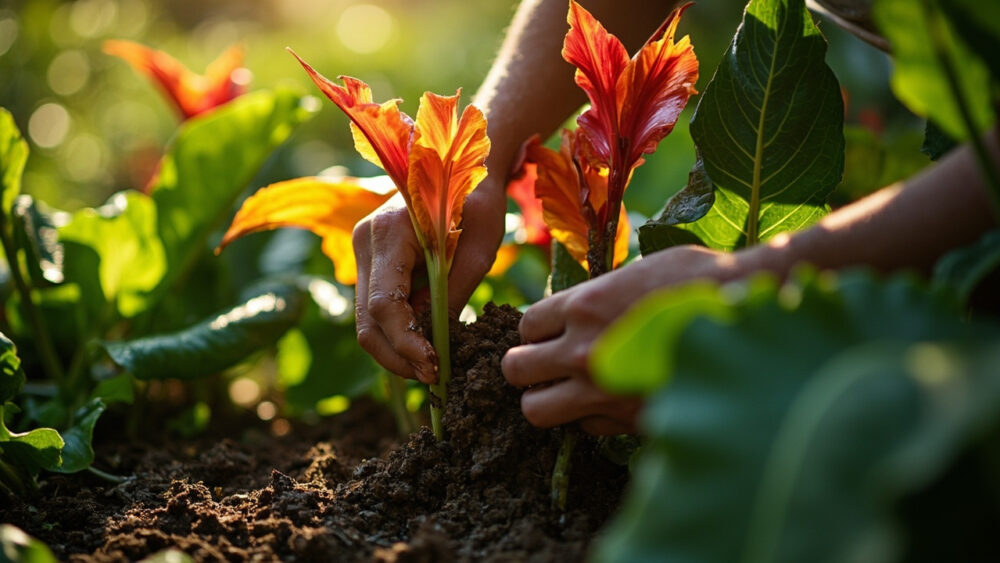
- Depth: dig holes or a trench 3 to 4 inches deep.
- Orientation: lay the rhizome horizontally with growing eyes (the pointed buds) facing up.
- Spacing: 18 to 24 inches apart for standard varieties, tighter (12 to 15 inches) for dwarf types.
- Cover and water: backfill with soil, water in well, then hold off on heavy watering until you see the first shoot, usually 2 to 4 weeks depending on soil temperature.
- Mulch lightly: a 1 to 2 inch layer keeps soil temperature even without smothering the emerging shoot.
That first shoot is the real signal that the rhizome took, and it changes how you water from here on out.
Watering and Feeding Through the Season
Once cannas are up and growing, they want consistent moisture, not occasional soaking. Aim for about 1 inch of water per week, more during hot, dry stretches, since these plants come from tropical wetlands and genuinely dislike drying out.
Feed monthly with a balanced fertilizer, or work a slow-release granular into the soil at planting time. A phosphorus-leaning feed helps push bloom production if you’re getting more leaf than flower.
Here’s the guess everyone makes and gets backwards: if a canna looks pale or stalled in early summer, most people assume it needs more water. Usually it needs more nitrogen, not more water, especially in sandy soil where nutrients wash through fast.
Check the soil an inch down before watering; if it’s still damp, the problem is almost always feeding, not thirst.
Fed and watered right, cannas grow fast, which is exactly when the pests show up looking for that soft new growth.
Problems That Actually Strike Cannas
Canna leaf rollers are the most common headache. These caterpillars roll new leaves into a tube and skeletonize them from inside. Unroll a suspicious leaf and you’ll usually find the culprit; remove it by hand or treat per label with a product labeled for caterpillars on ornamentals.
Japanese beetles chew ragged holes in leaves and flowers during mid-summer. Handpicking in early morning when they’re sluggish works better than most sprays.
Slugs and snails target young shoots right at emergence, leaving ragged edges and slime trails.
Canna rust shows up as orange-brown pustules on leaves in humid climates. There’s no cure once it’s established, so remove and dispose of affected foliage and improve airflow by dividing crowded clumps.
Root rot from soggy, cold soil is the one that kills the whole plant rather than just marking the leaves, which is exactly why planting timing and drainage matter as much as they do.
Handle the pests early and the plant mostly takes care of itself the rest of summer, right up through bloom.
When Canna Lilies Bloom, and What to Do at Season’s End
Cannas typically bloom 8 to 10 weeks after plantingputting most gardeners into flower by mid to late summer and continuing until frost. The sign everyone misreads is height: a canna can be chest-high with no flower stalk yet, because height comes from foliage growth first, blooming second.
What actually tells you bloom is close is a thickened central stalk pushing up above the leaf fan, distinct from the broad leaf stems around it. Deadhead spent blooms to keep the plant producing new ones instead of setting seed.
As for digging up rhizomes: in zones 8 and warmer, cannas can usually overwinter in the ground with a layer of mulch. In zones 7 and colder, dig rhizomes after the first light frost blackens the foliage, let them air-dry for a day, then store them in slightly damp peat or vermiculite somewhere cool and dark, around 45 to 55°F, until you replant next spring.
Skip that step in a cold zone and you’re not being lazy, you’re just starting over with new rhizomes next year, which is a legitimate choice but an honest cost to know about now.
Everything above compresses down to the card below, worth saving before you head out to the garden.
Canna Lilies at a Glance
- When to plant: 2 to 3 weeks after last frost, once soil hits at least 60°F, or start indoors 4 to 6 weeks early in short-season zones.
- Depth and spacing: plant rhizomes 3 to 4 inches deep, eyes facing up, spaced 18 to 24 inches apart, 12 to 15 inches for dwarf types.
- Light and soil: full sun, 6 or more hours daily, in rich soil amended with 2 to 3 inches of compost, moist but not waterlogged.
- Watering: about 1 inch per week, more in heat, never letting soil dry out completely.
- Feeding: balanced fertilizer monthly, or slow-release granular at planting, lean toward phosphorus if leaves outpace blooms.
- Bloom time: 8 to 10 weeks after planting, continuing until frost, signaled by a thickened central flower stalk, not overall height.
- Winter care: leave in ground with mulch in zones 8 and up, dig and store rhizomes at 45 to 55°F in zones 7 and colder.
If you remember one thing, remember the soil temperature, not the calendar date.
Warm soil and steady water do more for canna lilies than any other single decision you’ll make this season.