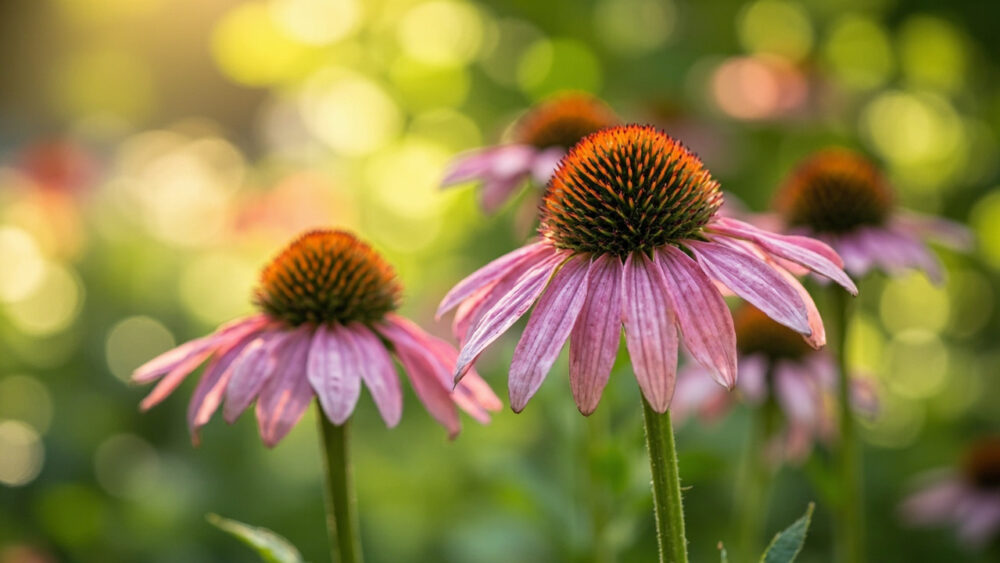
Yes, coneflowers come back every year in USDA zones 3 through 9, which covers most of the country. They are true perennials, not annuals, and a healthy plant will return from the same root system every spring for years, often five to ten or more before it needs dividing.
But “yes” is not the whole answer, and if you clicked this ad standing over a droopy, just-bought coneflower wondering if you wasted your money, you need the rest of it. There is one climate condition that flips the answer to no, one mistake in fall cleanup that quietly kills coneflowers over winter, and one sign in your yard right now that tells you whether this particular plant is coming back or not.
Stick around for the quick-reference card at the bottom. It is built to save and check next spring when you are staring at a bare patch of dirt trying to remember if that’s your coneflower or just weeds coming up.
The Plain Answer: Perennial, With Zone Exceptions
Purple coneflower (Echinacea purpurea) and its many hybrid cousins are winter-hardy perennials in zones 3 through 9. The roots survive freezing ground just fine. The top growth dies back to nothing, which fools a lot of new gardeners into thinking the plant died.
Zone 10 and warmer is where it gets honest. Coneflowers want a real winter chill to reset for the next bloom cycle, and in hot, frost-free climates they often struggle or peter out after a season or two, behaving more like a short-lived perennial than a reliable comeback plant.
Some newer hybrid coneflower varieties, especially ones bred for unusual colors like orange or deep red, are also genuinely less hardy and less long-lived than the classic purple species. If you planted one of those and it does not return, that is not automatically something you did wrong.
Your zone sets the baseline, but what happens between now and spring is what actually decides it.
What Happens Over Winter, and What “Dead” Actually Looks Like
After the first hard frost, coneflower foliage browns, flops, and looks completely finished. This is normal and expected, not a warning sign.
Underneath, the crown, the woody base where stems meet roots, is alive and storing energy for next year. You will see nothing happen above ground for months. That silence is the part that spooks people into thinking the plant died.
Come spring, new growth emerges from that same crown, usually as low rosettes of leaves before any stem shoots up. It typically shows up a few weeks after your last hard frost, once soil temperatures climb into the 50s.
If you assumed a bare, brown stalk all winter means the plant is gone, that guess costs a lot of perfectly fine coneflowers their second season.
How to Actually Overwinter One and Improve the Odds
Here is the mistake that kills more coneflowers over winter than cold ever does: cutting the plant flush to the ground in fall and then piling on wet mulch right against the crown. That traps moisture, and the crown rots before spring even arrives.
Leave 3 to 4 inches of stem standing when you cut back in late fall, or better, leave the whole seedhead-topped stalk standing through winter. It helps trap insulating snow, feeds goldfinches, and you cut it back in early spring instead.
Mulch is genuinely useful, but keep it a couple inches away from the crown itself, not mounded on top of it. Good drainage matters more than extra warmth. Coneflowers native to prairie conditions tolerate cold well but hate sitting in soggy, poorly drained soil all winter.
If your coneflower is in a container rather than the ground, its roots are far more exposed to cold. A pot left above ground in zone 5 winter can freeze solid clear through, which kills roots that would have survived fine in the ground. Sink the pot into a garden bed for winter, or move it against a sheltered wall and wrap the container, if you want it to return.
Get the crown right and drainage right, and most of what determines return-or-not is already handled.
When Treating It as an Annual Is Honestly the Right Call
Sometimes the smartest move is to stop expecting a comeback. If you garden in zone 10 or hotter, or you’re growing one of the fussier patented hybrid colors, planting fresh each spring and enjoying a full season of bloom without winter anxiety is a completely reasonable choice.
The same goes for heavy clay soil that stays wet all winter and cannot be amended easily. Rather than fighting drainage every year and losing plants to crown rot, some gardeners just replant.
Coneflowers are also generous self-seeders in the right conditions, so even a plant that does not personally survive winter often leaves volunteer seedlings nearby the following spring. That is a form of coming back too, just not from the same roots.
Whether yours is a true multi-year perennial or a one-and-done depends on the same handful of details, which is exactly what the card below sorts out.
Coneflowers: Quick Reference
- Core answer: yes, coneflowers are perennials and return yearly in zones 3 through 9, from the same root crown, for roughly five to ten years or more before dividing is needed.
- Zone exception: in zone 10 and warmer, lack of winter chill often makes them short-lived, sometimes treated as an annual instead.
- Winter appearance: foliage dies back completely and looks dead, this is normal, the living crown is at soil level, not in the visible stems.
- Spring return timing: new leafy growth emerges a few weeks after your last hard frost, once soil warms into the 50s, later than many other perennials.
- Biggest winter killer: wet, poorly drained soil or mulch piled directly against the crown, causing rot, far more dangerous than cold itself.
- Fall cutback rule: leave 3 to 4 inches of stem, or leave seedheads standing all winter for birds and insulation, cut back in early spring instead.
- Container coneflowers: roots freeze more easily above ground, sink the pot into a garden bed or shelter and insulate it for winter survival.
- Hybrid varieties: patented colors like orange or red are often less hardy and shorter-lived than classic purple coneflower.
Get the drainage and the crown right, and most coneflowers will outlast the fence you planted them next to.
Next spring, check the crown before you write anything off as dead.