Russian sage cares for itself once it’s established, and that’s really the whole secret. Give it full sun, dry-ish soil, and a hard prune once a year, and it will shrug off drought, heat, and neglect that would kill most other flowering perennials. Get any one of those wrong, though, and you end up with the two most common Russian sage complaints: a floppy, sprawling plant that falls open in the middle, or a woody, half-dead-looking clump that barely leafs out in spring.
There’s one mistake that causes both of those problems more than anything else, and it’s not what most people assume. It isn’t watering too little. It’s the opposite, plus one bad habit with the pruners that most gardeners do backwards.
Stick with me and I’ll walk through exactly where to plant it, how little water it actually wants, when to cut it back and by how much, and the honest read on the “sign of trouble” that usually isn’t trouble at all. Save the Russian Sage at a Glance card at the bottom for the fast version.
Light, Placement, and Temperature
Russian sage wants full sun, at least 6 hours a day, and it genuinely performs best with 8 or more. In partial shade it grows tall, thin, and leggy, then flops over the first time it rains. That floppy, open-centered look everyone blames on the variety is almost always a light problem, not a genetics problem.
It’s hardy in USDA zones 4 through 9, tolerates heat into the high 90s without complaint, and actually prefers a lean, hot, slightly neglected spot over a rich, pampered bed. Good air circulation matters too, since crowding invites the powdery mildew we’ll get to later.
The plant everyone thinks needs babying is usually the one that got planted somewhere too comfortable.
Watering: Less Than You Think, and Almost None Once Established
Water a newly planted Russian sage every 5 to 7 days for the first month or two, enough to keep the top 3 to 4 inches from drying out completely while roots establish. After that first season, cut way back. Established plants want water maybe once every 2 to 3 weeks in a normal summer, and in many climates natural rainfall covers it entirely.
If you assumed a wilted, sad-looking Russian sage needs more water, that guess is what kills most of them. Soggy, slow-draining soil rots the roots long before drought ever touches this plant.
Check by pushing a finger 2 inches down. If it’s still damp, wait. Russian sage would rather go a week too dry than a week too wet.
Once you get the water right, the soil underneath it matters just as much.
Soil, Drainage, and Feeding
Russian sage wants soil on the lean, sandy, fast-draining side, ideally neutral to slightly alkaline. Heavy clay is the real enemy here, not poor fertility. If your soil holds water after rain, work in coarse sand or grit before planting, or raise the bed 6 to 8 inches.
Skip the fertilizer, or use it sparingly. A single light topdressing of compost in spring is plenty. Rich soil and regular feeding produce exactly the weak, floppy growth that poor soil prevents, which is the opposite of how most perennials behave.
This is a plant where doing less for it is doing it a favor.
Pruning: The Task Almost Everyone Times Wrong
Here’s the habit that ruins more Russian sage plants than any pest ever does. Most gardeners either never cut it back, or they prune it hard in fall right after the blooms fade. Both are mistakes.
The right move is to leave the woody stems standing through winter and cut back hard in early spring, once you see new green growth low on the stems, usually 4 to 8 weeks before your last frost depending on climate. Cut the whole plant down to 6 to 10 inches, or to just above the lowest set of visible buds.
Fall pruning removes the structure that helps the plant handle winter wind and moisture, and it also removes next year’s flowering wood before it’s had a chance to do anything. Spring pruning on new growth is what keeps the plant compact, bushy, and covered in blooms instead of tall, gappy, and falling open by July.
Deadheading through summer is optional. It won’t hurt, but Russian sage reblooms on its own well enough that most gardeners skip it entirely.
Get the pruning timing right and most of the “problems” people report never show up at all.
Problems That Actually Show Up, and What They Mean
The follow-up question every reader eventually has: is this white powder on the leaves going to kill my plant? Almost never. Powdery mildew shows up as a gray-white film on leaves in humid weather or crowded plantings. It’s a cosmetic problem for Russian sage, not a fatal one. Improve airflow, water at the base instead of overhead, and it usually resolves on its own.
Root rot is the one that actually kills it, and it comes straight from wet feet, either overwatering or poor drainage. Blackened stem bases and a mushy crown mean the damage is likely done, and there’s no reviving that clump. Prevention, meaning good drainage from day one, is the only real fix.
Deer and rabbits generally leave it alone thanks to the strong sage scent, which makes it a solid choice near a vegetable garden border. Aphids occasionally show up on new spring growth but rarely need more than a strong blast of water from the hose.
Note for households with pets: Russian sage isn’t considered a major toxicity risk, but if a cat or dog eats a significant amount and shows vomiting, drooling, or lethargy, call your veterinarian rather than waiting it out.
Once the drainage and pruning timing are right, the plant mostly runs itself, and here’s how you’ll know it’s actually happy.
Signs Your Russian Sage Is Actually Thriving
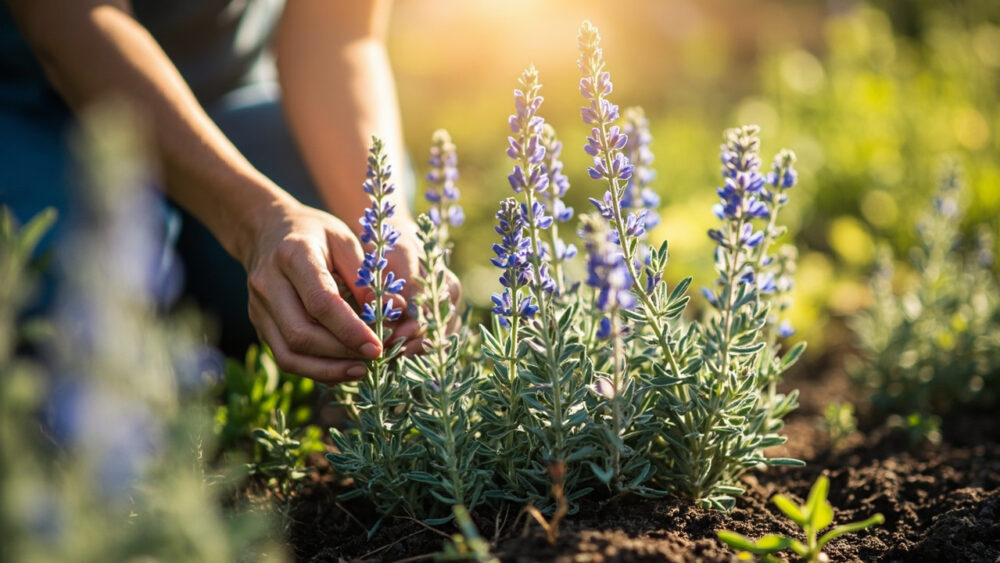
A thriving Russian sage has a silvery, upright, airy look, with stiff enough stems that it stands mostly on its own even in wind. The foliage should have a soft gray-green cast and a sharp, sage-like smell when brushed.
Bloom time runs mid to late summer into early fall, throwing up tall spikes of small lavender-blue flowers that pollinators, especially bees, show up for in serious numbers. A happy plant will get 2 to 4 feet tall and just as wide by its second or third year, sometimes taller in ideal conditions.
If it’s falling open in the middle or flopping after every rain, that’s not maturity, that’s the light or pruning issue circling back.
Here’s the whole thing distilled down to what you’ll actually want pulled up on your phone next spring.
Russian Sage at a Glance
- When to plant: spring after your last frost, or in early fall at least 6 weeks before the ground freezes.
- Light: full sun, 6 to 8 or more hours daily, non-negotiable for compact growth.
- Water: every 5 to 7 days while establishing, then once every 2 to 3 weeks once mature, less if rainfall covers it.
- Soil: lean, sandy, fast-draining, neutral to slightly alkaline, skip the heavy compost.
- Spacing: 2 to 3 feet apart to allow airflow and full mature spread.
- Pruning: cut back hard to 6 to 10 inches in early spring once new growth appears, never in fall.
- Hardiness: USDA zones 4 through 9, tolerant of heat, drought, and poor soil once established.
Get the sun and the spring pruning right, and Russian sage takes care of nearly everything else itself.
The plants that struggle almost always got too much water, too much shade, or a fall haircut, not too little care.