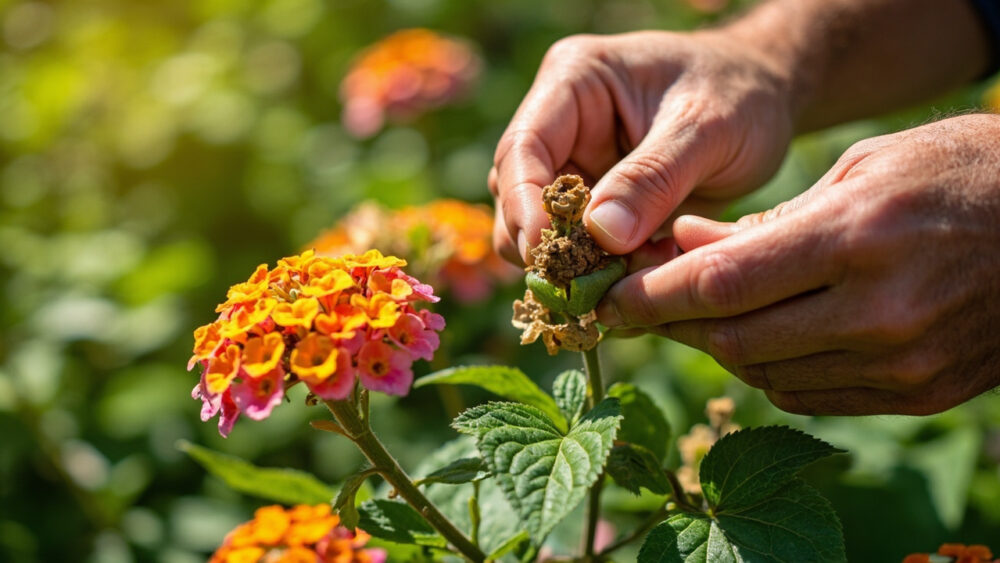
To deadhead lantana, pinch or snip off the spent flower clusters just below the round berry-like seed head, right where it meets the stem, and do it as soon as blooms turn brown and papery instead of waiting for a big cleanup session. Lantana blooms so heavily that most gardeners never bother deadheading at all, and the plant still flowers fine. But if your lantana has slowed down or looks tired by midsummer, deadheading combined with a light shear is what gets it blooming hard again in three to four weeks.
Here is the part almost nobody tells you: deadheading lantana is optional maintenance, not a requirement, and that surprises people who came here expecting a strict weekly chore. The real issue that ruins most attempts is not skipping deadheads, it is shearing the whole plant too hard too early, or doing it in the wrong week and cutting off the flush that was about to open.
Stick with me and you will also get the honest answer to the question right behind this one: whether those little green berries are safe to leave on, and what they mean for pets and kids in the yard. The full Lantana at a Glance card is waiting at the bottom, save it before you head out to the garden.
When to Deadhead, and When to Leave It Alone
Lantana flowers in rounds. A cluster blooms for one to two weeks, fades to brown, and the plant naturally starts another cluster nearby whether you touch it or not.
The best time to deadhead is right when you notice individual clusters browning but the plant overall is still actively growing, typically from late spring through late summer wherever nighttime temperatures stay above 50°F.
Do not deadhead in the two or three weeks before your first fall frost. Cutting back that late pushes out tender new growth that frost kills outright, and it wastes the plant’s last energy reserves right before dormancy.
Skip it entirely on a plant that is still small or newly transplanted, under six weeks in the ground. Let it establish roots first.
Timing matters less than most tasks in the garden, but the wrong week still costs you something.
Tools and the One Prep Step That Actually Matters
For scattered deadheading, your fingers work fine. Pinch the stem just below the spent cluster and snap it off.
For a fuller rejuvenation trim, use a clean pair of bypass pruners or garden shears, whichever matches how much you are removing.
The prep step everyone skips: wipe your blades with rubbing alcohol before you start, especially if you pruned anything else that day. Lantana is tough and disease-resistant, but dirty blades still spread fungal spores from plant to plant, and it costs you thirty seconds.
Wear gloves. Lantana foliage has a sharp, resinous smell and can irritate sensitive skin after repeated handling.
Once your tools are ready, the actual cutting is the easy part.
How to Deadhead Lantana Step by Step
Step 1: Find the spent cluster
Spent blooms turn from bright color to a dull brown or tan, and the petals get papery instead of soft. That is your cue, not the calendar.
Step 2: Cut at the right point
Snip or pinch the stem directly beneath the flower head, just above the first set of healthy leaves below it. Do not cut bare stem below the foliage, that just leaves an ugly stub with nothing to grow from.
Step 3: Decide how much to take
For routine deadheading, remove only the individual spent clusters, a few inches of stem at most. Leave the rest of the plant alone.
For a midsummer rejuvenation cut, when the whole plant looks leggy and sparse, shear back by one third of its total height, not more, in one pass.
Step 4: Clean up the debris
Rake up dropped clusters and berries from the soil surface, especially in beds where pets or small children play.
Once you have made the cuts, the plant needs a little time to show you it worked.
What to Expect After You Deadhead
Do not expect instant results. Lantana typically takes two to four weeks after a trim to push out the next full flush of blooms, depending on heat and how much you removed.
If you assumed a bare, twiggy look right after cutting means you did something wrong, that guess is backwards. A short bare stretch right after a rejuvenation shear is completely normal and is exactly what triggers the plant to branch and bloom fuller than before.
What should worry you instead is no new green growth at all after three or four weeks in warm weather. That points to root stress, poor drainage, or a plant that was cut back too hard for its size, not to deadheading itself.
Feed lightly with a balanced fertilizer after a hard shear if your soil is thin, lantana blooms best in soil that is not overly rich anyway.
Patience here pays off, but only if you have avoided the mistakes that quietly undercut the whole effort.
The Mistakes That Cost You Flowers
- Shearing too hard, too often: repeated hard cuts through the season stress the plant and delay blooms far more than they encourage them. One rejuvenation shear per season is usually enough.
- Deadheading right before frost: new growth pushed out in the last few weeks before your first frost date gets killed and wastes the plant’s stored energy.
- Cutting into bare wood: stems cut below all their leaves often do not resprout, especially late in the season. Always leave foliage below the cut.
- Ignoring drainage while chasing blooms: lantana that sits in wet soil will not flower well no matter how diligently you deadhead. Check that soil an inch down feels dry before you water again.
- Assuming the berries are harmless: lantana’s small green-to-black berries and foliage are toxic to pets and humans if eaten, particularly the unripe green ones. If a pet or child eats them, call a veterinarian or poison control and do not wait to see what happens.
Avoid those five and deadheading becomes the easy, satisfying task it is supposed to be.
Lantana at a Glance
- When to deadhead: as soon as flower clusters turn brown and papery, from late spring through late summer, stopping two to three weeks before your first fall frost.
- Where to cut: just below the spent flower head, right above the nearest healthy leaves, never into bare stem.
- How much to remove for maintenance: just the spent clusters, a few inches of stem at most.
- How much to remove for rejuvenation: up to one third of the plant’s total height, once per season.
- Time to rebloom: two to four weeks after cutting, depending on heat and how hard you sheared.
- Soil check before you water: feel an inch down, lantana blooms poorly in soggy soil.
- Toxicity note: berries and foliage are toxic to pets and people if ingested, contact a veterinarian or poison control for any suspected ingestion.
Deadhead lightly and often, save the hard shear for one midsummer reset, and let the plant’s own brown clusters tell you when to grab the shears.
Skip the calendar, trust the color of the bloom, and lantana will keep flowering with almost no help from you at all.