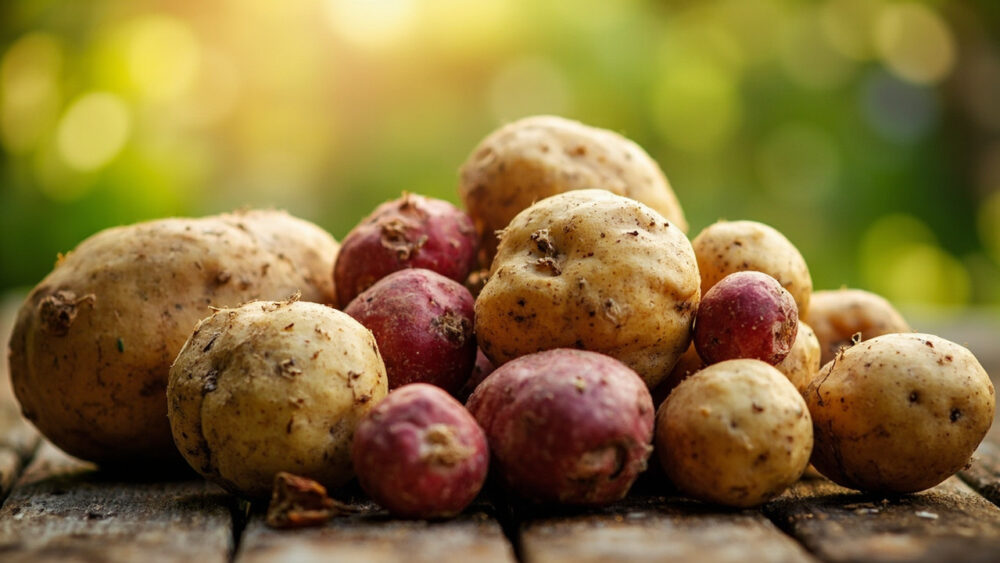
The fastest way to sort out types of potatoes is by starch content, because that single trait tells you whether a potato bakes fluffy, holds its shape in a soup, or turns waxy and dense on the fork. High-starch potatoes fall apart into fluffy mash. Low-starch, waxy potatoes hold together through boiling and roasting.
Most people grab russets out of habit and never touch the small, thin-skinned varieties that actually taste better fresh from the garden. There is also a color-fleshed potato most gardeners assume is just decorative, and it is not. One entry on this list, number 13, gets misidentified by nearly everyone who grows it, confused for a completely different potato with a similar skin.
All 15 are below, grouped by how they cook and grow, with the real standouts and the choosing method waiting at the bottom.
Russets and Other High-Starch Bakers
These are the fluffy, mealy potatoes bred for baking, frying, and mashing, not for holding a clean shape in salad.
1. Russet Burbank
The classic oblong baker with netted brown skin and dry, fluffy white flesh. It needs a long season, 90 to 110 days, and loose, deep soil to size up properly, which makes it a poor fit for heavy clay or short-season northern gardens.
2. Norkotah
An earlier, more forgiving russet that bulks up in 80 to 90 days and tolerates less-than-perfect soil better than Burbank. It is the one to plant if you want that classic baked-potato texture but your season runs short.
3. Butte
A high-starch russet bred for nutrition and storage life rather than looks. Flesh is drier and denser than Burbank, and it keeps remarkably well in a cool, dark cellar through winter.
If fluffy and mealy is not the texture you actually want, the next group is where you belong.
Waxy Reds and Whites for Boiling and Salads
Low-starch, thin-skinned potatoes that stay firm and sliceable after cooking, the backbone of potato salad and roasted wedges.
4. Red Pontiac
A deep rose-red skin over white, moist flesh that holds together through boiling without going grainy. It is a heavy, reliable yielder in almost any soil, which makes it the reds most beginner gardeners land on first.
5. Chieftain
Smoother and rounder than Pontiac, with bright red skin and shallow eyes that make peeling faster. Flavor is milder, and it stores a bit better than most reds, though not as long as a russet.
6. Kennebec
A tan-skinned all-rounder that splits the difference between waxy and starchy, so it fries well, mashes decently, and boils without falling apart. It is also unusually tolerant of drought and heat compared to most main-crop potatoes.
7. Superior
An early, small-to-medium white that matures in as little as 70 to 80 days, useful if your season is short or you want new potatoes fast. Skin is thin enough to bruise easily, so it is a fresh-eating potato, not a long-storage one.
Waxy potatoes get all the salad attention, but the fingerlings do the flavor work most cooks are missing.
Fingerlings and Specialty Shapes
Small, elongated, knobby potatoes prized for dense, nutty flesh rather than size or yield per plant.
8. Russian Banana
The fingerling most people picture when they hear the word: pale yellow, waxy, banana-shaped, with a buttery flavor that holds up roasted whole. Yields are modest per plant, so you need more row length than you would for a main-crop russet.
9. French Fingerling
Rose-pink skin with a yellow interior streaked pink, and a firmer bite than Russian Banana. It is a favorite among gardeners who sell at farmers markets because the color alone sells it.
10. Purple Peruvian
Deep purple skin and flesh all the way through, with an earthy flavor distinct from any white or yellow potato. The color is not just for show, it comes from the same anthocyanin pigments found in blueberries, and it fades some with heavy cooking but never disappears.
Yellow-fleshed potatoes are next, and they solve a problem the reds and fingerlings cannot.
Yellow-Fleshed All-Purpose Types
Medium starch, naturally buttery flavor, and flesh that holds together well enough for roasting while still mashing smooth, which is why these dominate home gardens.
11. Yukon Gold
The gold standard, literally, with smooth tan skin and dense yellow flesh that mashes creamy without added butter doing all the work. It matures in 90 to 100 days and stores moderately well, though not as long as a russet.
12. German Butterball
Rougher, netted tan skin over flesh that is richer and more buttery than Yukon Gold, with better storage life to match. Gardeners who grow both usually end up preferring this one once they taste the difference.
13. All Blue
Almost everyone confuses this with Purple Peruvian on sight, since both show deep purple skin, but All Blue has blue-violet flesh with a ring of white near the skin, a milder flavor, and better yield per plant. Slice one in half before you decide which purple potato you actually grew.
14. Bintje
A pale yellow European heirloom valued for exceptional flavor and reliable frying, but it bruises easily and does not store as long as modern yellows. It rewards careful handling more than it rewards being ignored in a bin all winter.
15. Adirondack Blue
A newer American variety with genuinely blue flesh and skin, bred specifically for that pigment to hold through cooking better than older purple types. It is the one to plant if you want the color payoff of a purple potato without the flavor being an afterthought.
How to Choose the Right One
Match the potato to your space, climate, and what you actually cook before you fall for a pretty catalog photo.
- Count your row space first: fingerlings need more linear feet for the same yield as a main-crop russet or Yukon Gold.
- Check your season length: short-season northern gardens do better with Norkotah, Superior, or Yukon Gold than with a 110-day Russet Burbank.
- Decide your main use: baking and frying point to russets, salads and roasting point to reds or waxy yellows, and specialty color dishes point to the purples and blues.
- Be honest about storage: russets and Butte keep for months in a cool cellar, while thin-skinned reds and fingerlings are best eaten within weeks.
- Test your soil drainage: heavy clay punishes long-season russets and rewards the tougher, shorter-season types like Kennebec.
- Plant more than one type if you have room, since a mixed row hedges against a bad season for any single variety.
Pick based on what ends up on your plate, not what looks best in the seed catalog.
Once you know your soil and season, the right potato is usually obvious.