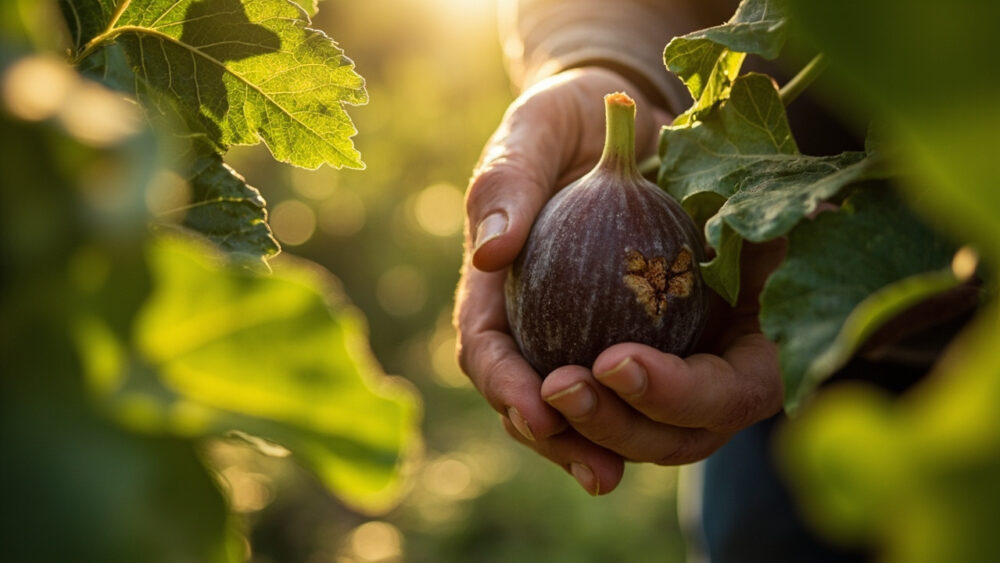
The moment to harvest figs is when the fruit hangs down instead of pointing out or up, the neck near the stem softens and sometimes wrinkles slightly, and the skin gives easily under light thumb pressure without splitting. A fig that is still firm and standing at attention is not ripe, no matter what color it has turned. Color change alone is the trap that fools almost everyone into picking too early.
There is a second trap waiting on the other side of that one. Wait a day or two past ripe and birds, wasps, or your own dog will beat you to it, because a ripe fig has almost no shelf life left on the tree.
Below you will find the exact signs to check with your eyes and hands, what actually happens if you pick early versus late, and the harvest move that keeps a fig tree producing for weeks instead of days. Save the “Figs at a Glance” card at the bottom for the next time you walk past the tree and can’t remember if today’s the day.
The Real Ready Signs, Not Just Color
Color is the least reliable signal a fig gives you. Plenty of ripe figs are still greenish on one side, and plenty of unripe ones have already gone purple or brown on the skin.
The droop
An unripe fig points outward or up along the branch. A ripe fig bends at the neck and hangs down under its own weight, like it’s too heavy for the stem to hold up anymore. This is the single most honest sign on the whole tree.
The give
Press gently with your thumb. Ripe skin yields and feels soft all the way through, not just mushy on the surface. If it feels like pressing a tennis ball, it needs more days.
The weep
A bead of sugary nectar at the eye (the opening opposite the stem) is a strong ripeness sign on many varieties. No weep and a stiff neck means walk away and check again tomorrow.
Once you know what droop, give, and weep actually feel like, the timing window makes a lot more sense.
The Timing Window: Early Fruit, Main Crop, and What Ripens When
Many fig varieties produce two harvests in a season. An early “breba” crop ripens on last year’s wood in late spring to early summer, followed by the larger main crop that ripens on new growth from mid to late summer into fall, depending on your climate and variety. In cooler zones you may only get the main crop before frost shuts things down.
Figs do not ripen further once picked, unlike tomatoes or bananas. That single fact changes how you should think about timing entirely.
Pick too early and you get a fig that stays bland, starchy, and firm forever. There is no windowsill fix, no paper bag trick, no ripening bowl. What you harvested is what you get.
Wait too long and the fig splits, ferments slightly inside, or draws every wasp and bird in the neighborhood before you get to it. An overripe fig also sours fast, sometimes within hours in hot weather.
The real window on most varieties is only one to three days between “not quite” and “past it,” which is why timing here is less about a date on the calendar and more about checking the tree every day once the first fruits start to droop.
That narrow window is exactly why how you actually pick the fruit matters as much as when.
How to Harvest Figs Without Wrecking the Tree or the Fruit
Fig sap is mildly irritating to skin for some people, so consider light gloves if you have sensitive skin, especially when picking a lot of fruit at once.
- Support the fig in your palm, don’t just yank it off the branch.
- Twist gently upward or lift so the stem separates from the branch cleanly, leaving a short stub of stem attached to the fruit.
- Never pull down or tear since ripe fig skin bruises and splits at the slightest rough handling.
- Handle one at a time and set each fig into a shallow container rather than tossing it into a bag, where the weight of fruit on top will crush the ones underneath.
- Pick in the cooler part of the day, morning or early evening, when the fruit is firmer and less prone to tearing.
Leave the stem stub on. A fig pulled clean off at the fruit itself will weep sap immediately and spoil within a day.
Getting the fig off the tree gently is only half the job, what you do in the next hour matters just as much.
Right After Picking: Handle Figs Like the Fragile Fruit They Are
Ripe figs are among the most perishable fruits you can grow. Get them out of the sun immediately and into the shade or indoors.
Refrigerate what you’re not eating today, uncovered or loosely covered in a single layer so they don’t sweat and mold. Most fresh figs hold up for only two to three days in the fridge, even handled carefully.
Sort as you go. Any fig with a split skin, a sour smell, or visible mold should be eaten immediately, composted, or set aside for drying, not stored with the good ones.
If you picked more than you can eat fresh this week, you’re not stuck, there’s a straightforward next move.
Keeping the Harvest Going, and What to Do With the Overflow
A healthy, established fig tree in the right climate can drop ripe fruit in flushes over several weeks rather than all at once, especially during a long main-crop season. Checking daily once fruit starts drooping keeps you ahead of splitting and bird damage instead of finding a mess of overripe fruit every few days.
Picking regularly actually helps future fruit too, since it reduces the sugar-scent draw that pulls in wasps and birds looking for an easy meal near the rest of the crop.
For the overflow, figs dry exceptionally well. Halve or quarter them and dehydrate at a low setting, or slice thin and use a food dehydrator or low oven with the door cracked, until leathery and no longer sticky-wet in the center.
Dried properly and stored in an airtight container, figs keep for months, which solves the “I have forty ripe figs and two days” problem better than any amount of fridge space.
Once you’ve got the rhythm of checking, picking, and processing down, the whole thing gets easy enough to do on autopilot, which is where this card comes in.
Figs at a Glance
- Ready sign: fruit droops downward at the neck, skin gives easily under gentle thumb pressure, sometimes a bead of nectar at the eye.
- Timing window: only one to three days between underripe and overripe on most varieties, so check daily once fruit starts drooping.
- Season: an early breba crop in late spring to early summer on some varieties, main crop from midsummer into fall depending on climate.
- How to pick: support the fruit in your palm and twist or lift gently, leaving a short stem stub attached, never pull or tear.
- Handling: keep out of direct sun, place in a single layer, don’t stack or crush.
- Storage: refrigerate loosely covered and eat within two to three days, or dehydrate for months-long storage.
- Big mistake to avoid: picking based on color alone, figs do not ripen after picking so an early pick stays bland forever.
If you remember nothing else, remember this: check the droop and the give, not the color, and pick a little too early rather than a day too late.
Everything else about growing figs is forgiving. This part isn’t.