You start grapes from seed by cold-stratifying them in the fridge for 8 to 12 weeks, then sowing them a quarter inch deep in a seed-starting mix once nighttime temperatures stay above 50°F. Growing grapes from seed is slow work, expect 3 to 4 years before you see a single cluster, and the fruit you get often will not match the parent vine at all. That last part surprises almost everyone who tries this, and it is the real reason most commercial growers never touch a grape seed.
Here is what nobody tells you upfront: the seed inside a store-bought grape is usually a dead end genetically, and even seeds from a named variety like Concord will grow a vine that tastes nothing like Concord. There is also a germination window that trips up first-timers, a stretch of 4 to 8 weeks where absolutely nothing visible happens and most people assume the seeds are dead and toss them. And there is a hard truth about how long this really takes that most seed packets conveniently leave off.
Stick with me and I will walk you through sowing, the long wait, hardening off, and what care actually looks like across that first season and beyond. At the bottom you will find a save-able Grapes at a Glance card with the numbers you will want on hand once your seedlings are in the ground.
Why Grapes From Seed Are a Different Game Than Cuttings
Almost every vineyard and backyard grapevine you have ever seen was started from a cutting, not a seed. That is because grapevines do not grow “true” from seed, the offspring is a genetic mix, not a clone. If you are hoping to grow another vine exactly like the one whose grapes you ate, seed growing will not get you there. You might get something decent, sour, or completely inedible.
That is not a reason to skip this project. It is a reason to treat it like a fun genetic gamble rather than a shortcut to a specific variety.
Once you accept that, the seed-starting process itself is worth doing right.
When to Start Grape Seeds: Indoors, and Why Direct Sowing Rarely Works
Grape seeds need a cold, moist period before they will germinate at all, so timing runs backward from when you want seedlings ready to go outside. Start the stratification process in late winter, about 10 to 14 weeks before your last expected frost, so you have time for both the cold treatment and the slower germination that follows.
Direct sowing outdoors in fall can work in mild climates where winter delivers a natural cold stratification, but it is unreliable. Seeds get eaten by rodents, washed away, or simply rot in wet soil before spring.
Starting indoors under your control gets you a far higher success rate.
Next comes the part almost everyone skips or rushes, and it is the single biggest reason seed-grown grapes fail before they even get planted.
Cold Stratification: The Step That Ruins Most Attempts
Grape seeds are dormant when fresh, and skipping stratification is the mistake that kills more attempts than any other. Rinse the seeds clean of fruit pulp, pat them dry, then seal them in a plastic bag with a spoonful of barely damp sand or peat.
Refrigerate that bag for 8 to 12 weeks at around 34 to 41°F. Check every couple of weeks for mold and for any seeds that have started to split, which is normal and a good sign.
Skip this cold period and you can expect little to no germination at all, no matter how good your soil or light setup is.
Sowing Grape Seeds Step by Step
Once stratification is done, sowing itself is simple and fast.
Steps
- Medium: use a well-draining seed-starting mix, not garden soil, in 3 to 4 inch pots or deep seed trays.
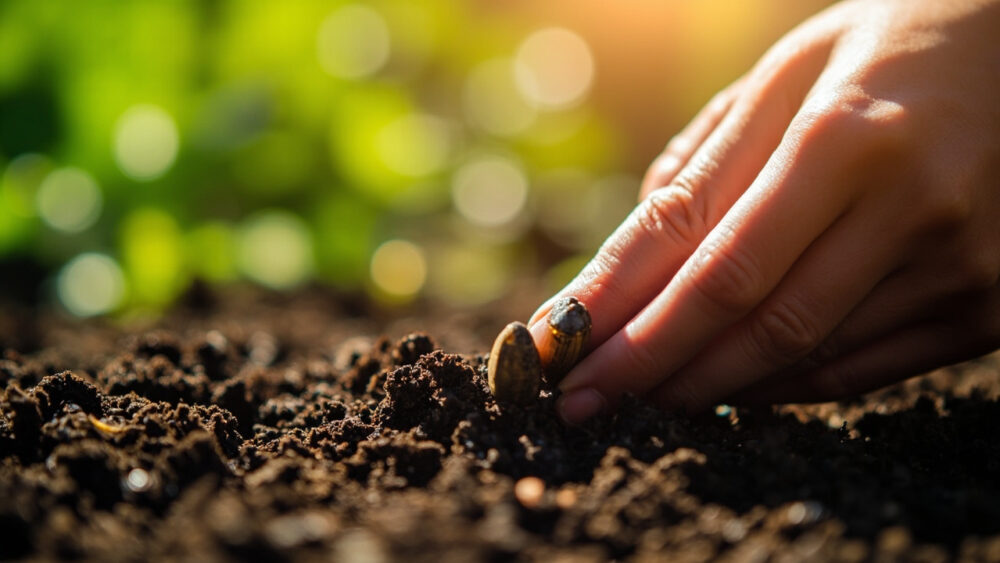
- Depth: sow seeds about a quarter inch deep, one seed per cell or two per small pot as insurance.
- Moisture: water gently so the mix is evenly damp, never soggy, and keep it that way throughout germination.
- Temperature: keep the pots around 70 to 75°F, a seedling heat mat helps a lot here.
- Light: bright indirect light until you see growth, then move to direct light or a grow light once shoots appear.
That is the whole sowing process, but what happens next tests your patience more than your technique.
Germination: What to Expect and When to Actually Worry
Grape seeds are slow, and germination can take anywhere from 3 to 8 weeks even after proper stratification. If you assumed a bare pot after two weeks means dead seeds, that guess is wrong more often than right, this is one of the slowest common seeds home gardeners start.
Watch the soil surface, not a calendar. A tiny pale shoot pushing up, sometimes bent like a hook before it straightens, is your first real sign.
The honest line to worry: if you are past 10 to 12 weeks with zero movement and the medium has stayed consistently damp and warm, germination has failed and it is time to start a fresh batch rather than keep waiting.
Once you do see growth, the next decision point comes fast.
Hardening Off and Transplanting Seedlings
Grape seedlings grown indoors are soft and need a gradual introduction to real sun and wind before they go in the ground. Start hardening off once seedlings have 3 to 4 true leaves and outdoor lows are reliably above 45 to 50°F, usually a couple weeks after your last frost.
Set pots outside in a shaded, wind-protected spot for an hour or two the first day, then add an hour daily over 7 to 10 days until they are handling full sun.
Transplant into the garden or a larger container once they shrug off that full-sun test without wilting. Give each vine at least 6 to 8 feet of space if you intend to let it grow into a full-sized plant, since grapevines get large and need real room to sprawl on a trellis or arbor.
Getting a seedling into the ground is a milestone, but it is nowhere near the finish line.
Season-by-Season Care for a Seed-Grown Vine
The first year is all about root and cane development, not fruit. Water deeply once a week during dry stretches rather than shallow daily sprinkles, letting the top 2 inches of soil dry between waterings.
Install a trellis, stake, or arbor at planting time, not later, since grape roots resent disturbance once established. Train the strongest cane upward and pinch off competing shoots so the plant’s energy goes into one main leader.
Feed lightly with a balanced fertilizer in spring, and skip heavy nitrogen once the vine is established, since that pushes leafy growth at the expense of future fruiting wood.
Watch for powdery mildew, a gray-white coating on leaves that shows up in humid weather; improve airflow by pruning crowded growth, and treat with a fungicide labeled for grapes if it persists, following the product label exactly.
All of that groundwork is in service of one honest, sometimes disappointing timeline.
When You Will Actually See Bloom and Harvest
Here is the follow-up question you were probably about to ask: how long until there is actual fruit? Seed-grown grapevines typically need 3 to 4 years before their first bloom, and often longer before you get a real harvest worth eating, compared to 2 to 3 years for a vine started from a cutting.
Small greenish flower clusters appearing in late spring of year three or four are your first sign the vine has matured enough to fruit. Not every flower cluster sets fruit, and the first year or two of fruiting is often sparse.
Grapes are ready to pick when they taste ready, not when they look ripe, color change alone is unreliable. Taste-test a berry from the cluster; sugar content rises fast in the final couple weeks, so check every few days once color has fully developed.
Once you get there, everything below is what you will want saved for quick reference.
Grapes at a Glance
- When to start seeds: begin cold stratification 10 to 14 weeks before your last frost, refrigerate 8 to 12 weeks at 34 to 41°F.
- Sowing depth: about a quarter inch deep in well-draining seed-starting mix, kept at 70 to 75°F.
- Germination time: 3 to 8 weeks after sowing, sometimes longer, worry only past 10 to 12 weeks with no growth.
- Transplant timing: after hardening off, once seedlings have 3 to 4 true leaves and lows stay above 45 to 50°F.
- Spacing: 6 to 8 feet between vines, with a trellis or arbor installed at planting time.
- Time to first bloom: 3 to 4 years from seed, longer than the 2 to 3 years typical of cutting-grown vines.
- Harvest cue: taste, not color, sugar rises sharply in the final couple weeks before full ripeness.
Grapes from seed reward patience more than skill, the technique here is simple. The vine you end up with will be a surprise, and that is the whole point of growing this way.