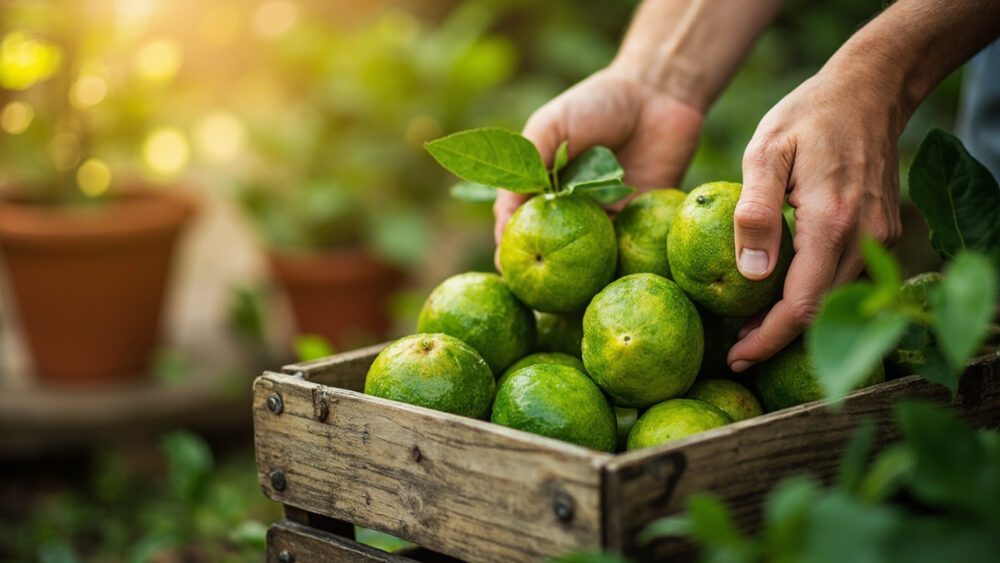
The best way to store limes is loose in the crisper drawer of your fridge, unwashed, where they’ll hold up for three to four weeks. Leave them on the counter and you get about a week, sometimes less if your kitchen runs warm. If you’re wondering how to store limes long term, the answer isn’t the fridge at all, it’s the freezer, either whole, juiced, or zested.
That part surprises most people. So does the mistake that quietly ruins a whole bag of limes before you even notice: sealing them up in a produce bag or airtight container thinking you’re protecting them.
There’s also a sign of spoilage everyone misreads as “still fine,” and a curing trick some people swear by that doesn’t actually do what they think it does. Stick around, there’s a save-able Limes at a Glance card at the bottom with every number in one place.
The Best Method: Loose in the Crisper Drawer
Skip the bag. Limes need airflow, not a sealed environment. Put them loose in the crisper drawer, ideally in the higher-humidity setting if your fridge lets you choose, and leave them be.
Don’t wash them before storing. Water on the skin invites mold, especially anywhere the peel is nicked or bruised. Wash each lime right before you cut into it, not before it goes in the drawer.
If your crisper is packed tight with vegetables, keep limes in a shallow open bowl on a shelf instead. The goal is the same either way: cool, humid, and breathing.
That’s the everyday method, but it’s not the only one, and knowing which to use when is where people trip up.
How Long Limes Actually Keep, Method by Method
Counter, room temperature: five to seven days before the peel starts going soft and dull. Fine if you’re using them fast.
Fridge, loose in the crisper: three to four weeks, sometimes closer to five with a fresh, thick-skinned batch. This is the sweet spot for most kitchens.
Cut limes: wrap the cut face in plastic wrap or store in a small sealed container and use within three to four days. The exposed flesh dries out and turns bitter fast.
Juice: fresh-squeezed lime juice keeps four to five days in the fridge in a sealed jar.
Freezer, whole: six to eight months. Freezer, juiced or zested: eight to twelve months.
Each of those numbers depends on how the lime was handled before it ever got cold, which is the next thing that matters.
The Prep That Makes or Breaks the Batch
If you assumed washing your limes before storing is just good hygiene, that instinct is the one that starts the mold. Moisture is the enemy here, not dirt. A quick rinse right before use is all a lime needs.
Sorting matters more than most people realize. One lime with a soft spot or a hairline crack in the peel will speed up decay in every lime touching it. Go through the bag before it goes in the drawer and pull anything questionable.
Freezing whole limes needs no blanching, no peeling, nothing. Just dry them off, bag them, and freeze. For juice, strain out the pulp if you want ice-cube-tray portions that pop out clean.
Zest freezes best stored separately from juice, since thawed zest turns gummy if it’s been sitting in liquid.
Prep decides whether your limes last the full run or quit on you early, and there’s one over-eager habit that undoes all of it.
The Signs a Lime Has Turned
A lime that’s still good feels heavy and firm, with tight, glossy skin. That’s the baseline to check against.
Here’s the misread: a lime that’s gone slightly soft and a little wrinkled at the stem end is often still usable inside, just past its prime for garnish and better for juicing. People toss these thinking they’re spoiled when they’re really just aging, not rotten.
The actual signs of spoilage are different:
- Soft, mushy patches that give under light pressure
- Mold, which shows up as white, gray, or greenish fuzz, usually starting at a blemish or the stem end
- A fermented, sour-off smell, distinct from lime’s normal sharp tang
- Juice that tastes bitter or flat instead of bright and acidic
If you see mold on one lime in a bag, check every other lime it was touching, not just the one.
Knowing the difference between “aging” and “spoiled” saves you fruit, but it won’t save you from the mistakes that ruin a whole batch before spoilage ever shows up.
The Mistakes That Ruin a Batch
Sealing limes in an airtight bag is the single most common mistake, and it’s the one from the intro. Trapped moisture condenses on the peel overnight, and mold takes hold within days, often before you’d think to check.
Storing limes next to bananas or apples is another quiet killer. Those fruits give off ethylene gas, which speeds up ripening and softening in nearby produce, limes included.
Leaving cut limes exposed, face up on a cutting board “for later,” dries out the flesh and lets bacteria in far faster than a wrapped, refrigerated half will.
Freezing limes in a lump instead of spread out means you get one giant frozen block instead of fruit you can grab one at a time.
And the curing myth: leaving limes out on the counter to “cure” or ripen further doesn’t actually improve flavor the way it does for some fruit. Limes don’t ripen after picking, they only decline, so there’s no upside to delaying the fridge.
Avoid those five mistakes and your limes will outlast almost anyone else’s, which brings us to the numbers worth saving.
Limes at a Glance
- Best everyday storage: loose and unwashed in the fridge crisper drawer, humidity setting high if available.
- Counter storage: five to seven days, fine for short-term use only.
- Fridge storage: three to four weeks, up to five with fresh, unblemished fruit.
- Cut limes: wrap the cut face tightly, use within three to four days.
- Fresh juice: sealed in the fridge, four to five days.
- Freezer: whole limes six to eight months, juice or zest eight to twelve months.
- Avoid: sealed produce bags, storage near bananas or apples, and washing before storing.
Get the drawer right and skip the sealed bag, and that’s genuinely most of the battle.
Everything else, juicing, zesting, freezing, is just deciding how you want to meet that lime later.