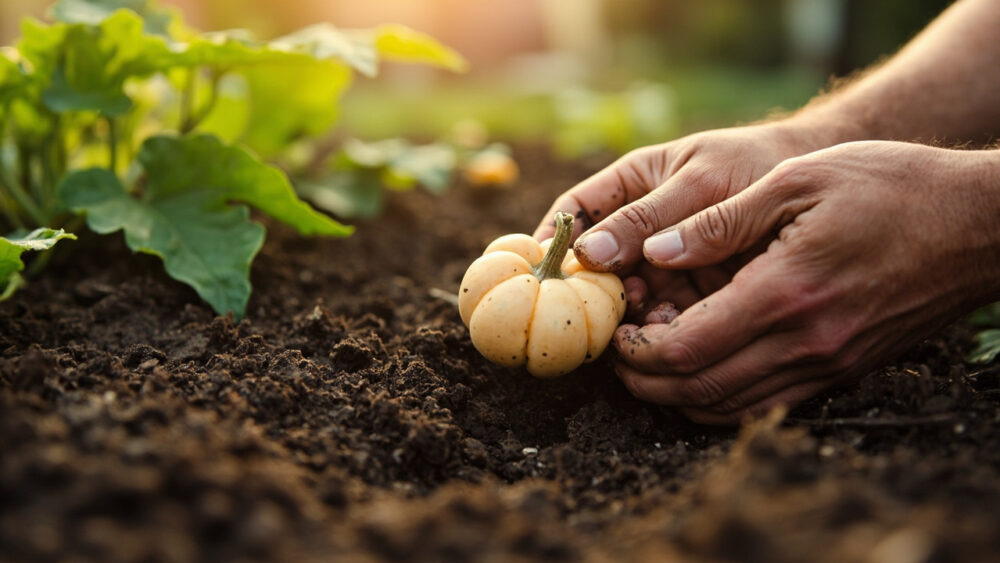
Plant pumpkins directly in the garden after your last frost date has passed, once soil temperature is reliably above 60°F, and count backward 90 to 120 days from when you actually want ripe pumpkins, usually meaning a planting window from late May through late June for most of the country. Miss that window on either end and you either lose seedlings to a surprise cold snap or end up with green pumpkins on the vine when the first hard freeze hits in fall. Get it right and you get exactly what you want, an orange pumpkin sitting on the porch on the day you actually need it.
That last part is where most people go wrong. The mistake that ruins most pumpkin patches isn’t planting too late in spring, it’s planting too early because the seed packet in the garden center rack showed up in April and nobody stopped to do the math backward from Halloween.
There’s also a sign a lot of gardeners misread when deciding whether it’s safe to plant, and a straight answer to the question every pumpkin grower eventually asks about whether they can just start seeds indoors to get ahead. Both are below, along with the full Pumpkins at a Glance card at the bottom of this guide, worth saving to your phone before you head out to the garden.
The Real Planting Window, Anchored to Frost and Soil
Pumpkins are warm-season vines with zero tolerance for frost and not much more for cold soil. Wait until night temperatures are reliably above 50°F and soil at a 2 inch depth has warmed past 60°F, ideally sitting closer to 70°F. Seed sown into cold, wet soil doesn’t just grow slowly, it often rots before it germinates at all.
Work backward from your target harvest date using the days-to-maturity number on your seed packet, typically 90 to 120 days depending on variety. Want a pumpkin ready by late October? Count back from there, then check that date falls safely after your last frost.
In most of the US that lands somewhere between late May and late June. Gulf Coast and low desert gardeners can plant earlier, sometimes late April, and should avoid the worst summer heat by timing around it rather than through it.
The calendar gets you close, but your own yard has the final vote.
How to Tell Your Actual Window, Not the Almanac’s
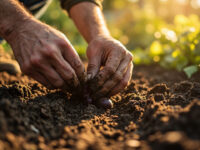
Forget the printed date on a seed rack. Push a soil thermometer 2 inches down in the spot you plan to plant, check it for three or four mornings in a row, and go by what it actually says.
No thermometer? Use your hand. If soil feels cool and damp like early spring dirt rather than sun-warmed, it’s not ready no matter what the calendar claims.
Here’s the sign people misread: a few warm afternoons in a row does not mean the soil has caught up. Air temperature swings fast, soil temperature lags behind it by days to weeks, especially in clay or shaded ground. A 75°F afternoon after a cold spring can still sit over soil that’s stubbornly stuck in the 50s.
Trust the dirt, not the thermometer on your porch.
Too Early, Too Late: What Each Mistake Actually Costs You
Plant too early and seeds either rot in cold, wet soil or germinate into weak, stunted seedlings that never fully recover even after warm weather arrives. This is the single most common way people lose their first pumpkin attempt, and it’s rarely fixable once it happens.
Plant too late and the vine runs out of season before the fruit finishes ripening. You’ll get vines, flowers, maybe small green pumpkins, but not enough warm days left to turn them orange and hard-shelled before frost ends the growing season for good.
Now the honest answer to the follow-up question almost everyone asks next: can you start pumpkins indoors to get a jump on the season? You can, but only barely.
Start seed indoors no more than 2 to 3 weeks before your outdoor planting window, in individual pots, because pumpkin roots hate being disturbed and transplant shock sets vines back further than it helps them. Starting any earlier just gives you a leggy, rootbound seedling waiting miserably for weather that hasn’t arrived yet.
Direct seeding outdoors, once soil is actually warm, usually beats transplanting for this particular plant.
What to Do Before the Window Opens
Pumpkins are heavy feeders that need real space and rich ground, and that groundwork happens before planting day, not during it. Work aged compost or manure into the bed a couple weeks ahead, since pumpkins pull hard on soil nitrogen and organic matter all season long.
Give vining types 4 to 8 feet between plants and rows 6 to 10 feet apart. Bush varieties can go tighter, around 3 to 4 feet, if space is limited.
Plant seeds about 1 inch deep, 2 to 3 seeds per hole, thinning to the strongest seedling once they’re a few inches tall.
Pick a spot with full sun, at least 6 hours a day, and soil that drains well since standing water rots both seed and roots. If your ground stays soggy, raise the planting mound a few inches above grade.
Once your bed is built and your soil is warm, the actual planting takes about ten minutes.
Zone and Region Notes That Change the Math
Northern gardeners in zones 3 to 5 have a shorter runway and should lean toward shorter-maturity varieties, 90 to 100 days, planted as soon as soil warms in late May or early June, with no room to delay.
Zones 6 to 7 have more flexibility, generally planting from late May through mid June, and can grow longer-season varieties, including the big classic carving and giant types that need 110 to 120 days.
Zones 8 to 10 and hot desert regions face the opposite problem, too much heat rather than too little season. Plant early, often April into May, and avoid a midsummer planting that forces pollination and fruit set during peak heat, which pumpkins tolerate poorly.
Know your zone, know your frost dates, and the rest of this guide slots into place for your specific yard.
Pumpkins at a Glance
- When to plant: after your last frost, once soil at 2 inches is reliably above 60°F, usually late May through late June in most regions.
- Days to maturity: 90 to 120 days depending on variety, count backward from your target harvest date to confirm your planting window works.
- Planting depth: about 1 inch deep, 2 to 3 seeds per hole, thin to the strongest seedling.
- Spacing: 4 to 8 feet between vining plants, rows 6 to 10 feet apart, bush varieties can go 3 to 4 feet.
- Sun and soil: full sun, at least 6 hours daily, rich well-drained soil amended with compost or aged manure before planting.
- Starting indoors: possible but only 2 to 3 weeks ahead, in individual pots, since transplant shock sets pumpkins back badly.
- Zone notes: zones 3 to 5 need shorter-season varieties planted promptly, zones 8 to 10 should plant early to dodge peak summer heat.
Soil temperature decides this timing far more than the calendar does.
Check the dirt with your own hand before you trust any date, including this one.