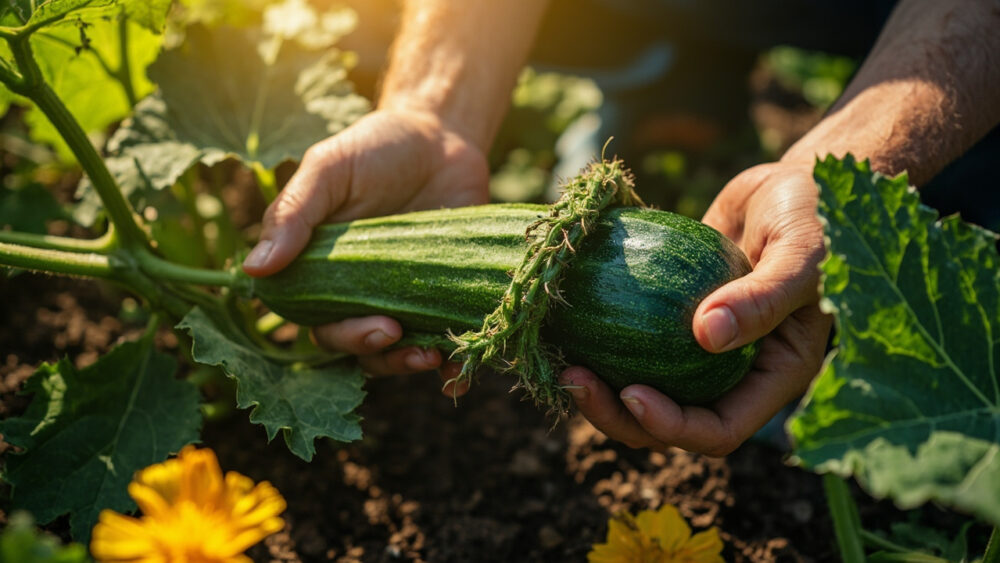
The right time to harvest zucchini is when the fruit is 6 to 8 inches long and about as thick as a soda can, usually 45 to 55 days after you plant, and every day you wait past that turns tender squash into a watery baseball bat. Zucchini moves fast once it starts. A fruit that was too small to bother with on Tuesday can be too big to want by Saturday, especially in hot weather.
Here is the part almost nobody warns you about: the plant that looks like it stopped producing usually did not stop, you just missed a fruit hiding under the leaves and it grew into a club, and now the plant is putting all its energy into that one monster instead of making new ones. That single miss is the mistake that quietly ends a lot of zucchini seasons early.
Below I will walk through the exact signs to check, what oversized zucchini actually costs you, how to cut it off the plant without hurting next week’s fruit, and how to keep the harvest coming for months instead of weeks. Save-able specifics, including the Zucchini at a Glance card with every number in one place, are waiting at the bottom.
The Real Ready Signs, Not Just “It Looks Big Enough”
Size is the main cue, but skin and stem tell you more than a tape measure. Glossy, tight skin means the zucchini is still young and sweet. Once the skin turns dull or starts to look slightly rubbery, that fruit has already gone too far for eating fresh.
The squeeze test
Press a thumbnail gently into the skin near the blossom end. It should give slightly and feel firm, not hard as rock and not soft and yielding. Soft, spongy give means it is overripe.
Check the size, not the calendar
For standard green zucchini, 6 to 8 inches is the sweet spot. Round and pattypan types get picked smaller, around 3 to 4 inches across, since size changes texture faster in those varieties.
Once you know what ripe feels like, the next question is how much room you actually have to work with.
The Timing Window: What Early or Late Actually Costs You
You have roughly a 2 to 3 day window per fruit where zucchini is at its best. Miss it by a few days and you do not ruin dinner, but you do trade texture for size.
Pick too early and you are not really losing much, tiny zucchini is still good, just less yield per fruit than waiting a couple more days would give you. That is the safe side to err on.
Pick too late is the expensive mistake. Oversized zucchini develops large, tough seeds, a spongy watery center, and a bitter edge to the skin. Worse, letting even one fruit mature to full size signals the plant to slow down new flower and fruit production, since it is now busy finishing that one squash.
If you assumed an overgrown zucchini is just a bigger version of a good one, that assumption is exactly what stalls a productive plant.
How to Harvest Without Hurting the Plant
Zucchini stems are hollow, fibrous, and easy to tear if you twist or yank. Torn stems open the door to rot and stress the whole plant.
- Use a clean knife or pruners: cut about an inch above where the fruit meets the stem, angling slightly.
- Support the fruit: hold it steady with your other hand so the weight does not tear the cut as it comes free.
- Watch for spines: zucchini stems and leaves are bristly, wear a light glove or expect some scratched forearms.
- Check underneath every plant: big leaves hide fruit against the soil, and that is where the surprise oversized zucchini always turns up.
Once it is off the plant, what you do in the next hour matters more than people think.
Right After the Cut: Handling That Actually Extends Shelf Life
Fresh zucchini is mostly water, and it loses quality fast if you let it sit in the sun or in a hot garage. Get it out of direct heat within 30 minutes or so.
Do not wash it yet. Extra surface moisture speeds up soft spots and mold in storage. Wipe off loose soil with a dry cloth instead.
Refrigerate unwashed zucchini in a loose plastic bag or a perforated produce bag in the crisper drawer. It holds well for about a week, sometimes closer to 10 days if it was picked at the right size and the fruit had no bruises or nicks going in.
That storage clock is short, which is exactly why the next section matters if your plant is producing faster than your kitchen can keep up.
Keeping the Harvest Coming, Not Just Surviving One Batch
A healthy zucchini plant in full swing can produce every 1 to 2 days once it gets going, and that pace holds for 6 to 10 weeks under good conditions. The trick is staying ahead of it, not catching up.
Harvest on a schedule, not by memory. Check the plant every 2 days minimum during peak season. Waiting three or four days between checks is how “hidden” oversized zucchini happens.
Consistent picking, even of slightly small fruit, tells the plant to keep flowering. Letting fruit sit and mature does the opposite.
If your kitchen genuinely cannot keep up, zucchini freezes well shredded or sliced for cooking later, though texture softens so it is better for baking and soups than for a fresh side dish. It does not preserve well raw and crisp no matter how you store it.
Keep that picking rhythm going and you will get months of squash instead of one big flush followed by a stalled plant, which brings us to everything worth pinning to your phone before your next trip out to the garden.
Zucchini at a Glance
- When to plant: after your last frost, once soil hits about 60 to 70°F, direct-sown or transplanted.
- Spacing and depth: seeds 1 inch deep, plants thinned or spaced 24 to 36 inches apart in rows 3 to 4 feet apart.
- Days to first harvest: 45 to 55 days from planting for most standard varieties.
- Ideal harvest size: 6 to 8 inches long for standard green zucchini, 3 to 4 inches across for round or pattypan types.
- Check frequency: every 1 to 2 days once fruiting starts, since size can double in that time.
- How to cut: use a knife or pruners about an inch above the fruit, never twist or pull by hand.
- Storage: unwashed, in a loose or perforated bag in the fridge, good for about 7 to 10 days.
Pick a little early rather than a little late, and check under the leaves every couple of days.
Do that and one plant can feed you all summer instead of dumping half its harvest on you in oversized clubs.