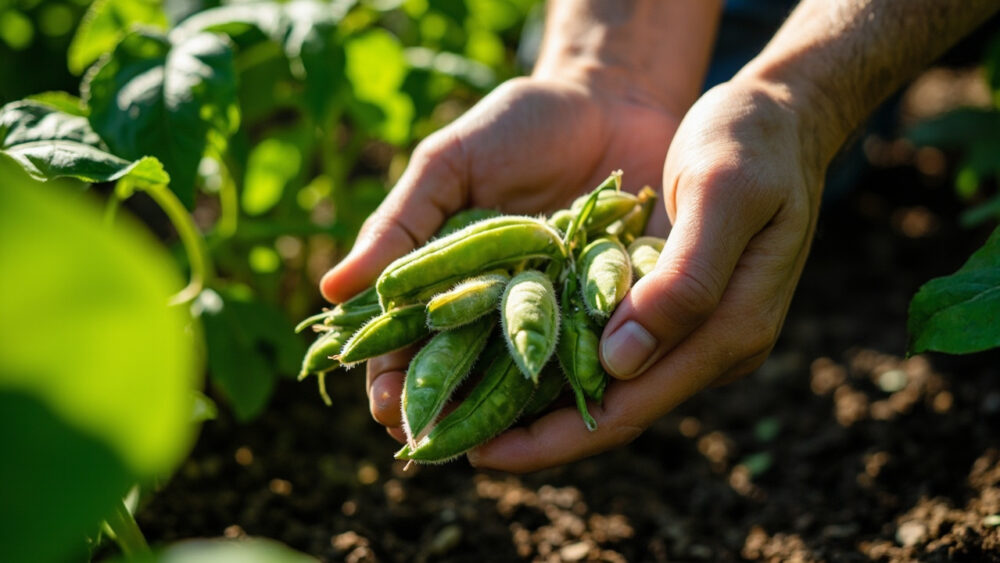
Learning how to grow edamame starts with treating it like the warm-season legume it is, not like a bush bean. You plant seeds directly in the garden once soil has warmed past 55°F, space them 2 to 4 inches apart in rows 18 to 24 inches apart, and pick the pods while they’re still plump and green, roughly 75 to 90 days later, not after they’ve dried and rattled on the plant.
That last part is where most people lose their harvest. Edamame is soybean, and soybean left too long on the plant turns from a tender snack into tough livestock feed, and the window between “perfect” and “past it” is shorter than you’d think.
There’s also a seed-starting mistake that trips up gardeners who treat every vegetable like a tomato, a nitrogen habit that quietly stalls pod production, and a specific look the pods get right before they’re ready that has nothing to do with size. Stick with me through the growing steps and I’ll flag all three. The save-able Edamame at a Glance card is waiting at the bottom once you’ve got the full picture.
When to Plant Edamame
Edamame is a warm-weather crop through and through. Wait until soil temperature is reliably at least 55°Fideally 60 to 65°F, and all frost danger has passed, which usually lands 1 to 2 weeks after your last spring frost date.
If you assumed you could get a jump on the season by starting seeds indoors like peppers or tomatoes, that guess backfires here. Soybean seedlings resent transplanting; their roots are brittle and the plants sulk for weeks if disturbed. Direct-sow instead.
In cooler zones (5 and below), you can succession plant every 2 to 3 weeks through early summer for a longer harvest window. In hot climates, avoid planting into soil above 85°F, germination gets spotty and uneven.
Get the timing right and the rest of the season is mostly maintenance.
Choosing the Spot and Prepping the Soil
Edamame wants full sunat least 6 to 8 hours a day, and soil that drains well but holds a bit of moisture. Heavy clay that stays soggy will rot the seeds before they ever sprout.
Work in an inch or two of compost before planting, but go easy on high-nitrogen fertilizer here. Soybeans are legumes that fix their own nitrogen through root nodules once inoculated by soil bacteria, and pushing extra nitrogen encourages leafy plants with disappointing pod sets.
Aim for soil pH between 6.0 and 6.8. If you’ve never grown soybeans or other legumes in that bed before, a seed inoculant powder (sold wherever you buy bean and pea seed) gives the nodule-forming bacteria a head start and often means a noticeably better yield.
The bed prep is simple, but skipping the inoculant is the quiet mistake that shows up weeks later as a so-so harvest.
Step by Step: Planting Edamame
- Depth: sow seeds 1 to 1.5 inches deep, slightly deeper in sandy soil, slightly shallower in heavier soil.
- Spacing: 2 to 4 inches apart within the row, thinned later to about 4 to 6 inches once seedlings have their first true leaves.
- Rows: space rows 18 to 24 inches apart to leave room for the bushy, sprawling growth that comes later.
- Watering in: water gently right after planting and keep the top inch of soil consistently damp until germination, which takes 7 to 14 days depending on soil temperature.
- Blocks over rows: plant in short blocks rather than one long single row if you have the space; soybeans are self-pollinating but tend to set fuller pods with plants clustered nearby.
Once seedlings are up and standing on their own, the job shifts from planting to steady upkeep.
Watering and Feeding Through the Season
Edamame needs consistent moisture, especially during two critical stretches: germination and flowering into pod fill. Let the soil dry slightly between waterings once plants are established, checking by feeling an inch down. Water when it’s dry at that depth, roughly 1 to 1.5 inches of water per week including rainfall.
Drought stress during flowering is the single fastest way to get a plant full of leaves and hardly any pods. If a hot, dry week hits right as you notice the small purple or white flowers opening, that’s the moment to water deeply, not skip it.
Skip nitrogen-heavy feeds. If your soil is thin, a light side-dressing of compost or a balanced, low-nitrogen fertilizer once plants are 6 inches tall is plenty. Too much nitrogen is the quiet feeding mistake that gives you a jungle of green with barely a pod to show for it.
Keep the water steady and the fertilizer modest, and the plant does most of the rest of the work itself.
Problems That Actually Show Up
Edamame is fairly trouble-free compared to a lot of garden vegetables, but a few pests and issues are common enough to watch for.
Common Pests
- Bean leaf beetles and Japanese beetles: chew visible holes in leaves. Handpick when populations are light, and use a labeled insecticide only if damage is heavy, following the product label exactly.
- Aphids: cluster on new growth and stems. A strong water spray or insecticidal soap knocks populations down.
- Rabbits and deer: will strip young seedlings overnight. Fencing or row cover is the reliable fix, not a spray.
Common Diseases
Root rot and damping-off show up in soggy, poorly drained soil, which is exactly why drainage mattered so much back at planting. Powdery mildew can appear late in humid summers, showing as a white dusty coating on leaves. Improve airflow by spacing plants properly and avoid overhead watering late in the day.
Most of these problems trace back to one of two things: wet feet or crowded plants, both fixable before you ever put a seed in the ground.
Handle the pests and keep the leaves dry when you water, and you’ll spend more time harvesting than troubleshooting.
When and How to Harvest Edamame
Here’s the part everyone gets wrong: they wait for the pods to look “big,” the way you’d wait for a zucchini. Edamame pods don’t tell you they’re ready by size, they tell you by fullness and firmness.
Pods are ready when they’re bright green, plump enough that you can see and feel the outline of the beans pushing against the pod wall, and still firm rather than starting to yellow or feel leathery. This typically happens 75 to 90 days after planting, depending on variety, and the window of peak quality often lasts only 5 to 10 days per plant.
Squeeze a pod gently between your fingers. If it feels tight and full, pick it. If it feels squishy or the pod has gone from bright green toward yellow-green, you’ve waited too long and the beans inside are turning starchy.
Harvest by cutting whole clusters or pulling entire plants once most pods on it look ready, since edamame ripens fairly uniformly plant by plant. Blanch pods within a few hours of picking for the best flavor and texture, whether you’re eating them fresh or freezing for later.
Get the timing right on that squeeze test and you’ll never serve a chalky, overgrown pod again.
Edamame at a Glance
- When to plant: direct-sow after last frost, once soil is at least 55°F, ideally 60 to 65°F.
- Depth and spacing: sow 1 to 1.5 inches deep, 2 to 4 inches apart, in rows 18 to 24 inches apart.
- Sun and soil: full sun, well-drained soil with pH 6.0 to 6.8, light on nitrogen fertilizer.
- Water needs: about 1 to 1.5 inches per week, with extra care not to let plants dry out during flowering.
- Days to harvest: roughly 75 to 90 days from planting, varying by variety.
- Ready sign: pods bright green, plump, and firm, with beans visibly filling out the pod when squeezed gently.
- After harvest: blanch within a few hours for the best texture, whether eating fresh or freezing.
Get the soil temperature and the squeeze test right, and edamame practically grows itself.
Everything else on this list is just backup for those two moments.