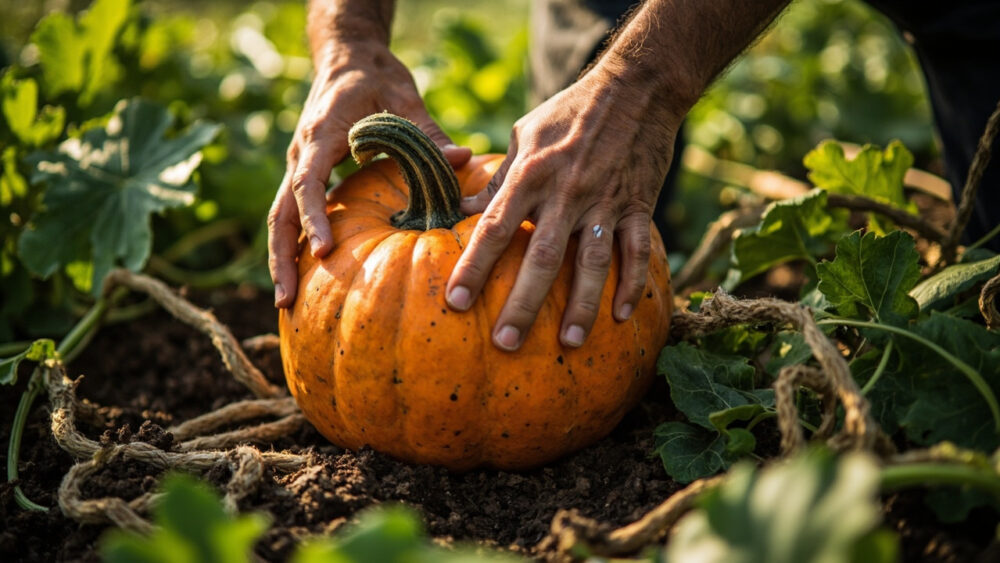
The answer to when to harvest pumpkins comes down to color and skin hardness, not a date on the calendar. A pumpkin is ready when its skin has turned fully to its mature color, all over, including the side sitting on the ground, and that skin resists a firm push from your thumbnail instead of denting easily. For most varieties that lands somewhere between 90 and 120 days after planting, generally late September through October depending on your climate and when you got seed in the ground.
That part is simple. What trips people up is everything around it. The vine still looks green and healthy while the pumpkin sitting under it is fully done, and folks leave it out of loyalty to the plant. Frost timing gets misread in both directions, some panic-harvest three weeks too early, others let a hard freeze wreck fruit they could have saved with one blanket. And almost nobody asks the honest follow-up question until it is too late: once you cut it, how long does it actually keep.
All of that gets answered below, section by section. Save-and-scroll to the bottom for the Pumpkins at a Glance card, the one you can pull up on your phone standing in the patch deciding whether this one comes off the vine today or next week.
The Real Ready Signs
Color is the first tell, but it has to be complete. A pumpkin that is orange on top and pale or greenish where it touches the soil is not ready, even if it has been sitting there looking festive for two weeks. Roll it gently and check the bottom before you trust the color.
The Rind Test
Press a thumbnail into the skin. On a ripe pumpkin it will not puncture, it just resists. If your nail sinks in and leaves a mark, the rind has not hardened enough and the pumpkin needs more time on the vine.
The Stem and Sound
The stem itself should be turning brown, dry, and a little woody near where it meets the fruit, and the vine near that pumpkin is often dying back even if the rest of the plant is still green. A ripe pumpkin also sounds hollow when you knock on it, similar to a ripe watermelon.
Those three checks together beat any single one on its own.
The Window: Why Early and Late Both Cost You
If you assumed a bigger pumpkin left longer is always a better pumpkin, that guess is what leads to soft, hollow-tasting fruit and short storage life. Size stops mattering once the rind has matured, and pumpkins left on the vine well past ready are more exposed to rot, insects, and squash bugs finding a way in through the stem end.
Harvest too early and you get pale, thin-skinned fruit that will not cure or store, and the flesh stays watery and underdeveloped even off the vine. Pumpkins do not ripen further once cut, unlike tomatoes, so an early pick is locked in at whatever stage it was picked.
Frost is the real deadline. A light frost on the vines does not hurt mature pumpkins and can even help by killing back foliage so you can see what you have. A hard freeze is different, it can damage the rind and shorten storage life fast, so get anything ripe or close to ripe in before a hard freeze hits, and cover fruit still finishing up if only a light frost is forecast.
Get the timing right and the next question is how you actually get it off the vine without wrecking it.
How to Harvest Without Damaging the Fruit
This is the step almost everyone gets slightly wrong, and it is not the cutting, it is the carrying. Pumpkins get bruised and cracked far more often from being dropped, dragged, or grabbed by the stem than from a bad cut.
- Cut, do not twist or snap. Use pruning shears or a sharp knife and cut the stem 3 to 4 inches from the fruit.
- Leave a stem handle on purpose. That stub protects the fruit from rot at the attachment point and helps it store longer, so do not trim it flush.
- Never carry it by the stem. The stem is not a handle, it is the weak point, and a broken stem is one of the fastest ways to shorten storage life. Support the pumpkin from underneath with both hands or a wagon.
- Set it down gently, do not drop it. Even a short drop onto hard ground can crack the rind in a way you will not see for a week, right before it turns to rot from the inside.
Cutting it clean is half the job, what you do in the next 24 hours is the other half.
Right After You Cut It: Curing
Fresh-cut pumpkins benefit from curing before storage, and skipping this step is the honest answer to why some people’s pumpkins rot in three weeks while others last until Christmas. Curing hardens the rind further and heals over the cut stem.
Set pumpkins in a warm, dry spot with good airflow for 7 to 10 days, ideally 80 to 85 degrees Fahrenheit if you can manage it, or simply the warmest dry spell you get in early fall. A sunny porch or garage with the door cracked works fine.
Keep them out of rain and off cold, wet ground during this stretch. Wipe off soil but do not scrub or soak them, and do not wash with water until you are ready to use one, since moisture invites rot.
Cured properly, most pumpkins hold for 8 to 12 weeks in a cool, dry spot around 50 to 60 degrees, some of the harder-shelled varieties even longer.
Curing buys you storage time, but there is still the matter of the vine you left behind.
Keeping the Rest of the Patch Producing
Once you have harvested the ripe fruit, check the vine for others still sizing up. Pumpkin plants often set fruit in flushes, so a healthy vine can still be finishing a second or third pumpkin even after your first is cured and on the porch.
Stop watering heavily once fruit is mature and the vine is dying back, extra water at that point does nothing for ripening fruit and can encourage rot at the soil line.
If frost is close and you have green pumpkins that are not close to ready, size and color rarely improve enough in the last stretch to be worth risking a freeze. Harvest them anyway before a hard freeze, they will not store as long, but use them soon rather than losing them entirely.
Once the vines are spent and the last fruit is in, all that is left is knowing the numbers cold.
Pumpkins at a Glance
- When to plant: after your last frost once soil hits about 65 to 70 degrees Fahrenheit, timing backward so maturity lands before your first fall frost.
- Days to maturity: 90 to 120 days from planting depending on variety, small pie types on the shorter end, big field types on the longer end.
- Ready signs: full mature color on all sides including the bottom, rind that resists a thumbnail, stem turning brown and woody, hollow sound when knocked.
- Harvest method: cut the stem 3 to 4 inches from the fruit, never twist it off, never carry by the stem.
- Frost rule: light frost is fine on mature or nearly mature fruit, harvest everything ripe before a hard freeze.
- Curing: 7 to 10 days in a warm, dry, airy spot around 80 to 85 degrees before long-term storage.
- Storage: cool and dry around 50 to 60 degrees, typically 8 to 12 weeks, longer for hard-shelled varieties.
Color and rind hardness tell you it is ready, the vine’s opinion does not matter.
Handle it by the belly, not the stem, and it will outlast the ones that got dropped or dragged.