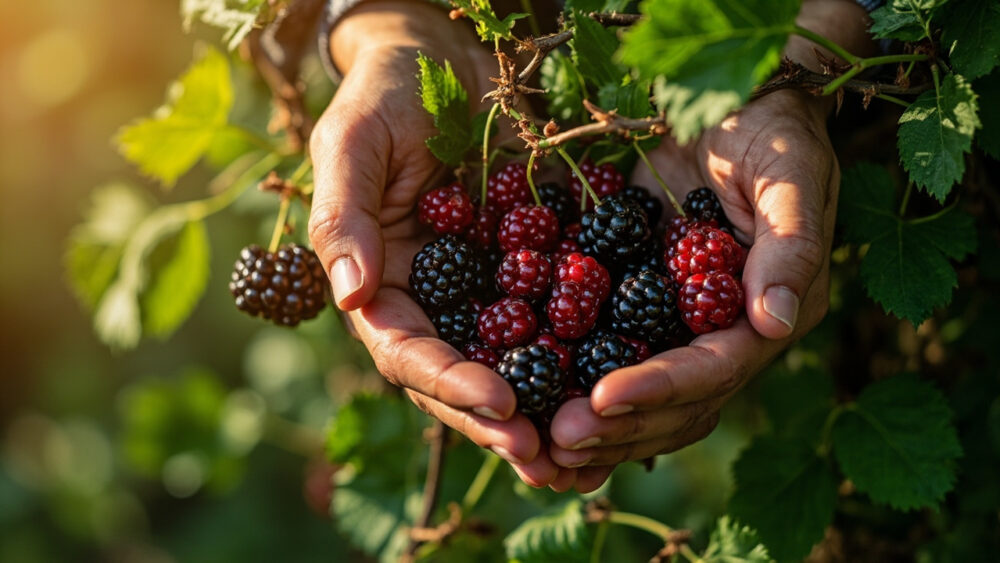
You know a blackberry is ready when it turns fully black, pulls off the cane with barely a tug, and gives just slightly under your fingers like a ripe grape. Color alone lies to you. If you’re timing the harvest by how dark the berry looks and nothing else, you’re picking a lot of sour fruit.
Blackberries generally ripen over a four to eight week window from early to late summer depending on your climate and variety, and the picking isn’t a one-day event, it’s every two to three days for the whole run. That’s the part most first-timers get wrong: they treat it like a tomato harvest, one pass and done, when really it’s a rolling job.
Below I’ll walk through the tug test everyone misreads, the honest cost of picking even one day too early, and the mistake that turns a good patch into a moldy one by the second week. Save-able specifics, including the exact “at a glance” numbers for your phone, are at the bottom.
The Real Ready Signs
Color is step one, not the whole test. A ripe blackberry has zero red or purple left anywhere on it, including the tiny druplets at the tip.
The tug test
A ready berry releases with almost no resistance, just a gentle roll between your fingers. If you have to pull or twist, it’s not ripe yet, put it back and come back in a day or two.
Unripe berries that get tugged off don’t ripen further once picked. They just sit there tart and slightly hard, forever.
The dull test
Ripe blackberries lose their shine and go slightly matte, almost dusty-looking. A glossy black berry is usually a day away, not there yet.
That dull, soft, easy-release combination is the real signal, and it’s the one people skip past because they’re only checking color.
The Timing Window, and What Early or Late Costs You
Most varieties ripen midsummer into early fall, roughly 60 to 70 days after bloom, with everbearing types giving a second flush later in the season. Exact timing depends heavily on your region and cultivar, so watch the plant, not the calendar.
Pick too early and you get sour, seedy berries that never sweeten up in the bowl. This is the mistake almost everyone assumes is harmless, “it’ll ripen on the counter like a banana,” and it flatly does not. Blackberries stop developing sugar the moment they’re off the cane.
Pick too late and the berries turn mushy, drop on their own, or mold right on the plant, especially after rain. Overripe fruit also draws wasps, birds, and fruit flies fast, which pulls pressure off nothing and onto everything else nearby.
The safe window per berry is short, usually just two to three days of true ripeness before it turns.
How to Harvest Without Wrecking the Cane
Pick in the cool of morning once the dew has dried. Warm afternoon berries bruise faster and don’t hold as long.
- Cup the berry gently in your palm rather than pinching it between two fingers.
- Roll it away from the stem with light pressure, don’t yank straight down.
- If it resists at all, leave it and move to the next one.
- Set berries directly into a shallow container, one layer deep if you can manage it.
- Work the whole row, then loop back in two to three days for what wasn’t ready.
Avoid piling berries deep in a bucket. Blackberries are mostly water and they crush under their own weight within an hour, turning the bottom layer to juice.
Gentle hands and shallow containers get you fruit that actually survives the walk back to the kitchen.
Right After the Harvest
Get berries out of direct sun immediately, heat and light are what push them from ripe to moldy fastest. Don’t wash them yet.
Water on the skin before storage speeds up rot, so rinse only right before you eat or use them. Spread berries on a paper towel-lined tray if any look damp or bruised, and pull out the soft or leaking ones now before they take down the rest.
Refrigerate unwashed berries in a single layer, or in a container with the lid slightly cracked. That single step, keeping them dry and cold right away, is the difference between fruit that holds five to seven days and fruit that’s soup by tomorrow.
Once they’re cooling properly, the next question is how to keep the harvest going.
Keeping the Harvest Coming
Blackberry canes don’t stop producing after one picking, they keep ripening in waves for weeks. Checking every two to three days is what actually maximizes your total yield, not one big harvest day.
Remove any overripe, moldy, or shriveled berries you find, even ones you’re not keeping. Left on the cane, they invite rot and pests that spread to the fruit still ripening nearby.
For storage beyond a week, freezing works well. Spread washed, fully dried berries on a tray until solid, then bag them, this keeps them from clumping into one frozen mass.
A patch picked consistently and cleaned of overripe fruit will keep giving you berries right up until the canes naturally taper off for the season.
Blackberries at a Glance
- Ready signs: fully black with no red or purple, dull rather than glossy, releases with a gentle roll instead of a tug.
- Timing window: roughly 60 to 70 days after bloom, midsummer into early fall depending on variety and climate, with each berry ripe for only two to three days.
- Picking frequency: every two to three days through the whole ripening run, not a single harvest day.
- How to pick: cup gently, roll away from the stem, leave anything that resists, collect in a shallow single layer.
- After picking: keep out of sun and heat, don’t wash until ready to use, refrigerate promptly.
- Storage life: about five to seven days refrigerated unwashed, months if frozen dry on a tray first.
- Biggest mistake: picking early hoping they’ll sweeten off the plant, they won’t, sugar only develops on the cane.
If you remember one thing, remember the roll, not the color.
A berry that gives up easily is ready, one you have to pull for isn’t, no matter how black it looks.