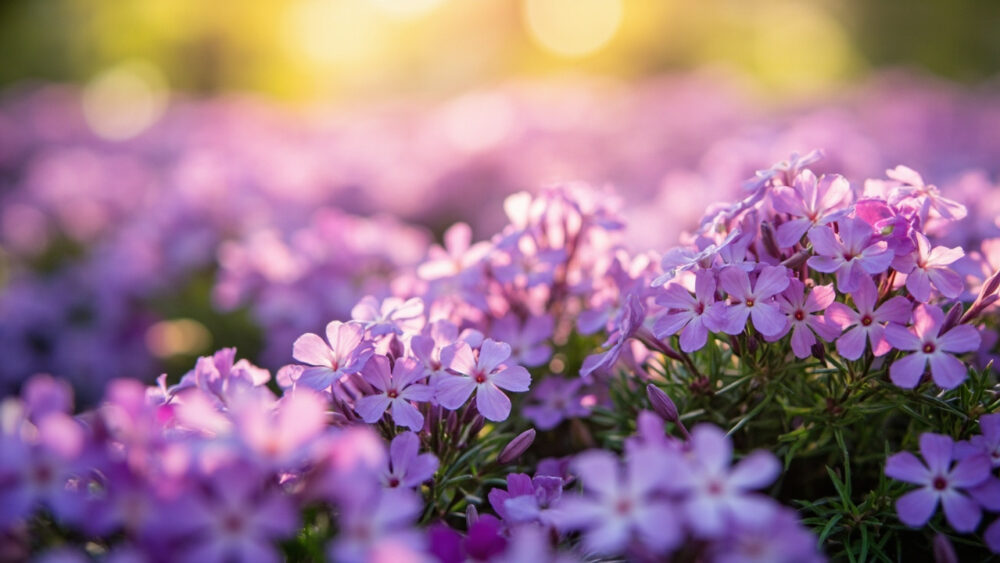
Creeping phlox blooms in early to mid spring, usually a four to six week stretch somewhere between late March and May depending on your climate, with the peak show lasting about two to three weeks. Warmer zones see it start earlier, cold mountain gardens push it into May, and a late frost can stall the opening by a week or two without ruining it.
That is the short version, but three things change it for a lot of readers. Sun exposure shifts the timing and the density of the bloom by weeks, not days. Age of the plant matters more than people expect, since a first-year division blooms thin no matter what you do. And there is one pruning habit that either buys you a longer season or quietly shortens next year’s.
Stick around for the part on why an established mat sometimes goes mute, because the answer usually is not what people assume. There is also a save-able quick reference card at the bottom with the bloom window, the light needs, and the aftercare in one place.
The Actual Bloom Window, and Why It Moves
In most of the country, creeping phlox (Phlox subulata and Phlox stolonifera) flowers for four to six weeks starting anywhere from late March in mild zones to early May farther north. The heaviest color lasts about two to three weeks at the middle of that window, then tapers off as temperatures climb into the 70s and 80s.
Zone matters a lot here. Zone 7 and warmer often see bloom start in March. Zone 4 and 5 gardens are usually looking at late April into May.
A cold snap after buds form will not kill the flowers, it just holds them shut a few extra days until things warm back up.
Once you know your window, the next question is what actually controls where you land in it.
What Actually Controls the Timing
Soil temperature and day length trigger the bloom, not the calendar. Phlox breaks dormancy and sets buds once soil warms consistently, which is why the same variety blooms weeks apart in a north-facing bed versus a south-facing slope just down the road.
Sun exposure is the biggest lever you control. Full sun, at least six hours, gives you an earlier start and a denser carpet of flowers. Partial shade delays bloom and thins it out, sometimes by half.
Plant age plays a real role too. A plant in its first spring after planting or dividing will bloom light. It takes a full second season for the mat to fill in and flower the way the tag photo promised.
Get the light right and the age sorted, and the next move is making that window last as long as it can.
How to Get More Flowers, and a Longer Show
Three things move the needle here, and none of them involve fertilizer tricks or timing games.
- Sun first: six or more hours of direct light is non-negotiable for a full bloom. Shift a shaded planting to a sunnier spot in fall or early spring if the flowering has always been thin.
- Feed lightly, once: a light application of a balanced or bloom-boosting fertilizer just as new growth starts in early spring supports bud set. Skip heavy nitrogen feeds, they push foliage over flowers.
- Divide every three to four years: older mats get woody in the center and bloom sparse there. Dividing in early fall or right after bloom rejuvenates the planting.
None of this rushes the calendar, but all of it thickens the display once the window opens.
If you have done all three and still get a weak show, the problem is usually somewhere else entirely.
Why Your Creeping Phlox Might Not Be Blooming
If you assumed a bloom-free phlox just needs more water, that guess is rarely the fix. Creeping phlox is drought-tolerant once established and actually resents wet feet, so overwatering is a far more common problem than underwatering.
Too much shade is the number one cause of a mat that stays green but never flowers well. Check how much direct sun that spot actually gets in April and May specifically, not midsummer, since a deciduous tree overhead changes everything once it leafs out.
Other common culprits:
- Overcrowding or thatch buildup: old woody growth in the center chokes out new flowering stems.
- Too much nitrogen: lush green growth with few flowers often means a lawn fertilizer drifted into the bed.
- A too-young planting: anything planted within the last year is still establishing roots, not putting energy into flowers yet.
- Poor drainage: soggy soil rots the crown and stresses the plant before it ever buds.
Fix the light and drainage issues and most creeping phlox rebounds within one full growing season.
Once the flowers do show up, what you do right after they fade decides how good next year looks.
Deadheading and Aftercare That Extends the Show
Creeping phlox does not need deadheading flower by flower, the plant is too dense and low for that kind of fuss. Instead, shear the whole mat back by about a third right after the main bloom fades.
This one habit does two things at once. It tidies up the sprawl and it can trigger a light rebloom later in summer in cooler climates, though the second show is always thinner than the spring flush.
Skip a light water during any dry stretch that first month after shearing, since the plant is putting energy into new stem growth. Beyond that, creeping phlox wants to be left alone. No heavy feeding, no constant watering, no rich soil amendments, it actually performs better in lean, well-drained ground.
Get the shearing right and you have covered every stage from first bud to next year’s display.
Creeping Phlox: Quick Reference
- Bloom window: late March to May depending on zone, with peak color lasting two to three weeks.
- Zone timing: zone 7 and warmer often starts in March, zone 4 to 5 usually blooms late April into May.
- Sunlight needed: six or more hours of direct sun for full, dense flowering.
- Plant age: first-year plantings bloom light, full display takes a second season.
- Common bloom problem: too much shade, followed by overcrowding, excess nitrogen, and poor drainage.
- Aftercare: shear back by about a third right after bloom to tidy growth and encourage a light rebloom.
That is everything the window depends on, saved in one place.
Get the light and the timing right, and this is one of the easiest spring flowers you will ever grow.