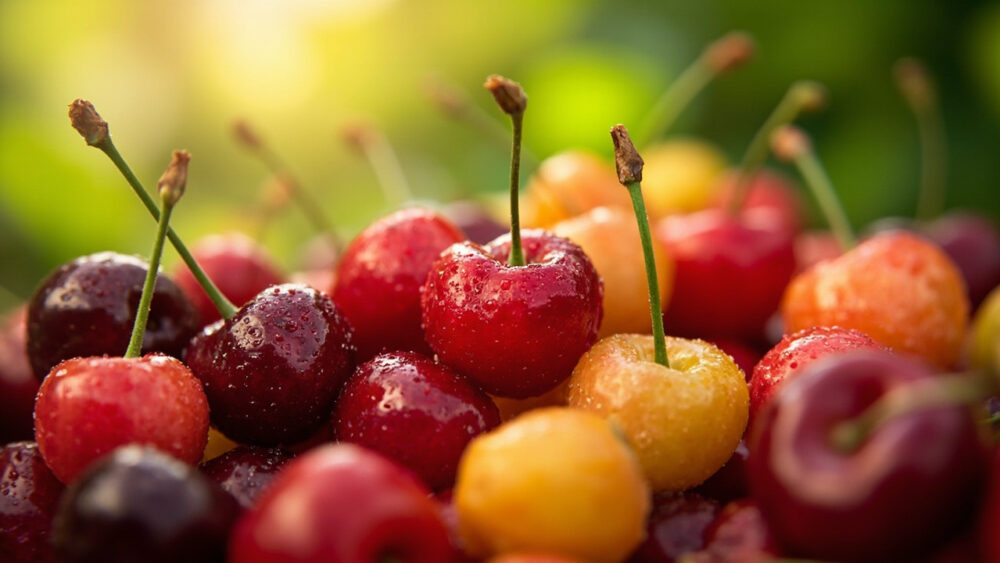
The fastest way to sort out types of cherries is by what they’re for: sweet cherries you eat off the tree, and tart (sour) cherries you cook, bake, or dry. Get that split right first and everything else, like size, hardiness, and pollination needs, falls into place fast. Most backyard growers pick a sweet cherry for the wrong reason (they want the biggest, darkest fruit they’ve seen at the store) without realizing that variety needs a second tree nearby just to set fruit at all.
There’s an underrated category too, the bush and dwarf tart cherries that experienced growers quietly love because they’re self-fertile, cold-hardy to the point of being nearly indestructible, and small enough for a patio pot. Number 13 on this list is the one most people get completely wrong, assuming it’s a novelty when it’s actually one of the toughest producers you can plant.
Stick with me through all five categories. The last few entries plus a straightforward method for picking the right cherry for your yard are waiting at the bottom.
Classic Sweet Cherries (Eating Fresh)
These are the cherries you picture when someone says “cherry,” big, glossy, and best eaten standing at the tree.
1. Bing
The deep mahogany-red standard most grocery store cherries are modeled on. It’s vigorous, grows 25 to 35 feet unless kept pruned, and needs a pollinator partner like Rainier or Van since it’s not self-fertile. Hardy in zones 5 through 8, it wants full sun and well-drained soil, and it’s genuinely fussy about rain cracking the fruit right before harvest.
2. Rainier
The yellow-blushed-pink sweetheart with a sugar content that beats almost every dark cherry. Skin bruises easily so it rarely ships well, which is exactly why growing your own is worth it. It also needs a pollinator tree and ripens slightly earlier than Bing.
3. Stella
The self-fertile dark cherry that solves the pollination headache outright. Medium-large, deep red, and reliably sweet, it’s the one to plant if you only have room or interest in a single sweet cherry tree. Standard trees reach 20 feet or more, but it’s commonly sold on dwarfing rootstock for small yards.
4. Lapins
The crack-resistant workhorse bred for regions with unpredictable rain near harvest. Self-fertile, large, dark red, firm-fleshed, and it also happens to pollinate other sweet cherries well if you’re planting a small orchard. Zones 5 through 8, full sun, and it ripens a bit later than Bing.
5. Sweetheart
The late-season sweet cherry that extends your harvest window by two to three weeks past Bing. Bright red, firm, and self-fertile, it’s a smart second tree to stagger your picking season. It also tolerates cooler summers better than most sweet types.
Sweet cherries are the showpiece, but the tart side of the family is where the real cooking flavor lives.
Tart (Sour) Cherries for Baking and Preserves
These are smaller, more acidic, almost never eaten raw off the tree, and they’re the backbone of pie filling, jam, and dried cherries.
6. Montmorency
The pie-cherry standard grown across nearly every commercial tart cherry operation in North America. Bright red, juicy, self-fertile, and hardy to zone 4, it’s also one of the most cold-tolerant cherries you can plant. Trees stay smaller than sweet cherries, typically 15 to 18 feet.
7. Morello
The darker, more intense cousin of Montmorency, with nearly black-red skin and juice that stains a cutting board on contact. It’s self-fertile, thrives in partial shade better than most cherries, and is the classic choice for cherry liqueur and preserves in European baking traditions.
8. Meteor
The compact tart cherry bred specifically for small yards, topping out around 8 to 10 feet. Self-fertile and cold-hardy into zone 4, it produces Montmorency-quality fruit on a tree you can actually net against birds without a ladder.
If you thought tart cherries were just a smaller version of sweet ones, the next category proves that guess wrong entirely.
Dwarf and Bush Cherries for Small Spaces
This group isn’t a scaled-down version of a standard tree, it’s a genuinely different growth habit built for pots, borders, and cold climates that would kill a full-size cherry.
9. Nanking Cherry
The multi-stemmed shrub that behaves more like a hedge than a tree, reaching 6 to 10 feet. Extremely cold-hardy to zone 2, self-fertile, and the small tart-sweet fruit is prized for jam more than fresh eating. It also doubles as an ornamental with fragrant spring bloom.
10. Carmine Jewel
The Saskatchewan-bred dwarf sour cherry built to survive winters that hit minus 40. Self-fertile, only 6 to 7 feet tall, and it fruits within two to three years of planting, faster than most standard cherries. This is the one serious cold-climate growers plant first.
11. Juliet
The dessert-quality dwarf tart cherry that’s sweet enough to eat fresh, unlike most sour types. Hardy to zone 3, self-fertile, and it stays compact at around 7 feet, making it a real option in a large container. Flavor sits between a tart cherry and a sweet one, which surprises people who expect pure sourness.
Small trees solve space problems, but the next category solves a different one: flavor complexity nobody stocks at the store.
Duke and Specialty Cherries (The In-Between Types)
Dukes are a genuine hybrid category, part sweet, part tart, and most gardeners have never heard of them.
12. May Duke
The old hybrid that splits the difference between sweet and sour, with dark red fruit that’s sweeter than Montmorency but sharper than Bing. It’s partially self-fertile, meaning it sets some fruit alone but produces heavier with a second tree nearby. Hardy in zones 5 through 8.
13. Royal Duke
The one most people assume is a novelty and skip entirely, but it’s actually a heavy, reliable producer once established. It ripens later than May Duke, tolerates partial shade better than sweet cherries, and its dual sweet-tart flavor works fresh or cooked, which is rare in one fruit. If your site has less than full sun, this is the cherry that still performs.
Two categories deep and you’ve still got the black cherry specialists and the choosing method ahead.
Black Cherries and Regional Specialties
These are the deep, almost black-skinned types grown for intensity of flavor and, in one case, wild-tree familiarity.
14. Black Tartarian
The heirloom black sweet cherry dating back over 200 years, small to medium fruit with deep purple-black skin and a rich, wine-like flavor. It’s an excellent pollinator for Bing and other sweet cherries, so plant it alongside rather than alone. Zones 5 through 8, vigorous growth to 30 feet unless pruned hard.
15. Black Cherry (Wild, Prunus serotina)
The native wild tree found across eastern North America, tall, fast-growing, and bearing small, bitter fruit that birds strip fast. This entry is for identification only, not a foraging recommendation. Wild cherry species have lookalikes and toxic parts, including leaves, bark, and pits, so never eat wild cherries or use any part of the tree without expert identification and guidance, and contact a doctor or poison control if ingestion is suspected.
Fifteen types down. Here’s how to actually pick between them.
How to Choose the Right One
- Check your space first: a standard sweet cherry needs 25 to 35 feet, a dwarf or bush type fits in 6 to 10 feet or a large container.
- Match your climate: sweet cherries generally top out around zone 5 on the cold end, while Carmine Jewel, Juliet, and Nanking push hardiness into zone 2 or 3.
- Decide fresh eating versus cooking: pick sweet types like Stella or Lapins for eating off the tree, and Montmorency, Morello, or Meteor for pies and preserves.
- Confirm pollination needs: Bing, Rainier, and Black Tartarian all need a second compatible tree nearby, while Stella, Lapins, Sweetheart, and most tart cherries are self-fertile and can stand alone.
- Rate your care appetite: tart and dwarf cherries tolerate more neglect and less-than-full sun, while sweet cherries want full sun, consistent watering, and protection from rain cracking near harvest.
- Think about harvest timing: stagger a few varieties, early sweet, late sweet, and a tart type, and you’ll pick cherries across six to eight weeks instead of two.
Fifteen cherries, five real categories, and one honest rule: figure out sweet versus tart before you fall for a photo of the fruit.
Plant accordingly and you’ll be picking your own in two to four years, not fighting a mismatched tree for a decade.