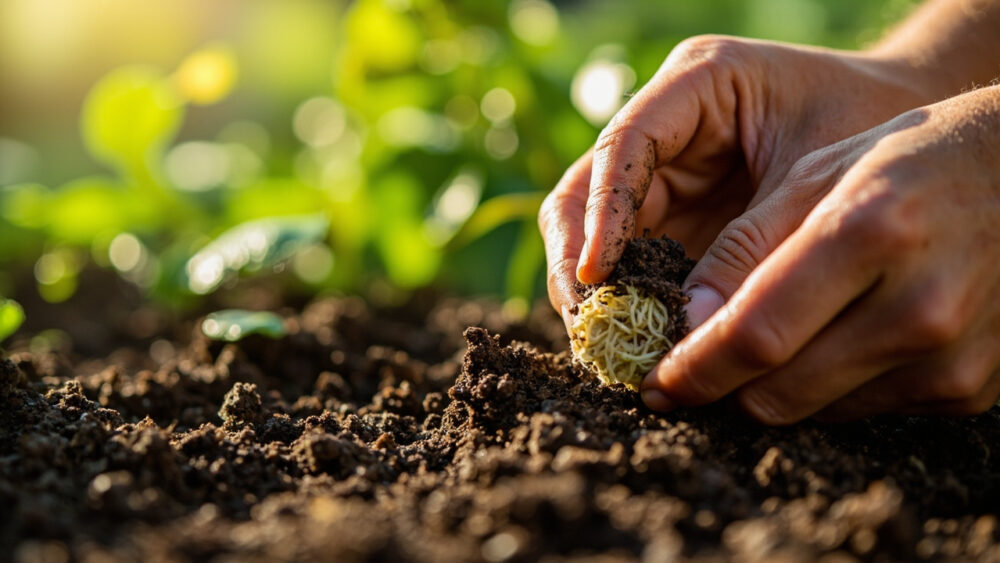
You grow a mango from seed by cracking open the husk around the pit, pulling out the bean-shaped seed inside, and planting that seed on its side in warm, well-draining potting mix, kept around 75 to 85°F, where it sprouts in 1 to 3 weeks. That part is genuinely easy. What is not easy, and what almost nobody tells you before they start, is that a seed-grown mango will probably never fruit true to the parent, and if it does fruit at all, you are looking at 5 to 8 years and a lot of patience.
There is also a mistake that kills more seedlings than any pest ever will, and it happens in the first 48 hours, long before you even see a sprout. There is a sign on the leaves in week two that panics almost every first-time grower, and it is not the problem it looks like. And there is a fruiting question you are already forming in your head right now, about whether that grocery-store mango pit can ever give you grocery-store mangoes, that deserves a straight answer instead of a hopeful one.
Stick with this all the way through and you will hit the Mangoes at a Glance card at the bottom, the save-it-to-your-phone version of everything here. But the steps in between are where the seedling actually lives or dies, so let us get you there in order.
When to Start Mango Seeds
Mangoes are tropical trees, so forget frost-date thinking entirely for the seed-starting step itself. You start a mango seed indoors any time you can get your hands on a ripe fruit, because the seed inside does not stay viable long once removed from the husk.
Timing matters more for what comes after germination. If you live somewhere with real winters, start the seed 8 to 10 weeks before your last frost so the seedling has size on it before you even think about taking it outside, and plan to keep it as a container plant that summers outdoors and winters in a bright room. If you are in USDA zone 10 or warmer, you can start anytime and eventually plant it in the ground.
Direct sowing outdoors only works in zones 10 to 12, where the ground never drops below the mid-50s.
Sowing a Mango Seed, Step by Step
The seed you plant is not the fibrous husk, it is the smooth, kidney-bean-shaped seed hidden inside it. That husk is the mistake that ruins most attempts before they even start.
Step 1: Extract the seed
Eat or cut the fruit away, then use a knife to slit the tough husk along its edge like opening a clam. Pull out the pale, flat seed inside. Discard the husk.
Step 2: Check for viability
A plump, firm, cream-colored seed is good. A shriveled, gray, or moldy one will not sprout, so do not waste a pot on it.
Step 3: Plant it on its side
Use a well-draining potting mix, never garden soil straight from the yard. Bury the seed about half an inch to an inch deep, on its side, with the curved edge slightly up. Planting it upright or too deep is a second common mistake that delays or kills germination.
Step 4: Warmth and light
Keep the pot at 75 to 85°F, on a heat mat if your house runs cooler, in bright indirect light. Direct blasting sun on a bare pot is not necessary yet, the seed does not need light to sprout, only warmth and consistent moisture.
Get the seed in wrong-side up or too deep and you can lose weeks waiting on a sprout that was never coming.
Germination: What to Expect, and the Sign That Panics People
Expect a sprout in 1 to 3 weeks at 75 to 85°F. Below 70°F, germination slows dramatically or stalls. A thick, pale shoot pushes up first, followed by leaves that emerge deep burgundy or reddish-purple, not green.
If you assumed those red leaves meant a nutrient problem or sun scorch, that guess sends a lot of people to dump fertilizer on a perfectly healthy seedling. It is normal mango pigmentation, and the leaves green up gradually over 2 to 4 weeks as they mature.
Worry if nothing has emerged by week 4, or if the seed feels soft and mushy when you check it, that means rot, usually from soil kept too wet and too cool at the same time.
Healthy red leaves are a good sign, not a warning label.
Hardening Off and Transplanting
Do not move a mango seedling straight from a warm indoor windowsill into full outdoor sun. That shock scorches the young leaves fast, sometimes within a single afternoon.
Harden off over 7 to 10 days, starting with an hour or two in dappled shade and adding an hour a day until the plant tolerates a full day outside. Only move it outdoors once nighttime temperatures stay reliably above 55 to 60°F.
Transplant into a container at least 12 to 16 inches wide with drainage holes, using a loose, fast-draining mix, once the seedling has outgrown its starter pot and shows 3 to 4 sets of true leaves. If your climate allows in-ground planting, choose a spot with full sun and space trees 25 to 40 feet apart, because seed-grown mangoes eventually get large.
A rushed hardening-off is the second-most common way people lose a seedling they worked weeks to grow.
Care Through the Season
Water when the top inch or two of soil feels dry, and let excess drain freely, mangoes hate sitting in wet feet. Feed lightly with a balanced fertilizer during active growth in spring and summer, and hold off in fall and winter when growth naturally slows.
Full sun, at least 6 to 8 hours a day, produces a sturdier, faster-growing tree than a shady spot ever will. If you are growing in a container, expect to repot every 1 to 2 years as the roots fill the space, and expect the tree to eventually need a genuinely large pot or a permanent spot in the ground.
Cold is the real limit here. Mango trees are damaged by temperatures below about 40°F and can be killed outright by a hard frost, so container growers in colder climates need a bright indoor spot for winter every single year.
None of that care is complicated, but it does need to be consistent for years before you get to the part everyone actually wants.
When It Reaches Bloom and Harvest, the Honest Timeline
Here is the follow-up question you were already forming: will a seed from a grocery-store mango grow into a tree that makes grocery-store mangoes? Usually, no. Most mangoes sold fresh are grafted varieties, and a seed grown from their fruit does not reliably come back true to type, you may get smaller, more fibrous, or differently flavored fruit than the parent.
Some mango seeds are polyembryonic, meaning a single seed sprouts multiple seedlings that are genetically identical to the parent tree, but you cannot tell if your seed is one of those until it sprouts and you see more than one shoot come up.
Realistic timeline: a seed-grown mango tree typically needs 5 to 8 years of growth before it flowers and sets fruit, sometimes longer in a container. Flowering shows as large branched clusters of small pink or yellowish blooms at the branch tips, usually triggered by a cool, dry period followed by warming.
If you want fruit true to a named variety sooner, grafted nursery trees fruit in 2 to 4 years instead. Growing from seed is worth doing for the experience and for a genuinely unique tree, just go in knowing patience is the actual price of admission.
Mangoes at a Glance
- When to plant the seed: anytime you have a ripe fruit, indoors in warm soil, no frost timing needed for the seed itself.
- Depth and position: half an inch to one inch deep, planted on its side, in well-draining potting mix.
- Ideal temperature: 75 to 85°F for germination and healthy growth, below 70°F slows or stalls sprouting.
- Germination time: 1 to 3 weeks, with reddish-purple first leaves that green up over several weeks.
- Light needs: full sun once hardened off, 6 to 8 hours a day for strongest growth.
- Cold tolerance: damaged below about 40°F, killed by hard frost, must winter indoors in cold climates.
- Time to fruit: 5 to 8 years from seed, versus 2 to 4 years for a grafted nursery tree.
The seed itself is the easy part, almost anyone can get a mango pit to sprout.
Getting a mature, fruiting tree out of it is a multi-year commitment, and knowing that going in is what keeps people from giving up on a perfectly healthy seedling in year two.