How to grow cantaloupe comes down to three things: warm soil, full sun, and enough room for the vines to run. Wait until soil hits at least 65 F before you plant, give each plant 18 to 24 inches of space in rows 4 to 6 feet apart, and keep the soil evenly moist until fruit starts sizing up. Get those three right and the rest of the season mostly takes care of itself.
Most failed attempts trace back to one mistake, and it is not disease or bugs. It is planting too early into cold soil, which stalls the seed so long it either rots or limps along all season stunted. There is also a harvest sign almost everyone misreads, one that has nothing to do with color or size, and getting it wrong means picking fruit that will never taste right no matter how long it sits on the counter.
By the end of this you will know exactly when your soil is ready, how to plant so the vines do not smother each other, what actually threatens a cantaloupe patch, and the one physical cue that tells you a melon is ripe. Save the Cantaloupe at a Glance card at the very bottom for the numbers you will want again in July.
When to Plant Cantaloupe
Cantaloupe is a heat lover through and through. Do not plant until nighttime temperatures are reliably above 55 F and soil temperature at a 2 inch depth holds at 65 F or warmer. That is usually two to three weeks after your last spring frost date, sometimes later in cooler climates.
If you garden in zone 3 to 5, start seed indoors 3 to 4 weeks before that soil-warmth window and transplant out once conditions catch up. Zones 6 and warmer can direct-seed once the soil cooperates.
A soil thermometer costs little and saves you a month of guessing.
Choosing the Spot and Prepping the Soil
Cantaloupe wants a minimum of 8 hours of direct sun and soil that drains fast. Heavy clay that stays soggy breeds root rot before the vine ever sets fruit.
Work in 2 to 3 inches of compost before planting. Cantaloupe is a hungry crop, and thin, tired soil produces small, bland melons even if everything else goes right.
Aim for a soil pH between 6.0 and 6.8. Raised mounds or hills, 12 inches across and a few inches tall, warm faster in spring and improve drainage, which matters more for melons than almost any other vegetable garden crop.
Get the bed right now and planting day goes fast.
Step by Step: Planting Cantaloupe
- Depth: sow seed 0.5 to 1 inch deep, or set transplants so the root ball sits flush with the soil surface.
- Spacing: 18 to 24 inches between plants, with rows or hills spaced 4 to 6 feet apart to give vines room to sprawl.
- Hills: plant 2 to 3 seeds per hill, thin to the strongest single seedling once true leaves appear.
- Water in: soak the planting area right after sowing or transplanting to settle soil around the roots.
- Mulch: lay straw or black plastic mulch once seedlings are established, both to hold soil warmth and keep fruit off wet ground later.
Crowding is the second-biggest mistake behind planting too early, since packed vines compete for light and stay disease-prone in the humid microclimate they create.
Once seedlings are up and growing, the season becomes about water and feeding, and that is where a lot of gardeners overcorrect.
Watering and Feeding Through the Season
Cantaloupe needs about 1 to 1.5 inches of water a week, delivered steadily rather than in one heavy soak. Check soil moisture with your finger an inch downnot by how the surface looks, since the surface dries out and lies to you constantly in summer heat.
If you assumed more water always means better melons, that guess is exactly what produces watery, weak-flavored fruit late in the season. Cut back on water noticeably once fruits reach full size and start to soften near the stem, since a drier finish concentrates sugar. This is the step almost everyone gets backward, watering hard right up to harvest instead of easing off.
Feed with a balanced fertilizer or side-dress with compost at planting, then again when vines start to run and once more when fruit sets. Too much nitrogen late produces huge leafy vines and disappointing fruit.
Water generously through flowering and fruit set, then start pulling back, and you have timed it right.
Problems That Actually Threaten a Cantaloupe Patch
Powdery mildew, a white dusty coating on leaves, is the most common issue and shows up in humid stretches or when foliage stays wet overnight. Water at the soil line, not overhead, and space plants for airflow to head it off. If it takes hold, a fungicide labeled for powdery mildew on cucurbits can slow it; follow the product label exactly.
Cucumber beetles and squash bugs chew leaves and can spread bacterial wilt, which shows as sudden vine collapse with no warning. Floating row covers over young plants block early damage; remove covers once flowers open so pollinators can reach them.
Blossom drop, where flowers fall without setting fruit, is usually just poor pollination or heat stress, not disease. It typically self-corrects as more female flowers open and bee activity picks up.
Handle the pests and airflow early, and most cantaloupe problems never get the chance to start.
When and How to Harvest Cantaloupe
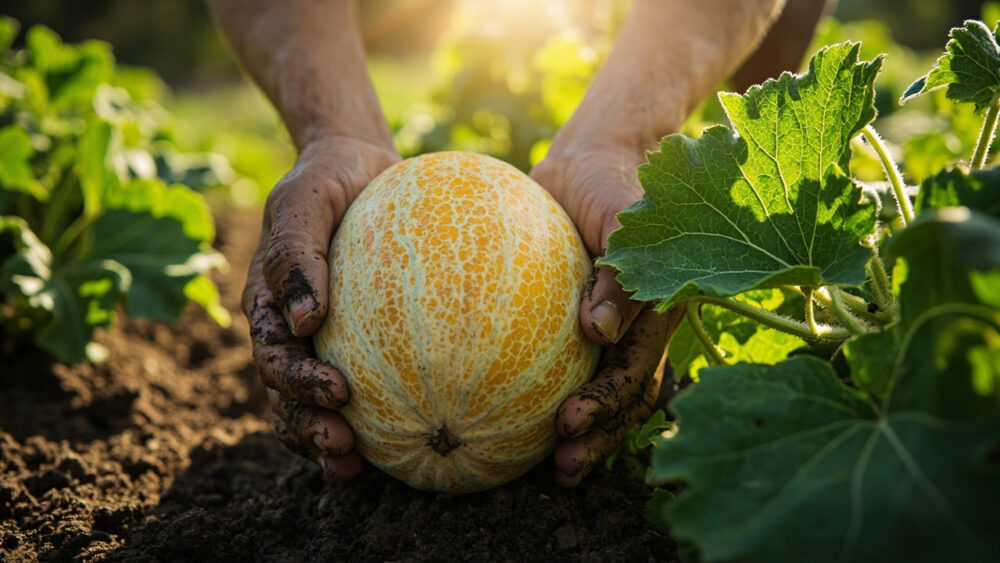
Here is the sign almost everyone misreads: color. A cantaloupe’s rind can look fully tan and netted well before the fruit is actually ripe, so color alone will fool you into picking too soon. The real tell is slipmeaning the stem separates from the fruit with gentle pressure instead of tearing.
Check daily once the netting looks mature and the area around the stem starts to soften slightly. A ripe cantaloupe will also give off a sweet, distinct smell right at the stem end, noticeable from a foot away in full sun.
Most varieties mature 70 to 90 days from seed. Twist gently at the stem. If it releases with barely any resistance, it is ready. If it fights you, give it another day or two and check again.
That slip test is the one piece of information worth remembering above everything else in this guide.
Cantaloupe at a Glance
- When to plant: once soil hits 65 F and nights stay above 55 F, typically 2 to 3 weeks after last frost.
- Spacing: 18 to 24 inches between plants, 4 to 6 feet between rows or hills.
- Planting depth: 0.5 to 1 inch for seed, root ball flush with soil for transplants.
- Water needs: 1 to 1.5 inches weekly, reduced once fruit nears full size.
- Sun requirement: at least 8 hours of direct sun daily.
- Days to maturity: 70 to 90 days from seed, depending on variety.
- Harvest sign: stem slips free with gentle twisting pressure, plus a sweet smell at the stem end.
Warm soil and patience get you a strong start. The stem-slip test is what gets you a genuinely sweet melon instead of a good-looking disappointment.