When to harvest pineapples comes down to color, smell, and a little bit of nerve: you’re looking for the shell to shift from green to about a third or half yellow at the base, a sweet smell right at the fruit, and a slight give when you tug it. That usually happens 5 to 6 months after the fruit first forms, and 18 to 24 months after planting a crown or sucker in the ground. Most people pull the trigger too early because green-to-gold on a pineapple looks nothing like the neon yellow-orange they expect from the grocery store.
Here’s the thing nobody tells you until they’ve wasted a fruit finding out: pineapples do not ripen off the plant. Not really. A little color will develop, but the sugar content is locked in the moment you cut it. That single fact is behind most of the disappointment people report, and it changes exactly how you should time the cut.
There’s also the mistake that costs people an entire second harvest, a twist-versus-cut debate that actually matters more than it sounds, and the truth about what “a few days early” really costs you in sweetness. Stick around, because the save-able Pineapples at a Glance card at the bottom has every number in one place for your phone.
The Real Ready Signs, Not the Grocery Store Ones
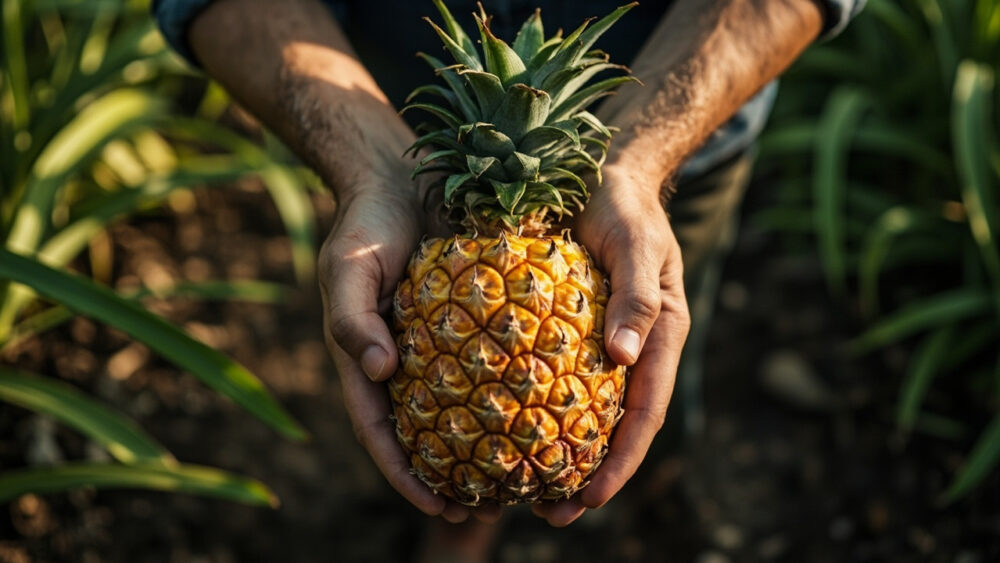
Forget the all-yellow pineapple you picture from the produce aisle. A field-ripe pineapple is often still mostly green with just the bottom third to half of the shell turned yellow, orange-yellow, or in some varieties a coppery gold.
The eyes, those flat segments covering the shell, flatten slightly and the fruit fills out to a rounder, less angular shape as it matures.
The Smell Test
Put your nose right up to the base of the fruit, near the stem end. A ripe pineapple smells sweet and slightly fermented even before you cut it. No smell at all usually means you’re still a couple weeks out.
The Tug and the Thump
Grab a leaf from the crown near the center and give it a gentle pull. On a ripe fruit, it comes away with a little resistance, not a fight. Some growers also thump the side of the fruit with a knuckle, listening for a dull, slightly hollow sound rather than a solid thud, though this takes practice to trust.
None of these signs alone is proof, which is exactly why the timing window matters as much as the checklist.
The Timing Window, and What Early or Late Actually Costs You
Count on roughly 5 to 6 months from the time the small purple-flowered fruit first appears at the center of the plant to harvest, though warm, consistently sunny conditions can shave a couple of weeks off that and cool or shady conditions can stretch it out.
Harvest too early and you get a fruit that’s more acidic than sweet, with a texture that stays a bit tough even after a few days on the counter. That sourness never fully resolves indoors, because the plant does the sugar conversion, not your kitchen windowsill.
Wait too long and the fruit overripens on the plant, going soft, fermenting internally, and attracting fruit flies and ants before you ever get a knife to it. Overripe pineapples also bruise and rot fast once cut, sometimes within a day.
The safe window between “not quite” and “past it” is usually about a week to two weeks, which is tighter than most first-time growers expect.
How to Cut It Without Wrecking the Plant
Use a sharp, clean knife rather than twisting the fruit off by hand. Twisting can tear the stalk and injure the plant’s crown, which matters if you want that plant to produce again.
Cut straight across the stalk about 1 to 2 inches below where the fruit meets the leaves, leaving a short stub of stem attached to the fruit rather than cutting flush against it.
Wear gloves or grip carefully. The spiny leaf edges and the tiny sharp points on the shell itself will happily take a layer of skin off your palm if you’re not paying attention.
Cut cleanly, and you’ve protected both the fruit and the plant’s next round.
Right After the Cut: What to Do in the First Hour
Set the pineapple stem-side down on a clean surface out of direct sun for a short rest before handling it further. This lets any sap at the cut stem seal a little rather than dripping everywhere.
Don’t wash it yet if you’re not eating it same day. Extra moisture on the shell speeds up mold, especially near the crown and base.
If you’re not slicing into it within a day or two, store the whole fruit at room temperature out of direct sun, then refrigerate once cut. Cut pineapple keeps well in a sealed container in the fridge for about 4 to 6 days.
Once it’s handled and settled, the next question is always the same one: can this plant do it again.
Keeping the Harvest Coming: Suckers, Slips, and the Second Fruit
Here’s the honest answer most people are about to ask next: yes, the same plant can fruit again, but not quickly and not automatically.
After harvest, the mother plant sends up side shoots called suckers from the base and slips from along the stalk. Leave two or three of the strongest suckers attached and remove the rest, along with the spent fruiting stalk, cutting it back near the base once it’s fully browned.
A sucker left in place typically fruits again in about 12 to 16 months, often producing a slightly smaller pineapple than the first round. If you want more plants instead of a faster second fruit, twist off healthy slips or suckers and root them separately, the same way you’d start a new plant from a store-bought crown.
Either path works, but trying to keep too many shoots on one plant splits its energy and delays everything.
With the plant sorted for next time, here’s everything worth saving in one place.
Pineapples at a Glance
- When to plant: anytime soil stays consistently warm, ideally 65 to 95°F, since pineapples are frost-tender tropicals grown outdoors year-round only in USDA zones 10 to 11, and in containers or greenhouses elsewhere.
- Time to first fruit: about 18 to 24 months from planting a crown or sucker to the fruit forming, then another 5 to 6 months for that fruit to ripen.
- Ready signs: lower third to half of the shell turns yellow or gold, a sweet smell at the base, slight give when you tug a center crown leaf.
- Timing window: about 1 to 2 weeks between first color change and overripe, so check every few days once color starts turning.
- How to cut: sharp knife straight across the stalk, 1 to 2 inches below the fruit, never twisted off by hand.
- After harvest: rest cut-side settled and out of sun briefly, store whole fruit at room temperature, refrigerate once sliced for up to about 4 to 6 days.
- Next harvest: keep 2 to 3 strong suckers per plant for a second fruit in roughly 12 to 16 months, or root extra suckers and slips as new plants.
Color and smell tell you more than any calendar ever will. Trust the fruit, not the clock, and you’ll rarely cut one wrong.