The best way to store kohlrabi is to cut the leaves off, leave the bulb whole and unwashed, and keep it in a perforated bag in the crisper drawer, where it holds firm for three to five weeks. Left with the leaves attached, that same bulb turns rubbery and pithy in under a week. That one step, trimming the tops, is the difference between kohlrabi that lasts a month and kohlrabi you’re tossing by Friday.
Most people also get the washing step backwards, and it costs them a jar of moldy vegetables a week later. There’s a good long-term option too, one that most people assume is the only choice, and it isn’t the best one for this vegetable.
Stick with me and I’ll walk through exactly how long kohlrabi lasts on the counter, in the fridge, cured in a root cellar setup, and frozen, plus the signs that tell you it’s already turned. Everything worth remembering is saved in the Kohlrabi at a Glance card at the bottom, so scroll to the end and save it before you put your phone down.
The Best Method: Trim, Don’t Wash, Bag It Loose
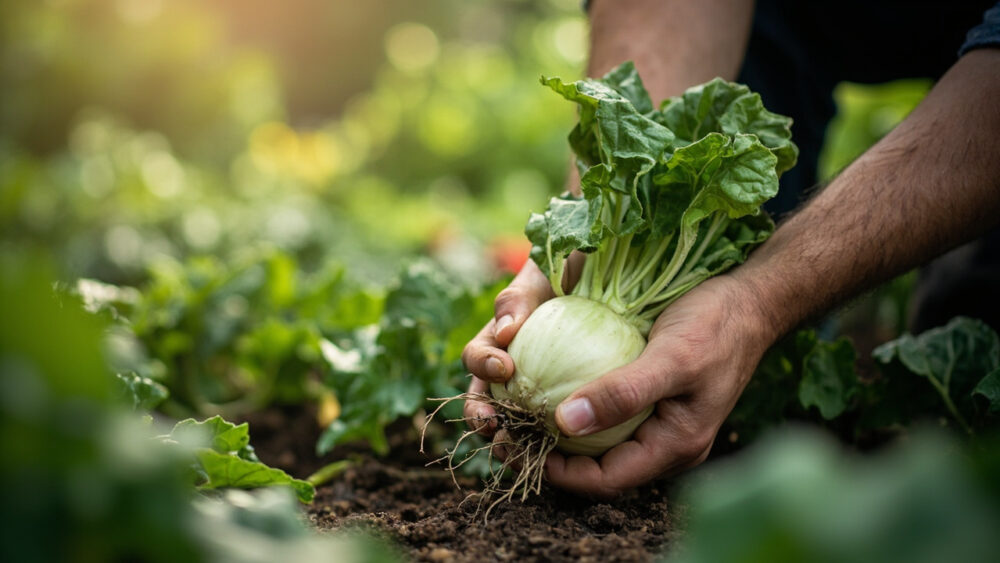
Start by cutting the leafy tops off about half an inch above the bulb. The leaves pull moisture out of the bulb constantly, even after harvest, and that’s what shrivels it fast. Save the leaves if you want, they cook like collards, but they don’t store on the bulb.
Do not wash the bulb before storing it. A quick brush to knock off loose dirt is fine, but wet skin invites rot in a sealed drawer. Wash it right before you cook it, not before it goes into the fridge.
Place the trimmed, unwashed bulbs in a perforated plastic bag or a loosely closed produce bag, and set them in the crisper drawer on the higher-humidity setting. Kohlrabi wants cold and moist air, but it needs somewhere for excess moisture to escape or it turns slimy against the plastic.
That crisper drawer setting matters more than people think, and it’s where the next mistake usually starts.
How Long Kohlrabi Actually Keeps, Method by Method
On the counter, kohlrabi is a two to three day vegetable, tops. It softens fast at room temperature, so counter storage only makes sense if you’re cooking it within a day or two of harvest or purchase.
In the fridge, trimmed and bagged as described above, expect three to five weeks from a fresh bulb. Older bulbs that have already sat around a store shelf for a week will run shorter, closer to two to three weeks.
Cured in a cool, humid root cellar setup, around 32 to 40°F with high humidity, kohlrabi can hold for two to three months, similar to turnips or beets. This is the move if you grew a big fall crop and don’t have fridge space for all of it.
Frozen, blanched kohlrabi keeps for 8 to 12 months, though texture softens and it’s best used in soups and purees rather than eaten raw or roasted after thawing.
Which of those four methods you pick depends entirely on how you’re prepping it first, and that’s where most of the damage gets done.
Prep That Makes or Breaks the Batch
If you’re freezing kohlrabi, you have to blanch it first, no exceptions. Peel the bulb, cut it into half-inch cubes, and drop it into boiling water for two to three minutes, then straight into ice water for the same amount of time. Skip blanching and the enzymes keep working in the freezer, turning the flesh mushy and grassy-tasting within a few months.
If you’re fridge-storing, skip peeling entirely until you’re ready to cook. The skin, tough as it is, is the barrier that keeps moisture in. Peel it early and you’ve opened the door for the flesh to dry out and toughen at the edges.
For root-cellar curing, a light coat of dirt left on the bulb actually helps, which surprises people who assume clean produce always stores better. Just make sure it’s dry dirt, not damp, before it goes into storage boxes or sand.
Good prep buys you weeks, but even perfect prep won’t save a bulb that’s already past its prime when you start.
The Signs Kohlrabi Has Turned
Soft, give-in-the-middle flesh when you press it is the first and most reliable sign it’s going downhill. A fresh kohlrabi bulb should feel as dense and solid as a turnip or a small cabbage core.
If you assumed a wrinkled, shriveled skin was just cosmetic and the inside was probably fine, that guess is wrong more often than right. Wrinkled skin means it’s already lost a meaningful amount of water, and the flesh underneath is usually spongy, not crisp.
Watch for these other signs too:
- A sour or fermented smell when you cut into it, rather than the mild, cabbage-like scent of a fresh bulb.
- Soft, translucent, or slimy patches under the skin, especially near cut surfaces.
- Dark spots or fuzzy mold, most often where it was in direct contact with a damp bag.
- A hollow, woody core when sliced, which happens in bulbs that grew too large or sat too long before harvest.
A little softness at the very edges is fine and just means eat it soon. Sliminess or smell means it goes in the compost, not the soup pot.
Most of those problems trace back to one of a handful of avoidable mistakes.
The Mistakes That Ruin a Batch
Leaving the leaves attached is the single biggest mistake, and it’s the one almost everyone makes the first time. Those leaves keep transpiring after harvest, pulling water straight out of the bulb, and a kohlrabi stored with tops on will go rubbery in days instead of weeks.
Washing before storage is the second most common one. Wet skin in a sealed bag is a mold incubator. Brush off dirt, don’t rinse, and wash only right before cooking.
Sealing the bag completely airtight is a quieter mistake that shows up a week or two in, once condensation builds up and the bulb starts to soften from the outside in. Perforated or loosely closed bags let that moisture escape.
Storing bulbs that are already oversized or woody is a mistake that starts in the garden, not the kitchen. Kohlrabi is best harvested at 2 to 3 inches across, tennis-ball size at the largest. Bulbs left in the ground past that point develop a fibrous, hollow core that no amount of good storage will fix.
Get those four things right and kohlrabi is genuinely one of the easier vegetables to keep around for weeks at a time.
Kohlrabi at a Glance
- Before storing: trim leafy tops half an inch above the bulb, brush off dirt, do not wash.
- Fridge storage: unwashed, in a perforated bag, crisper drawer on high humidity, lasts three to five weeks.
- Counter storage: good for two to three days only, softens fast at room temperature.
- Root cellar curing: 32 to 40°F, high humidity, light dry dirt left on, lasts two to three months.
- Freezing: peel, cube, blanch two to three minutes, ice bath, then freeze, lasts 8 to 12 months.
- Signs it’s turned: soft give when pressed, wrinkled skin, sour smell, slimy patches, hollow woody core.
- Best harvest size: 2 to 3 inches across, before the core turns woody.
Trim the tops, skip the wash, and give it somewhere to breathe. That single habit does more for kohlrabi than any container or gadget ever will.