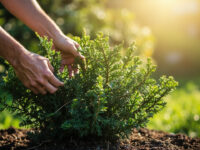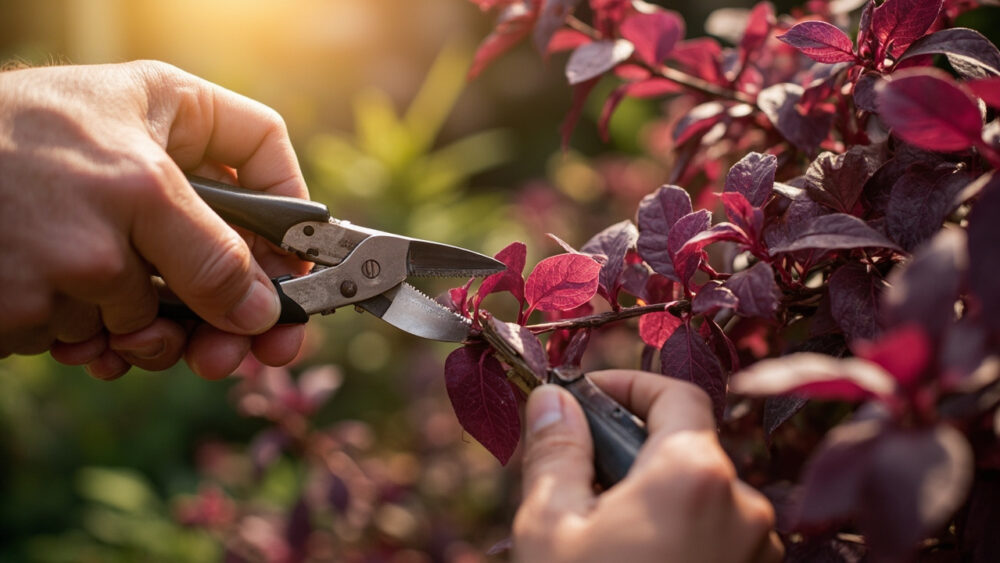
The best time to prune smoke bush is late winter to early spring, while it is still dormant and before new leaves push out. Cut back one third of the oldest stems to the ground and shorten the rest by about a third, working from the base outward. If you want a bigger plant with more of those smoky flower plumes, you prune light and early; if you want bold purple foliage as the main show, you can cut hard and lose most of that year’s bloom, which is a trade a lot of people make without meaning to.
That trade-off is the first thing most people get wrong on how to prune smoke bush. They prune for looks and then wonder why the plant skipped its famous haze of pink-gray flower clouds that season. There is an honest answer to that, and it is coming.
There are two other snags worth knowing before you make a single cut: the exact stage the plant needs to be at, and the specific mistake that turns a shapely shrub into a leggy, bare-legged mess for two or three years running. Stick with me and you will also get the save-able Smoke Bush at a Glance card at the bottom, the kind of thing you screenshot before you walk out to the yard.
When to Prune Smoke Bush, and When to Leave It Alone
Prune while the plant is fully dormant, after the coldest part of winter has passed but before buds swell, typically late winter into very early spring depending on your zone. You want bare stems and no active growth. Cutting too early in a hard winter risks exposing fresh wood to a deep freeze; cutting too late means you are removing buds that were about to become leaves or flowers, which sets the plant back.
Do not prune in fall. Fall cuts encourage a flush of tender new growth that has no time to harden off before frost, and that growth just dies back anyway, wasting the plant’s energy.
Also skip pruning right after a bloom flush if you are growing smoke bush mainly for those smoky plumes. Wait until the display fades on its own, then prune the following dormant season.
Here is the part almost nobody plans for: the amount you cut changes what kind of season you get next.
Tools and the One Prep Step That Actually Matters
You need bypass pruners for anything under about half an inch thick, loppers for stems up to an inch and a half, and a pruning saw for anything thicker at the base. Smoke bush stems get surprisingly woody fast, so do not try to force a small pruner through an old trunk.
Clean your blades before you start, and again between plants if you are pruning more than one shrub. Wipe them down with rubbing alcohol or a diluted disinfectant. This is the prep step people skip, and it is the one that matters most, because smoke bush can carry verticillium wilt, a soilborne fungal disease that spreads through infected wood and tools. A dirty blade can move it from a sick shrub to a healthy one in one afternoon.
Sharp, clean tools also make cleaner cuts that heal faster and shrug off disease and pests better than ragged, crushed cuts do.
Once your tools are ready, the actual cutting is the easy part.
Step by Step: Where and How Much to Cut
- Step 1: Remove any dead, damaged, or crossing branches first, cutting back to healthy wood or to the ground.
- Step 2: Pick out the oldest, thickest one third of the stems at the base and cut them off at ground level or to a low stub 2 to 3 inches up. This renewal pruning keeps the whole shrub from getting woody and bare-legged over time.
- Step 3: On the remaining stems, cut back by roughly one quarter to one third of their length, making each cut just above an outward-facing bud so new growth heads away from the center.
- Step 4: Step back and check the shape. Smoke bush looks best as a loose, rounded mound, not a tight ball, so resist the urge to shear it like a hedge.
- Step 5: If you want maximum flower show this year, stop here and go light, closer to one quarter overall. If you want maximum foliage color and a more compact plant next year, you can take it harder, up to about half, understanding you will trade away most of the bloom.
That last choice is the real answer to the trade-off question from the intro, and it is worth sitting with for a second.
Flowers or Foliage: The Honest Trade-Off
If you assumed harder pruning just means a fuller, better plant all around, that guess is what costs people their bloom. Smoke bush flowers on old wood that grew the previous year. Cut hard, and you remove most of the stems that were about to flower.
Purple-leaf varieties like the common dark cultivars grown for foliage actually respond well to hard, almost coppicing-style cuts, since a strong hard prune pushes out larger, more vividly colored new leaves. Growers chasing color often cut the whole plant back to 6 to 12 inches from the ground every year or two, sacrificing flowers entirely for bigger, richer leaves.
If the smoky plumes are the whole reason you planted it, prune lightly and only remove that renewal third of old wood, leaving the rest mostly intact.
Either way, what happens in the weeks right after pruning tells you whether you got it right.
What to Expect After You Prune
New growth should appear within 3 to 6 weeks once the weather warms, pushing out from buds along the remaining stems and from the base where you cut old wood down. A light prune usually means bloom by early to mid summer. A hard prune skips flowering that year but rewards you with vigorous, larger leaves through the season.
Watch the base of the plant, not just the top. Vigorous new shoots rising from ground level are a good sign the shrub is responding well to the renewal cuts.
If a particular stem you cut back shows no new growth by early summer while everything around it leafs out fine, cut it back further to check for green healthy tissue underneath the bark. No green means that stem is dead and should come out.
Most of what goes wrong after pruning, though, traces back to a handful of avoidable mistakes.
The Mistakes That Cost You Flowers, Shape, or the Whole Season
- Pruning in fall or mid-growing season: both invite tender growth that either freezes or interrupts the plant’s energy storage for next year.
- Shearing into a tight ball: smoke bush has a naturally loose, airy habit, and shearing ruins the plumes and looks unnatural year after year.
- Never removing old wood: skipping the renewal cuts for several years in a row leaves you with a shrub that is tall, woody, and bare at the base with all the growth up top.
- Dirty tools: reusing unclean blades across plants is the single most common way verticillium wilt spreads in a home landscape.
- Cutting hard and expecting flowers the same year: that is the trade-off nobody warns you about until the plumes simply do not show up.
Get the timing and the amount right, and smoke bush is genuinely low-maintenance for years at a stretch.
Here is everything from above condensed onto one card you can pull up while you are standing at the shrub.
Smoke Bush at a Glance
- When to prune: late winter to early spring, while fully dormant and before buds swell, never in fall.
- How much to cut: remove about one third of the oldest stems at the base, then shorten the rest by one quarter to one third.
- For more flowers: prune light, closer to one quarter overall, and skip hard renewal cuts that year.
- For bolder foliage: prune hard, up to half or even down to 6 to 12 inches for color-focused cultivars, accepting little to no bloom that season.
- Tools needed: bypass pruners for thin stems, loppers up to an inch and a half, a pruning saw for thicker old wood.
- The one prep step: disinfect blades before starting and between plants to avoid spreading verticillium wilt.
- What to watch after: new growth within 3 to 6 weeks, strong shoots from the base, and any stem with no green under the bark by early summer should be removed.
Prune on time, prune with clean tools, and decide up front whether you are chasing flowers or foliage this year. Everything else about smoke bush takes care of itself.