The short answer: learning how to grow magnolia trees comes down to three things you cannot skip: plant in early spring or fall when soil is workable and cool, give the tree full sun to light shade in soil that drains well but never dries to dust, and leave it alone for the first two years while roots establish. Skip any of those three and you get a magnolia that sulks for a decade instead of one that blooms.
Most people ruin their shot in the first ten minutes, at the planting hole, not months later. There is also a sign on the leaves that panics new growers every single spring, and it almost never means what they think it means. And if you are wondering when a young magnolia actually starts blooming, the honest answer is not the cheerful number on the plant tag.
Stick with me through the planting steps, the feeding schedule, and the problems that actually show up on magnolias, and I will hand you a save-able Magnolia Trees at a Glance card at the very bottom with the numbers worth keeping on your phone.
When to Plant a Magnolia
Plant in early spring after the ground has thawed and softened, or in early to mid fall while soil is still warm but air has cooled. Both windows give roots time to settle before they face summer heat or winter freeze. Avoid planting in the dead heat of summer or right before a hard freeze; the tree has no time to anchor itself.
Container-grown magnolias, which is how almost everyone buys them, are more forgiving than bare-root trees and can go in slightly outside these windows if you water diligently. Deciduous magnolias like star and saucer types are hardy roughly zones 4 through 9. Evergreen Southern magnolia prefers zones 7 through 9 and resents hard freezes right after planting.
Get the timing right and the next decision, where the tree actually lives, matters even more.
Choosing the Spot and Prepping the Soil
Magnolias want full sun to partial shade, at least four to six hours of direct light, and soil that is slightly acidic, rich, and drains well. Heavy clay that stays soggy after rain is the number one silent killer of young magnolias, not cold and not pests.
Check drainage before you buy the tree, not after. Dig a hole a foot deep, fill it with water, and see how long it takes to disappear. If water still sits there after an hour, you need a raised planting mound or a different spot.
Work compost into the native soil rather than replacing it entirely. A tree planted in a rich pocket surrounded by unimproved clay just grows roots in a circle and never ventures out.
Soil sorted, now for the part everyone rushes.
Planting a Magnolia Step by Step
This is where most first attempts go wrong, and it happens in the hole, not later. Plant too deep and the tree stalls for years without ever looking obviously sick, which is exactly why the mistake is so common and so hard to diagnose after the fact.
Steps to plant your magnolia
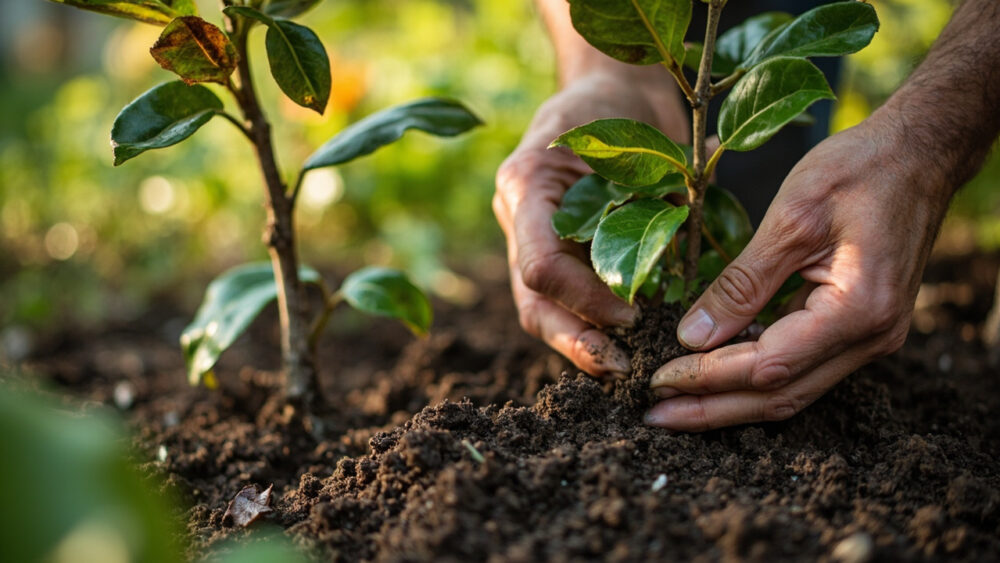
- Dig wide, not deep: the hole should be two to three times the width of the root ball but no deeper than the root ball itself.
- Find the root flare: the point where the trunk widens into roots must sit at or slightly above the surrounding soil line, never buried.
- Loosen the roots: if the tree is rootbound, score or gently tease the outer roots so they grow outward instead of circling.
- Backfill with native soil: mixed with compost, tamping gently to remove air pockets without compacting it hard.
- Water in immediately: a slow soak right after planting settles soil around the roots better than any amount of tamping.
- Mulch two to three inches deep: keeping it several inches away from the trunk itself.
- Space trees 15 to 30 feet apart: depending on the variety’s mature spread, since magnolias resent crowding later in life.
Get the tree in the ground correctly and the next challenge is keeping it alive through its first real season.
Watering and Feeding Through the Season
Water deeply once or twice a week for the first two growing seasonsaiming for moist soil down at root depth rather than a quick surface splash. A young magnolia’s roots are shallow and wide, so a slow soak over the whole root zone beats a fast hose blast every time.
Established trees, three years and older, tolerate short dry spells but still appreciate deep watering during drought and in the weeks before bloom.
Feed lightly in early spring with a balanced, slow-release fertilizer formulated for acid-loving trees, and skip feeding entirely in the tree’s first few months. Fresh transplants have limited roots to absorb nutrients, and heavy feeding right after planting does more harm than good.
Water and food handled, now the part that actually scares people: what shows up on the leaves.
The Problems That Actually Strike Magnolias
If you assumed yellowing leaves mean the tree needs more water, that guess causes more overwatering deaths than drought ever does on magnolias. Yellowing with green veins usually signals iron deficiency from soil that is not acidic enough, not thirst. A soil test and an acidifying amendment fix it far more reliably than another round of watering.
Scale insects and magnolia leaf spot are the two most common real problems. Scale shows up as small bumps along stems with sticky residue underneath; treat with horticultural oil, following the product label exactly. Leaf spot causes brown or black blotches in wet, humid years and is mostly cosmetic. Raking up fallen leaves in autumn cuts down next year’s spores.
Bud blastwhere flower buds turn brown and drop before opening, is usually a late frost catching an early bloomer off guard. There is no fix once it happens, only next year to look forward to.
Magnolia bark and leaves are considered mildly toxic if ingested by pets. Watch for drooling or stomach upset and call a veterinarian if you suspect a pet has eaten a significant amount.
Survive the pests and the frost surprises, and the reward is the thing you actually planted this tree for.
When a Magnolia Blooms and How to “Harvest” the Show
Magnolias do not get harvested like a vegetable, but the honest answer to when they bloom is the part plant tags gloss over. Deciduous types like star and saucer magnolia can flower within two to three years of planting a decent-sized nursery tree. Southern magnolia, the big glossy evergreen, often takes seven to ten years to put on a real bloom show, sometimes longer from a small sapling.
That is not a sign of failure, it is just how the tree is built.
Cut blooms for a vase in the early morning, choosing flowers just starting to open rather than fully spread, since magnolia blooms are short-lived once cut and open fast in a warm room.
For a tree left to do its own thing outdoors, blooms typically hold two to three weeks depending on weather, with hot, windy days shortening the display considerably.
That patience payoff is exactly why the quick-reference numbers below are worth saving before you close this tab.
Magnolia Trees at a Glance
- When to plant: early spring after soil thaws, or early to mid fall while soil is still warm.
- Sun and soil: full sun to partial shade, slightly acidic, rich, well-drained soil.
- Planting depth: root flare level with or slightly above the surrounding soil, never buried.
- Spacing: 15 to 30 feet apart depending on mature variety size.
- Watering: deep soak once or twice weekly for the first two years, then occasional deep watering during drought.
- Feeding: balanced, slow-release, acid-formula fertilizer once yearly in early spring, skipped the first season.
- Time to first bloom: two to three years for deciduous types, seven to ten years for Southern magnolia.
Get the planting depth right and the soil right, and everything else about growing magnolia trees is just patience.
That patience is the whole secret, the tree does the rest on its own schedule.