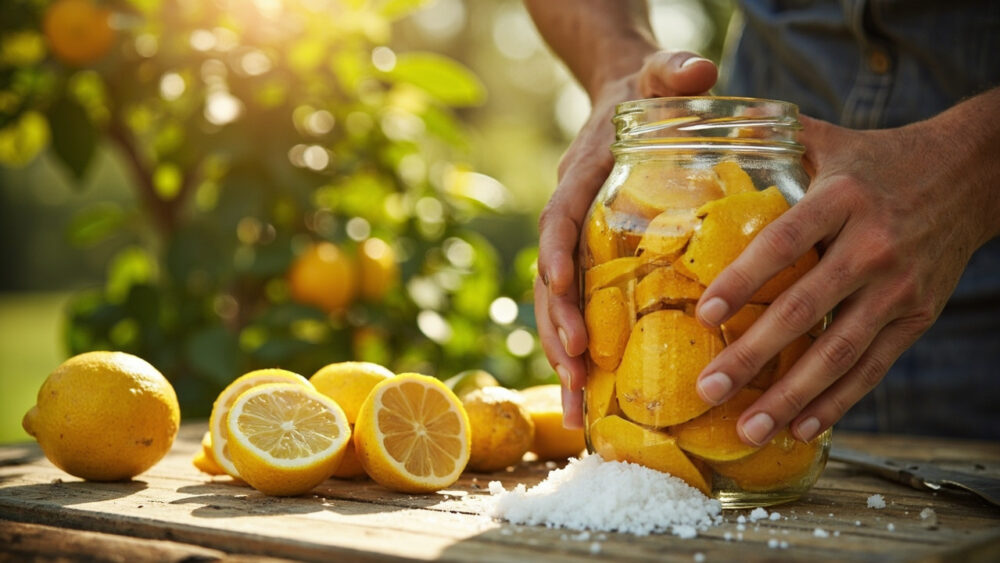
The best way to preserve lemons long-term is salt-curing them in a jar, the old North African method that turns them soft, tangy, and shelf-stable for up to a year without any canning equipment. If you just want to stretch fresh lemons a few extra weeks, the fridge and freezer both work, but they solve a different problem than curing does. If you’re standing in the kitchen right now wondering how to preserve lemons before they go soft on the counter, the method you pick depends entirely on how long you need them to last.
Here’s where most people go wrong: they either skip the salt ratio and end up with a jar of mush, or they freeze whole lemons and then can’t figure out why they’re bitter and waterlogged three months later. There’s also a step almost nobody does correctly on the first try, and it has nothing to do with salt.
Stick around, because the exact fix for cloudy, off-smelling jars and the full at-a-glance card with times for every method are both down at the bottom.
The Method That Actually Works: Salt-Curing
Salt-curing is the gold standard because it preserves lemons for months at room temperature or in the fridge, and it concentrates the flavor instead of diluting it. Here’s the process.
- Wash 6 to 8 lemons well, then quarter them lengthwise without cutting all the way through the base, so they open like a flower.
- Pack the inside of each cut generously with coarse kosher salt, roughly 1 to 2 tablespoons per lemon.
- Pack the lemons tightly into a clean glass jar, pressing down so they release juice as you go.
- Add more salt between layers and top off with fresh lemon juice until the fruit is fully submerged.
- Seal and leave at room temperature for 3 to 4 weeks, tipping or shaking the jar every day or two to redistribute the salt and juice.
The rind turns soft and translucent when it’s ready. That softness is the actual sign of doneness, not the calendar.
Once cured, the mistake everyone makes is what they do next, and that’s a separate problem entirely.
How Long Each Method Actually Keeps Lemons
Fresh, unwashed lemons hold up on the counter for about a week, and in the crisper drawer of the fridge for 3 to 4 weeks. That’s the ceiling for “fresh” storage, full stop.
Freezing whole lemons works for zest and juice, not for eating out of hand. Frozen whole, they last 3 to 4 months, but the texture turns mealy the moment they thaw. Freezing juice or zest separately in ice cube trays holds quality for 4 to 6 months.
Salt-cured lemons are the long game. Once cured, they keep in the fridge for 6 to 12 months, sealed under their own brine. Left unrefrigerated in a cool pantry, expect 3 to 6 months before quality drops, though many cooks push that further with no issue.
None of these timelines mean anything if the prep before curing was wrong, and that’s the part that trips people up.
The Prep Step That Makes or Breaks the Jar
If you assumed washing lemons well is the only prep that matters, that’s a reasonable guess, and it’s incomplete. Washing matters, yes, scrub off any wax or residue under warm water before you cut. But the step that actually determines whether your jar succeeds or fails is drying the jar and lemons completely before they touch salt.
Any leftover water dilutes the brine’s salt concentration, and a weak brine is what lets mold take hold. Use a completely dry jar, dry hands, and pat the lemons dry after washing.
Skip blanching entirely. Unlike some preserved citrus recipes you’ll see floating around, classic salt-cured lemons are never blanched. Blanching softens the rind in a way that works against the slow salt cure and often leads to a mushier, less stable result.
Get the drying step right and you’ve dodged the single biggest cause of ruined batches, but there’s still one more failure mode to watch for after the jar is sealed.
The Signs a Jar Has Turned
A properly curing jar smells sharp, salty, and citrusy, and the liquid stays cloudy-gold, not fuzzy. Trust your nose here over your eyes.
Mold on the surface is the clearest red flag, especially fuzzy white, green, or black spots on the exposed rind. A thin white film that’s flat and dissolves when you swirl the jar is usually just natural yeast bloom and is generally considered harmless, but if you’re ever unsure, don’t gamble on it.
Other signs to toss the batch: a sour, fermented smell that’s gone past tangy into rotten, sliminess on the rind instead of the expected soft-tender texture, or gas bubbles rising steadily days after curing started, which points to unwanted fermentation rather than a clean salt cure.
When lemons are fully submerged in brine and the jar stays out of direct sunlight, spoilage is rare. It’s almost always caused by one of a small handful of avoidable mistakes.
The Mistakes That Ruin a Batch
Most failed jars trace back to the same handful of errors, and they’re all preventable.
- Not enough salt: skimping to make the lemons “less salty” is the single biggest cause of mold, since salt concentration is what keeps bacteria out.
- Lemons not fully submerged: any rind exposed to air above the brine line is a spot mold can start.
- Using a reactive metal lid or container: the acid and salt corrode metal over time, so glass with a plastic-lined or glass lid is the safer bet.
- Opening the jar constantly: every open-and-close introduces air and moisture, so a daily shake for redistribution is fine, but leave the seal alone otherwise.
- Rushing the cure: pulling lemons at 1 week instead of 3 to 4 gives you salty raw lemon, not the soft, jammy cured texture you’re after.
Fix those five and a jar of salt-cured lemons is one of the most forgiving preserves in the kitchen.
Save the card below, and you’ll never have to guess which method fits the job again.
Lemons at a Glance
- Fresh on the counter: about 1 week before quality drops.
- Fresh in the fridge: 3 to 4 weeks in the crisper drawer, unwashed until use.
- Frozen whole: 3 to 4 months, best reserved for zest or juice, not eating fresh.
- Frozen juice or zest: 4 to 6 months in a sealed container or ice cube tray.
- Salt-cured, curing time: 3 to 4 weeks at room temperature, shaking daily.
- Salt-cured, storage after curing: 6 to 12 months refrigerated, 3 to 6 months in a cool pantry.
- Key rule: keep lemons fully submerged in brine or juice, and always start with a completely dry jar and dry fruit.
Salt and full submersion are what keep a jar of lemons good for months instead of days.
Get those two things right, and everything else about this method takes care of itself.