The most common reason a geranium won’t bloom is too little direct light, plain and simple. Geraniums need four to six hours of direct sun a day to flower well, and a spot that looks bright to your eyes is often too dim for buds to form. Move it to your sunniest window or a spot outdoors that gets real, unfiltered sun, and you’ll usually see new flower stalks within three to six weeks.
That said, light is not always the problem, and it’s worth checking before you drag the pot across the house. Most people blame fertilizer first, and most of the time that’s a wasted bag of plant food. There’s a specific detail on the plant, the look of the leaves and the shape of the stems, that tells you which of the real causes you’re actually dealing with.
We’ll go through every likely cause in order, how to confirm each one in about two minutes, and the honest odds that your plant comes back into bloom. There’s a full save-able diagnosis checklist waiting at the bottom once you’ve read through the causes.
Most Likely Causes, Ranked
1. Not Enough Direct Sun
Confirm it: look at the stems. Leggy, stretched growth with long gaps between leaves and pale, thin foliage means the plant is reaching for light. Geraniums in less than four hours of direct sun will grow green and leafy and simply skip flowering.
Fix it by moving the plant to a south or west-facing window indoors, or a spot outside with morning sun and afternoon light at minimum. If you can’t move it, a full-spectrum grow light run 12 to 14 hours a day will substitute for weak window light.
Light fixes take weeks, not days, so patience matters here.
2. Overfeeding, Especially High Nitrogen
Confirm it: the plant looks lush, dark green, and full, with plenty of leaf growth but no buds at all. If you’ve been feeding regularly with a general or high-nitrogen fertilizer, this is almost certainly it.
Nitrogen pushes leafy growth at the expense of flowers. Stop feeding for a month, then switch to a fertilizer formulated for blooms, one with a lower first number and higher second number on the label, and follow the product’s label rate exactly.
Overfed geraniums usually respond faster than any other cause on this list.
3. Pot Too Large, or Not Enough Root Restriction
Confirm it: check the pot size against the plant. Geraniums actually bloom better slightly root-bound, and a geranium swimming in a pot several sizes too big will put energy into roots and leaves instead of flowers.
Fix it by sizing down. A 6 to 8 inch pot is plenty for a mature geranium. Don’t upsize the container just because the plant looks big, wait until roots are visibly circling the bottom.
This one surprises people because every other houseplant rule says the opposite.
4. Spent Blooms Never Deadheaded
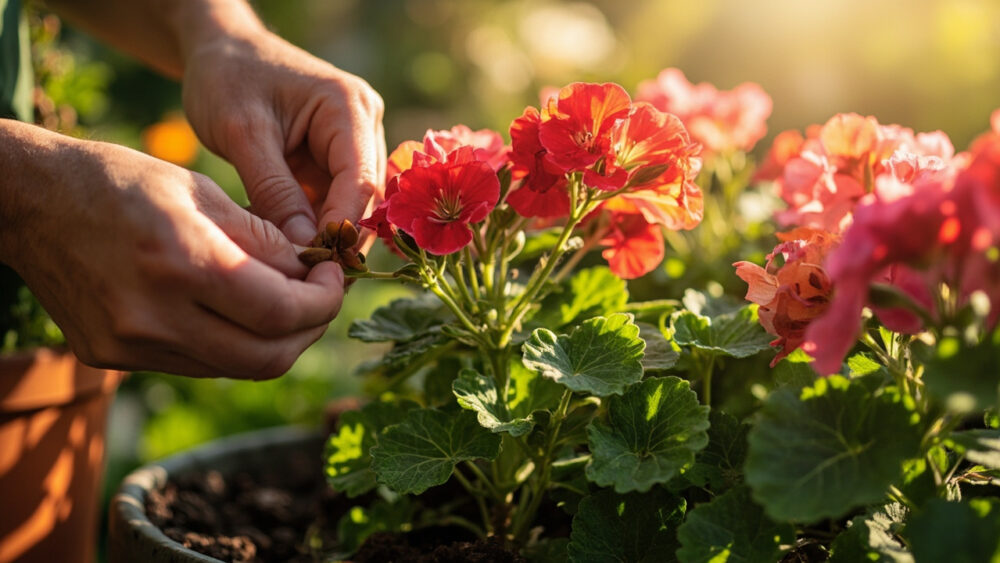
Confirm it: look closely for old, brown, or mushy flower heads hiding under fresh leaves. Geraniums that keep their spent blooms redirect energy into seed production instead of new flower stalks.
Snap or snip off the entire flower stem down to where it meets the main stalk, not just the dead petals. Do this weekly during the growing season.
Skip this step and you can do everything else right and still get a sparse plant.
5. Temperature Stress, Too Hot or Too Cold
Confirm it: think back on recent conditions. Geraniums stall out above about 85°F and also sulk below about 50°F. A plant that sat through a heat wave or a chilly porch night will pause flowering even with good light and food.
Move the plant out of extreme afternoon heat in summer, and bring it in well before the first frost in fall. There’s no quick fix here beyond waiting out the weather and keeping conditions moderate going forward.
Temperature stalls are temporary, but they can look identical to a light problem if you’re not watching the thermometer.
6. Watering Extremes, Too Wet or Too Dry
Confirm it: feel the soil an inch down. Constantly soggy soil or soil that’s been allowed to go bone dry for days both stress the plant enough to shut down bud formation. Yellowing lower leaves point to overwatering, crispy leaf edges point to underwatering.
Let the top inch or two of soil dry between waterings, then water thoroughly until it drains out the bottom. Never let the pot sit in a saucer of standing water.
Consistency matters more than any specific watering schedule.
7. Old, Overgrown, or Woody Plant
Confirm it: check the base of the plant. Thick, woody, bare lower stems with sparse new growth mean the plant has aged past its most productive phase, common in geraniums kept going for two or more years without pruning.
Cut the plant back hard, by a third to half, in early spring to force fresh, bloom-productive growth from the base. It looks brutal but geraniums recover fast from a hard prune.
An old, unpruned geranium is the one cause that light and fertilizer alone will never fix.
How to Tell the Causes Apart
Where the problem shows up on the plant is your best clue. Leggy stems with big gaps between leaves point to light. Lush, dark, oversized leaves with zero buds point to nitrogen. Woody, bare stems near the soil line point to plant age.
Pattern matters too. If new growth looks fine but old flower stalks are rotting in place, that’s deadheading, not a growing-condition problem. If the whole plant looks stressed at once, leaves curling or crisping uniformly, suspect temperature or water rather than light or feeding, since those two hit the whole plant evenly instead of just the newest growth.
Once you match the pattern to the cause, the fix is usually straightforward.
Will It Recover?
Most non-blooming geraniums recover fully once the actual cause is corrected, which is the good news here. Light and pot-size issues typically resolve in three to six weeks. Overfeeding issues resolve faster, often within two to four weeks of stopping fertilizer.
Deadheading fixes show results almost immediately, sometimes within the same growing season, since you’re just removing the drain on the plant’s energy.
Temperature stalls resolve on their own once conditions moderate, no intervention needed beyond patience.
The one honest exception is a very old, leggy, woody plant that’s been neglected for a long stretch. A hard prune usually revives it, but if the base is mostly bare wood with little green left, or if the plant is riddled with stem rot, it may be faster and more reliable to start a new plant from a healthy cutting than to nurse the old one back.
Knowing the odds is one thing, keeping it from happening again is the part that actually saves you the repeat headache.
How to Keep It From Happening Again
Give it real direct sun as a baseline, not filtered light through a sheer curtain. Four to six hours minimum, more if you can manage it.
Feed lightly and only with a bloom-formulated fertilizer during active growth, and stop entirely in the darker months.
Deadhead weekly without fail during the growing season, and keep the plant in a snug pot rather than sizing up every year.
Prune hard once a year, typically in early spring, to keep growth young and productive instead of woody.
Get these four habits in place and non-blooming stops being a mystery you have to diagnose.
Diagnosis Checklist
- Check the light: if the plant gets less than four hours of direct sun, move it before checking anything else.
- Look at the stems: long, stretched gaps between leaves mean insufficient light, not a feeding problem.
- Look at leaf color and size: unusually large, dark, lush leaves with zero buds mean stop fertilizing.
- Check the pot size against the plant: an oversized pot for the plant’s size means downsize the container.
- Search under the foliage for old, spent flower heads: if you find them, deadhead down to the main stem now.
- Recall recent weather: extreme heat above 85°F or cold below 50°F means wait it out, no other fix needed.
- Feel the soil an inch down: soggy or bone dry both mean adjust your watering rhythm.
- Check the base of the plant: thick, woody, bare stems mean the plant needs a hard prune or replacement.
- Fix only the one or two causes that match, then wait three to six weeks before judging results.
A geranium that won’t bloom is almost never a mystery, it’s a checklist. Work through it once and you’ll know exactly what your plant needs from now on.