You can grow zucchini from seed by direct sowing it outdoors about two weeks after your last frost, once the soil has warmed to at least 60°F, planting seeds an inch deep and thinning to 24 to 36 inches apart. That is the whole plant’s life cycle in one sentence, and if you do only that much, you will probably get zucchini. But “probably” is doing a lot of work in that sentence, because more zucchini plants die from good intentions than from bad luck.
Most first-timers make one specific timing mistake that costs them three weeks of the season, and I will walk you through exactly how to avoid it. There is also a sign on the seedling that everyone reads backward, thinking it means trouble when it actually means the plant is doing exactly what it should. And once fruit shows up, there is a question almost nobody asks until it is too late: why the plant is loaded with flowers but no zucchini at all.
Stick with me through the whole process and I will hand you a save-able Zucchini at a Glance card at the bottom with every number you need pinned in one place.
When to Start Zucchini Seeds
Zucchini hates root disturbance and hates cold soil even more, which is why direct sowing outdoors is the better default for most gardeners. Wait until night temperatures are reliably staying above 50°F and the soil has warmed to 60°F or higher, usually one to two weeks after your last frost date.
If you garden in a short-season climate and want a head start, you can start seeds indoors 2 to 3 weeks before your last frost, in individual 3 to 4 inch pots, never a shared flat. Zucchini seedlings resent transplanting, so bigger pots and a shorter indoor stay both help.
Here is the mistake that costs people weeks: planting too early into cold, wet soil, whether direct sown or transplanted. Zucchini seeds and roots just sit and rot below 55°F, and a plant that stalls out early rarely catches up to one sown two weeks later into warm soil.
Get the soil temperature right and the calendar date almost stops mattering.
Sowing Zucchini Step by Step
Whether you are sowing indoors or straight into the garden, the process is nearly identical.
Steps for sowing zucchini seed
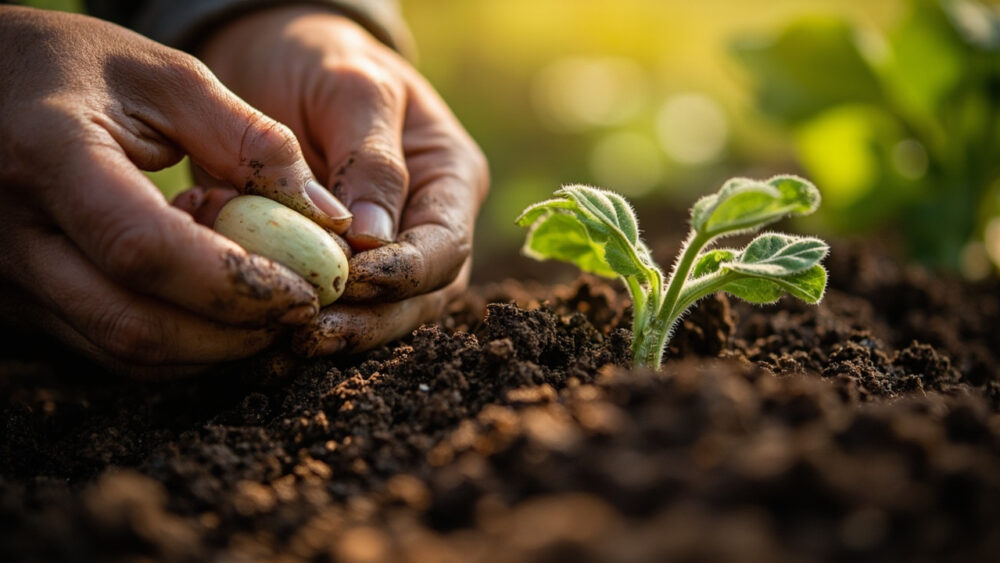
- Depth: plant seeds 1 inch deep, pointed end down if you can tell which end is which, but it germinates fine either way.
- Spacing: sow 2 to 3 seeds per spot, spots spaced 24 to 36 inches apart in rows 3 feet apart, in mounds if your soil drains slowly.
- Medium: loose, well-draining soil or seed-starting mix, amended with compost, at a pH around 6.0 to 7.0.
- Temperature: soil at 65 to 95°F germinates fastest, ideally around 70 to 85°F; below 60°F germination slows dramatically or stalls.
- Light: full sun once seedlings emerge, at least 6 to 8 hours a day; indoors, seeds need darkness to germinate but seedlings need bright light immediately after.
- Water: keep soil evenly moist, not soggy, until germination.
Once you have seeds in the ground, the waiting game starts, and this is where people start second-guessing themselves.
Germination: What to Expect and When to Worry
Zucchini germinates fast compared to most vegetables. Expect seedlings to break the surface in 5 to 10 days at soil temperatures around 70°F or warmer, and up to 2 weeks in cooler soil.
The seedling emerges with two rounded seed leaves, called cotyledons, followed within a few days by the first true leaf, which has the rough, slightly fuzzy, lobed shape you associate with squash.
Here is the sign everyone misreads. When those seed leaves start yellowing and shriveling around the time the second or third true leaf appears, new gardeners panic and assume disease or nutrient deficiency. Actually that is completely normal. The cotyledons are just spent energy reserves the plant no longer needs, and dropping them is a sign of a seedling moving forward, not one in trouble.
What is actually worth worrying about is no emergence at all past 2 weeks in warm soil. That usually means the seed rotted from too much moisture and cold, or something dug it up. Reseed rather than wait it out.
Once true leaves are up and growing, thin each cluster down to the strongest single seedling.
Hardening Off and Transplanting Indoor Seedlings
If you started seeds indoors, do not skip hardening off. Zucchini seedlings raised inside have soft tissue that sunburns and wind-whips badly if moved straight outside.
Over 7 to 10 days, set seedlings outside in a sheltered, shaded spot for an hour or two, gradually increasing sun exposure and time outdoors each day. By day 7 or so they should handle a full day outside before you transplant them into the garden permanently.
Transplant on an overcast day or in the evening, at the same soil depth they were growing at in the pot, and water them in well. Wait until nighttime temperatures are staying above 50°F, since a cold snap can stall or kill young transplants even if it does not technically frost.
Handle the root ball gently and only once, since zucchini roots do not forgive repeated disturbance.
Caring for Zucchini Through the Season
Zucchini is a heavy feeder and a heavy drinker once it gets rolling. Water deeply, about 1 to 1.5 inches per week, more during hot stretches, aiming water at the soil rather than the leaves to keep powdery mildew down.
Side-dress with compost or a balanced fertilizer once plants start flowering, and again 3 to 4 weeks later if the season is long. Mulch around the base to hold moisture and keep soil off the lower leaves.
Watch for squash vine borer and squash bugs, which are the two pests that end more zucchini plants than anything else. Row covers early in the season help, but must come off once flowers open so pollinators can reach them. If you see sudden wilting of a single vine despite moist soil, check the stem base for a small entry hole, a classic vine borer sign, and consult your local extension office or a garden center for current cultural and product-label controls.
A healthy plant sprawls fast, so give it room and get ahead of pests before you see real damage.
Flowering, Pollination, and the Harvest You Were Waiting For
Here is the honest answer to the question almost nobody asks until it happens to them: your zucchini plant is covered in bright yellow flowers and still producing zero fruit. That is not disease and it is not your fault exactly.
Zucchini produces male and female flowers separately on the same plant, and the male flowers, which have a plain thin stem, typically show up first, sometimes a full week or two before any females appear. No females yet means no fruit yet, full stop, no matter how many male blooms you count.
Female flowers have a small swollen bulb behind the petals, the beginning of the fruit. They need bees or other pollinators to move pollen from male to female flowers, and poor pollination is the second most common reason for flowers that drop or fruit that rots at the tip without swelling. If pollinator activity is low in your yard, you can hand-pollinate by transferring pollen from a male flower’s center to a female flower’s center with a small brush or your fingertip, early in the morning while flowers are open.
Plants reach harvest in 45 to 55 days from direct-sown seed for most varieties, sometimes a week earlier from transplants. Pick zucchini young, at 6 to 8 inches long, when the skin is still glossy and easily nicked with a fingernail. Left too long, fruit turns tough and seedy fast, and a plant loaded with oversized zucchini will actually slow down new fruit production.
Check plants every day or two once they start producing, because zucchini can double in size overnight.
Zucchini at a Glance
- When to plant: direct sow 1 to 2 weeks after last frost, once soil is at least 60°F, or start indoors 2 to 3 weeks before last frost in individual pots.
- Depth and spacing: sow seeds 1 inch deep, thin to one plant every 24 to 36 inches, rows 3 feet apart.
- Germination time: 5 to 10 days in warm soil around 70°F or above, up to 2 weeks in cooler soil.
- Sunlight and water: full sun, 6 to 8 hours minimum, 1 to 1.5 inches of water weekly aimed at the soil, not the leaves.
- Feeding: compost or balanced fertilizer at first flowering, again 3 to 4 weeks later.
- Days to harvest: 45 to 55 days from seed, pick fruit at 6 to 8 inches for best flavor and texture.
- Biggest risks: cold, wet soil at planting, poor pollination from low bee activity, and squash vine borer once plants mature.
Get the soil warm, give it room, and pick often. That is nearly the entire secret to a zucchini plant that actually earns its reputation for producing too much.