Yarrow grows best in full sun and lean, well-drained soil, and once it’s established you will spend more time keeping it in bounds than coaxing it along. If you’re learning how to grow yarrow because you saw those flat flower clusters at a nursery and want that same tough, drought-shrugging plant in your own bed, the short version is: plant it after your last frost in soil you have NOT enriched, space plants 12 to 18 inches apart, and then mostly leave it alone.
That last part is where most people go wrong. The one mistake that ruins a first attempt with yarrow almost always involves kindness: too much fertilizer, too much water, soil that’s too rich. Yarrow evolved on poor, rocky, dry ground, and it rewards neglect with sturdy stems and it punishes pampering with floppy, sprawling growth that flops over in the first summer storm.
Before you plant, there are a couple of honest answers you’ll want that most guides skip: how long yarrow actually takes to bloom its first year, and what that gray, powdery look on the leaves in August really means. Both are covered below, and at the very bottom you’ll find a saveable Yarrow at a Glance card with every number in one place for your phone.
When to Plant Yarrow
Plant yarrow after the danger of frost has passed and soil has warmed into the 60s Fwhether you’re setting out nursery starts, transplanting divisions, or direct sowing seed. In most of zones 3 through 9, that lands anywhere from mid spring to early summer depending on your local frost date.
Fall planting works too, ideally 6 to 8 weeks before your first hard frost, giving roots time to establish before winter. Yarrow is winter hardy down to zone 3, so cold isn’t the risk with fall planting, poor drainage during a wet, cold winter is.
Seed can also be started indoors 6 to 8 weeks before your last frost, but yarrow seed is slow and a little stubborn, and most gardeners get faster, more reliable results from nursery divisions or potted starts.
Once you know your planting window, the spot you choose matters just as much as the timing.
Choosing the Spot and Preparing the Soil
Yarrow wants at least 6 hours of direct sun and soil on the poor, dry side. If you’re picturing your best, most amended garden bed as the natural home for yarrow, that’s the guessable answer, and it’s backwards. Rich, moist soil is exactly what makes yarrow grow tall, weak-stemmed, and prone to flopping over by midsummer.
Skip the compost and skip the fertilizer at planting time. If your soil is heavy clay, work in some coarse sand or fine gravel to improve drainage rather than organic matter to improve fertility. Raised beds, gravel gardens, and slopes all suit yarrow better than a rich vegetable bed.
A soil pH anywhere from about 6.0 to 8.0 is fine; yarrow isn’t picky about pH the way it’s picky about drainage.
Get the site right and the actual planting is almost too easy.
Planting Yarrow Step by Step
- Loosen the soil to about 8 to 10 inches deep across the planting area, breaking up clumps but not enriching it.
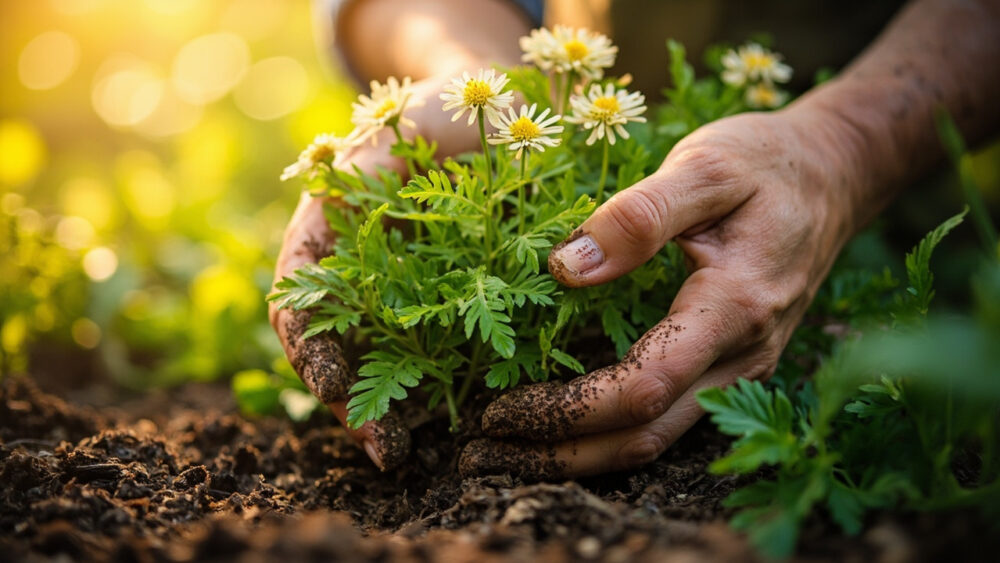
- Dig a hole just as deep as the root ball and twice as wide, whether you’re using a potted start or a division.
- Set the crown level with the surrounding soil, no deeper, since burying the crown invites rot.
- Space plants 12 to 18 inches apart in all directions, since yarrow spreads by rhizome and will fill gaps within a season or two.
- Backfill and water in once, firmly but gently, to settle soil around the roots.
- Skip the mulch right up against the crown; a thin layer further out is fine, but heavy mulch traps moisture yarrow doesn’t want.
Getting it in the ground correctly buys you an easy season, but the watering habits you build in the first few weeks matter more than the planting itself.
Watering and Feeding Through the Season
Water new plantings twice a week for the first 2 to 3 weeksjust enough to keep the top few inches of soil from drying out completely while roots establish. After that, yarrow wants you to back off almost entirely.
Once established, water only during real drought stress, meaning wilted foliage after a week or more with no rain. Established yarrow in average garden soil often needs no supplemental water at all through a normal summer.
Skip fertilizer completely in most soils. If your soil is truly poor, a light topdressing of compost in spring is plenty. Anything more pushes the same weak, floppy growth that rich soil causes.
The plants that struggle most with yarrow aren’t underfed, they’re overwatered, and that habit is also what invites the season’s most common problems.
Problems That Actually Show Up on Yarrow
Powdery mildew is the gray-white coating you’ll likely see on leaves by late summer, especially in humid weather or crowded plantingsand it’s a sign of airflow and moisture, not a disease you failed to prevent early. Thin out crowded clumps, water at the soil line instead of overhead, and remove badly coated leaves. A fungicide labeled for powdery mildew can help if you catch it early, applied exactly per the label.
Root rot is the more serious risk, and it comes straight from soil that stays wet, whether from heavy clay, overwatering, or low ground that collects runoff. There’s no fixing rotted roots. The honest move is to lift the plant, improve drainage, and replant a healthy division elsewhere.
Aphids show up occasionally on new growth. A strong spray of water or insecticidal soap applied per the label handles them without drama.
Flopping, sprawling stems aren’t a pest or disease at all, they’re almost always too much fertility, too much shade, or too much water, and the fix is cultural, not chemical.
Handle drainage and airflow, and yarrow will largely take care of itself through to bloom.
When and How to Harvest Yarrow
Yarrow typically blooms 90 to 120 days after planting from seed, or within the first season from an established division or nursery startwith flat clusters of tiny flowers in white, yellow, pink, or red depending on variety. If you assumed a slow-to-establish perennial means no flowers the first year, yarrow is one of the pleasant exceptions, especially from divisions.
For fresh bouquets, cut stems when about 70 to 80 percent of the flower cluster has openedchoosing stems with sturdy, upright growth.
For drying, cut whole stems once the cluster is fully open and the flowers feel slightly papery rather than soft, then hang them upside down in a dark, dry, well-ventilated space for 1 to 2 weeks.
For cutting or drying leaves for craft or garden useharvest any time through the growing season, since foliage regenerates readily.
A quick note if you have pets or kids around the bed: yarrow is considered mildly toxic to dogs, cats, and horses, and can cause symptoms like drooling, vomiting, or diarrhea if eaten in quantity. If you suspect a pet has eaten a significant amount, call your veterinarian rather than waiting to see what happens.
Deadheading spent blooms encourages a second flush later in the season, so don’t stop at one cutting.
Yarrow at a Glance
- When to plant: after last frost once soil hits the 60s F, or 6 to 8 weeks before first fall frost.
- Sun and soil: full sun, lean and well-drained soil, no compost or fertilizer needed at planting.
- Spacing and depth: 12 to 18 inches apart, crown set level with the soil surface.
- Watering: twice weekly for 2 to 3 weeks after planting, then only during real drought once established.
- Hardiness: perennial in USDA zones 3 through 9.
- Bloom time: 90 to 120 days from seed, often the same season from divisions or nursery starts.
- Harvest: cut for bouquets at 70 to 80 percent open, cut for drying once fully open and slightly papery.
Give yarrow poor soil, full sun, and room to spread, and it will outlast almost anything else in the bed.
The plants that struggle are nearly always the ones that got too much help, not too little.