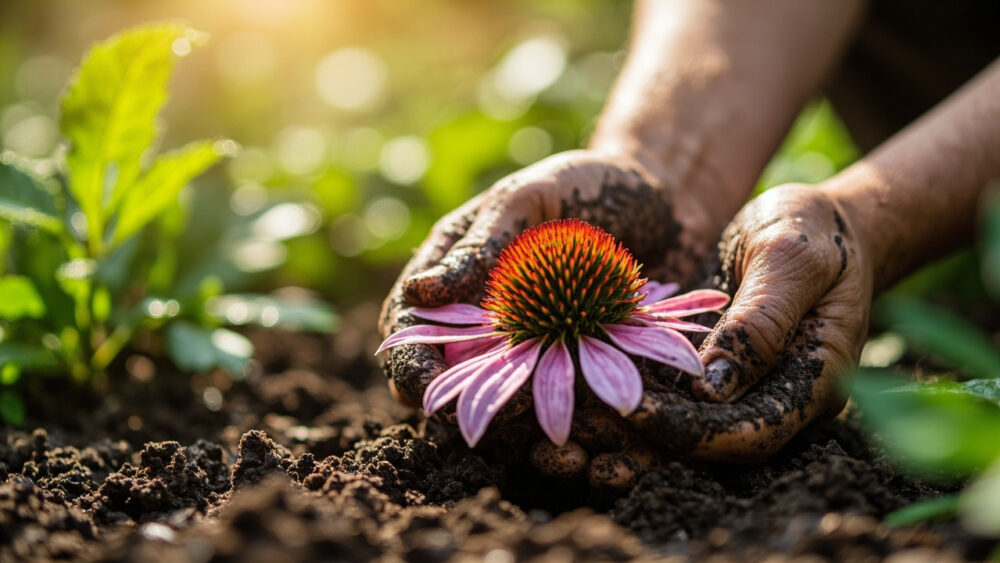
Learning how to grow echinacea comes down to three things: full sun, soil that drains fast, and patience the first year while it builds roots instead of flowers. Plant it after your last frost once soil hits about 60°F, space plants 18 to 24 inches apart, and set the crown right at soil level. Do that and skip the one mistake that kills more echinacea than drought, disease, or bad luck combined, and you get a plant that blooms for a decade or more.
That mistake is coddling it. Echinacea is a prairie native, and it fails more often from rich soil and generous watering than from neglect. There’s also a sign most new growers misread completely in year one, mistaking a quiet, flowerless plant for a dying one when it’s actually doing exactly what it should.
Stick with me through planting, feeding, the diseases that actually show up on this plant, and harvest timing if you’re growing it for tea or tincture. The save-able Echinacea at a Glance card is waiting at the bottom once you’ve got the full picture.
When to Plant Echinacea
Wait until the soil has warmed to roughly 60°F and all frost danger has passed before setting out plants or direct-sowing seed outdoors. That’s usually two to four weeks after your last spring frost date, depending on your zone.
Echinacea is hardy in USDA zones 3 through 9, and established plants shrug off winter cold with no protection needed. It’s the seedlings and fresh transplants that are vulnerable, not the mature root system.
Fall planting works too, ideally six weeks before your ground freezes, giving roots time to settle before winter. Gardeners starting from seed indoors should know that many echinacea varieties germinate better after a cold stratification period, four to six weeks in a moist paper towel in the fridge, mimicking the winter they’d get outdoors naturally.
Get the timing right and the next decision, where you actually put it, matters just as much.
Choosing the Spot and Prepping the Soil
Full sun is non-negotiable. Give echinacea at least 6 hours of direct sun, ideally 8 or more. In partial shade it survives but gets leggy, flops over, and blooms sparsely.
Drainage matters more than fertility. This plant evolved on open prairie in lean, gritty soil, and it actually resents rich, moisture-retentive beds. If your soil is heavy clay, work in coarse sand or fine gravel, not compost, before planting. A raised bed or slope handles wet winters far better than a low spot where water pools.
Skip the urge to dig in a load of compost or bagged garden soil. Loose, average-to-lean soil with a pH between 6.0 and 7.5 is exactly what echinacea wants.
Once the bed is ready, the actual planting takes about five minutes per plant.
Planting Echinacea Step by Step
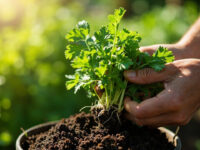
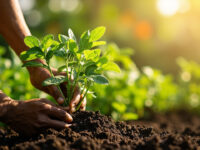
1. Dig the hole
Make it just as deep as the root ball or transplant pot and about twice as wide, so roots can spread into loosened soil instead of hitting a hard wall.
2. Set the crown at soil level
The point where stem meets root should sit flush with the surrounding soil, not buried and not sitting proud. Planting too deep is a common way to rot the crown before it ever gets going.
3. Space plants 18 to 24 inches apart
Echinacea forms substantial clumps over a few years. Crowding invites powdery mildew later because air can’t move through the foliage.
4. Backfill and water once, deeply
Firm the soil gently, water thoroughly to settle it around the roots, then step back. That first deep watering is the last generous drink this plant needs for a while.
Now comes the part that trips up almost everyone: figuring out how much attention is actually helpful.
Watering and Feeding Through the Season
If you assumed a struggling-looking young echinacea needs more water, that guess is exactly backward. New transplants need watering once or twice a week for the first month to establish roots, then you should back off hard. Established plants want about 1 inch of water a week from rain or irrigation, less once mature, and they tolerate real drought far better than they tolerate wet feet.
Overwatering is the fastest route to root and crown rot, especially in clay soil or a wet spring. Let the top 2 inches of soil dry out between waterings once plants are settled in.
Skip heavy feeding entirely. Echinacea grown in rich, over-fertilized soil produces soft, floppy growth, fewer flowers, and more disease. A single light topdressing of compost in spring is plenty. No fertilizer at all is also a perfectly fine choice for this plant.
Here’s the part that catches first-year growers off guard almost every time.
The Sign Everyone Misreads: The First-Year Sulk
Plant echinacea from seed or a small transplant and it will often do almost nothing above ground its first year, just a low rosette of leaves with no flowers. That’s not a failing plant.
It’s building a deep taproot system before it invests energy in blooms. Echinacea is a long-lived perennial that follows the old gardening rule of sleep, creep, leap: modest the first year, fuller the second, and a real show by the third.
Pulling a sulky first-year plant to replace it with something showier is the single most common way people quit on echinacea right before it was about to reward them.
Leave it be, and turn your attention instead to the problems that can genuinely derail it.
Problems That Actually Strike Echinacea
Powdery mildew shows up as a white, dusty coating on leaves, usually in humid weather with poor air circulation. Space plants properly and water the soil, not the foliage, to head it off. If it appears, a fungicide labeled for powdery mildew on ornamentals works when applied exactly per the product label.
Aster yellows is a more serious problem, a phytoplasma disease spread by leafhoppers that causes distorted, greenish, stunted flowers. There’s no cure. Infected plants should be dug up and destroyed, not composted, to keep it from spreading to neighboring coneflowers and asters.
Japanese beetles chew ragged holes in leaves and petals in mid to late summer. Hand-picking into soapy water in the morning, when they’re sluggish, controls light infestations well.
- Yellowing lower leaves with fine webbing: spider mites, common in hot, dry, dusty conditions.
- Sudden wilting of an otherwise healthy-looking plant: crown or root rot from soggy soil.
- Sparse blooms with vigorous leaf growth: too much nitrogen, ease off any feeding.
Get past that first tricky year and those diseases handled, and you’re finally at the payoff most people came for.
When and How to Harvest Echinacea
For cut flowers, snip blooms once the petals have fully opened and the central cone is firm, cutting stems long, just above a leaf node, to encourage more branching and rebloom.
If you’re growing echinacea for tea or homemade herbal preparations, timing depends on the plant part. Flowers and leaves are typically harvested at peak bloom, mid to late summer, and dried in a single layer somewhere warm, dark, and airy.
Roots are the most potent part traditionally used, and they’re harvested from plants at least 3 years old, in fall after the foliage has died back, when the plant’s energy has moved underground. Dig gently with a garden fork to avoid slicing through the taproot, then wash, slice, and dry thoroughly before storing.
One honest note on echinacea and health claims: it’s widely used in herbal tea and supplements, but it is not a substitute for medical care, and anyone with allergies, autoimmune conditions, or on medication should talk to a doctor before using it medicinally. It’s also worth knowing that echinacea is generally considered non-toxic to dogs and cats in small amounts, but large ingestions can cause stomach upset, and any pet showing vomiting, drooling, or lethargy after eating a large quantity of any garden plant should see a veterinarian.
Deadhead spent blooms through summer to keep the show going, or leave the last flush standing.
Leave Some Seed Heads for Winter
Goldfinches and other seed-eating birds work over echinacea seed heads all fall and into winter, and the dried cones add real structure to a winter garden instead of bare stubble.
Leaving a portion of the last bloom flush unpicked costs you nothing and feeds birds through the leanest months.
Everything above adds up to one simple card worth keeping on your phone.
Echinacea at a Glance
- When to plant: after last frost once soil reaches about 60°F, or in fall six weeks before ground freeze, zones 3 through 9.
- Spacing and depth: 18 to 24 inches apart, crown set level with the soil surface, never buried.
- Light and soil: full sun, 6 to 8 hours minimum, lean and fast-draining soil, pH 6.0 to 7.5.
- Watering: deep and frequent while establishing, then about 1 inch a week or less once mature, dry between waterings.
- Feeding: light or none, a single compost topdressing in spring is enough.
- First year: expect leaves only, little or no bloom, roots are the priority.
- Harvest: flowers at full bloom, roots from plants 3 years or older, dug in fall.
Give echinacea lean soil, full sun, and one full year of patience, and it will outlast almost anything else in the bed.
The plants that struggle are almost always the ones that got too much water and too much kindness, not too little.