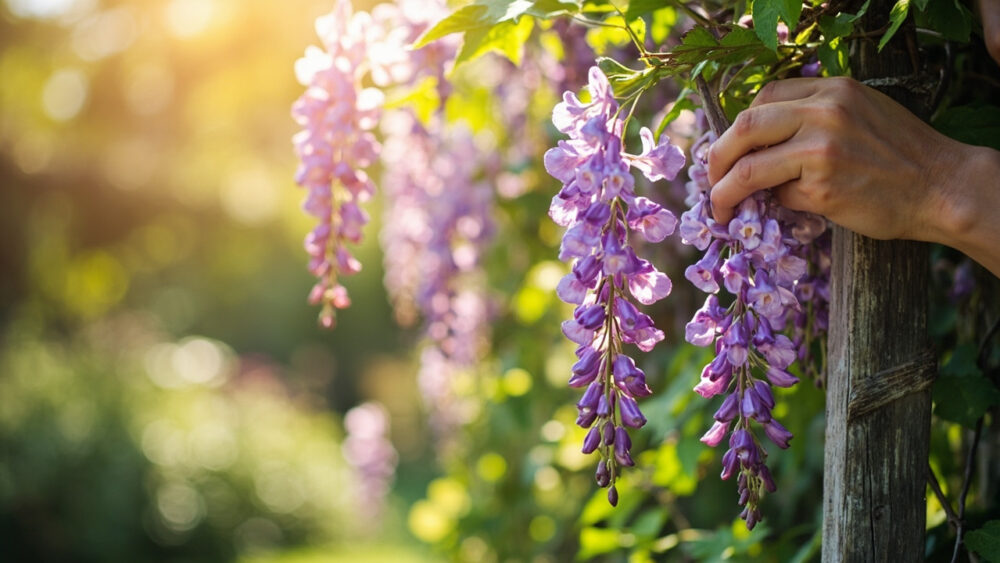
Growing wisteria means planting a young vine in spring or fall into deep, well-drained soil next to a serious support structure, giving it full sun, and then waiting. That last part is the honest catch. Most wisteria takes two to five years before it blooms at all, and how you prune and feed it in those early years decides whether you get cascades of flowers or just a wall of leaves.
Here is what nobody tells you before you plant: the single biggest reason wisteria refuses to bloom has almost nothing to do with soil or water. It is a pruning and feeding mistake nearly everyone makes without realizing it. There is also a sign people misread every spring, mistaking a vine that is simply too young to flower for one that is sick or planted wrong.
I will walk through timing, siting, planting, feeding, the problems that actually show up, and when to expect that first real bloom. Stick around for the Wisteria at a Glance card at the bottom, it is the short version worth saving to your phone before you head out to the nursery or the planting site this weekend.
When to Plant Wisteria
Plant wisteria in early spring once the ground has thawed and is workable, or in fall about four to six weeks before your first hard frost. Both windows let roots establish before the plant has to push top growth or survive winter.
Spring planting is the safer bet in colder regions, zones 4 and 5, where fall-planted roots may not settle in before a hard freeze. In zones 6 through 9, fall planting is often better because the cooler air slows leaf growth while roots keep working underground.
Container-grown wisteria, which is how almost everyone buys it, is forgiving about exact timing as long as you avoid planting into soil that is either frozen or soaked and muddy.
Get the timing right and the next decision, where you actually put it, matters even more.
Choosing the Spot and Preparing the Soil
Wisteria needs at least six hours of direct sun a day to bloom well. Plants stuck in partial shade will often grow huge and stay stubbornly flowerless.
It wants soil that drains well but does not need to be rich. In fact, soil that is too fertile, especially high in nitrogen, pushes leafy growth at the expense of flowers. A loose, average garden loam is ideal.
The part people skip is the support structure. Wisteria vines get heavy, thick as a wrist or thicker within a decade, and they twist with real force. A flimsy trellis or a porch post not built for it will eventually crack or get pulled apart. Plan for a sturdy arbor, pergola, or heavy metal structure set before you plant, not after.
Keep it away from windows, gutters, and roof lines too, since mature wisteria will happily climb into and damage all three.
Once you have picked a sunny spot with real support nearby, it is time to get it in the ground.
Planting Wisteria Step by Step
1. Dig the hole
Dig a hole twice as wide as the root ball and just as deep, so the crown sits level with the surrounding soil once backfilled.
2. Loosen the roots
Tease apart any roots that are circling the pot. Wisteria roots that stay coiled at planting time can girdle the plant for years afterward.
3. Position near the support
Set the plant 6 to 12 inches from the base of its trellis or post, angled slightly toward it, so early growth reaches the structure fast.
4. Backfill and water
Fill in with the native soil, no need for heavy amendment, tamp gently to remove air pockets, and water deeply right away.
5. Mulch lightly
Add 2 to 3 inches of mulch around the base, kept a few inches clear of the stem itself, to hold moisture and moderate soil temperature.
If you’re planting more than one vine along a fence or pergola, space plants 10 to 15 feet apart since a mature wisteria covers serious ground.
Getting it in the ground correctly is only half the job, what you do with water and fertilizer over the next few seasons is where most people go wrong.
Watering and Feeding Through the Season
Water new wisteria regularly through its first year, enough to keep the top few inches of soil moist but never waterlogged. Once established, usually by year two, it becomes quite drought-tolerant and only needs supplemental water during extended dry spells.
Now for the mistake that ruins more wisteria than any pest or disease: overfeeding with nitrogen. If you assumed a lush, fast-growing vine needs regular fertilizer to bloom, that guess is exactly backward. Nitrogen-rich fertilizer, including most all-purpose lawn or garden feeds, encourages leafy growth and actively suppresses flowering.
If you feed it at all, use a low-nitrogen, higher-phosphorus formula, something built for blooming, applied sparingly in early spring. Many established wisteria growing in average soil do fine with no fertilizer whatsoever.
What it actually needs to bloom is less feeding and more restraint with the pruning shears, and that is the part almost nobody gets right either.
The Problems Most Likely to Strike
The number one “problem” gardeners report is a wisteria that will not flower. Nine times out of ten this is not disease, it is youth, wrong pruning, too much shade, or too much nitrogen, not a sickness that needs treating.
True pest and disease pressure is fairly light on wisteria. Watch for a few recurring issues:
- Aphids and scale: small clusters on new growth, sticky residue on leaves below, treat with insecticidal soap and follow the product label.
- Powdery mildew: a white, dusty coating on leaves in humid weather, improve airflow by thinning growth and avoid overhead watering late in the day.
- Root rot: yellowing leaves and soft, dark roots in soil that stays wet, almost always a drainage problem, not a fungicide problem.
Wisteria is also toxic if eaten, particularly the seeds and pods, to people and pets alike. Watch for vomiting, diarrhea, or drooling in pets who chew on pods, and call your veterinarian right away if you suspect ingestion, don’t wait to see if symptoms pass.
Handle the pests, keep the roots dry enough, and keep the pods away from curious dogs, then the only real work left is pruning it into a bloomer.
When and How Wisteria Actually Blooms
Here is the honest answer to the question everyone eventually asks: most wisteria takes two to five years to bloom, and vines grown from seed can take even longer, sometimes a decade or more. Vines grown from cuttings or grafted nursery stock bloom sooner than seed-grown plants.
Once mature, wisteria blooms in mid to late spring, producing long hanging clusters of purple, lavender, pink, or white flowers, usually just before or as the leaves fully emerge.
The move that gets vines blooming faster is hard summer pruning. Right after the spring bloom finishes, cut back the long whippy side shoots to about 6 inches, leaving a framework of main stems. Prune again in late summer, shortening new growth to encourage flower buds rather than more leafy vine.
Skip the pruning and you get a wisteria that grows aggressively, covers your structure fast, and stays disappointingly green for years.
That trade, patience plus real pruning discipline, is the whole secret, and everything you need to remember about it fits in the card below.
Wisteria at a Glance
- When to plant: early spring after the ground thaws, or fall four to six weeks before first frost.
- Sun and soil: at least six hours of direct sun, average well-drained soil, no need for rich or heavily amended ground.
- Spacing and depth: plant at the same depth as the pot, 6 to 12 inches from its support, 10 to 15 feet between multiple vines.
- Water needs: regular moisture the first year, drought-tolerant once established.
- Feeding: little to none, avoid nitrogen-heavy fertilizer, which blocks blooms.
- Time to bloom: two to five years for grafted or cutting-grown plants, longer from seed.
- Pruning for flowers: cut side shoots back hard after spring bloom and again in late summer.
Get the sun, the support, and the pruning right, and the flowers will come on their own schedule.
Everything else about wisteria is really just patience with a pair of shears in hand.